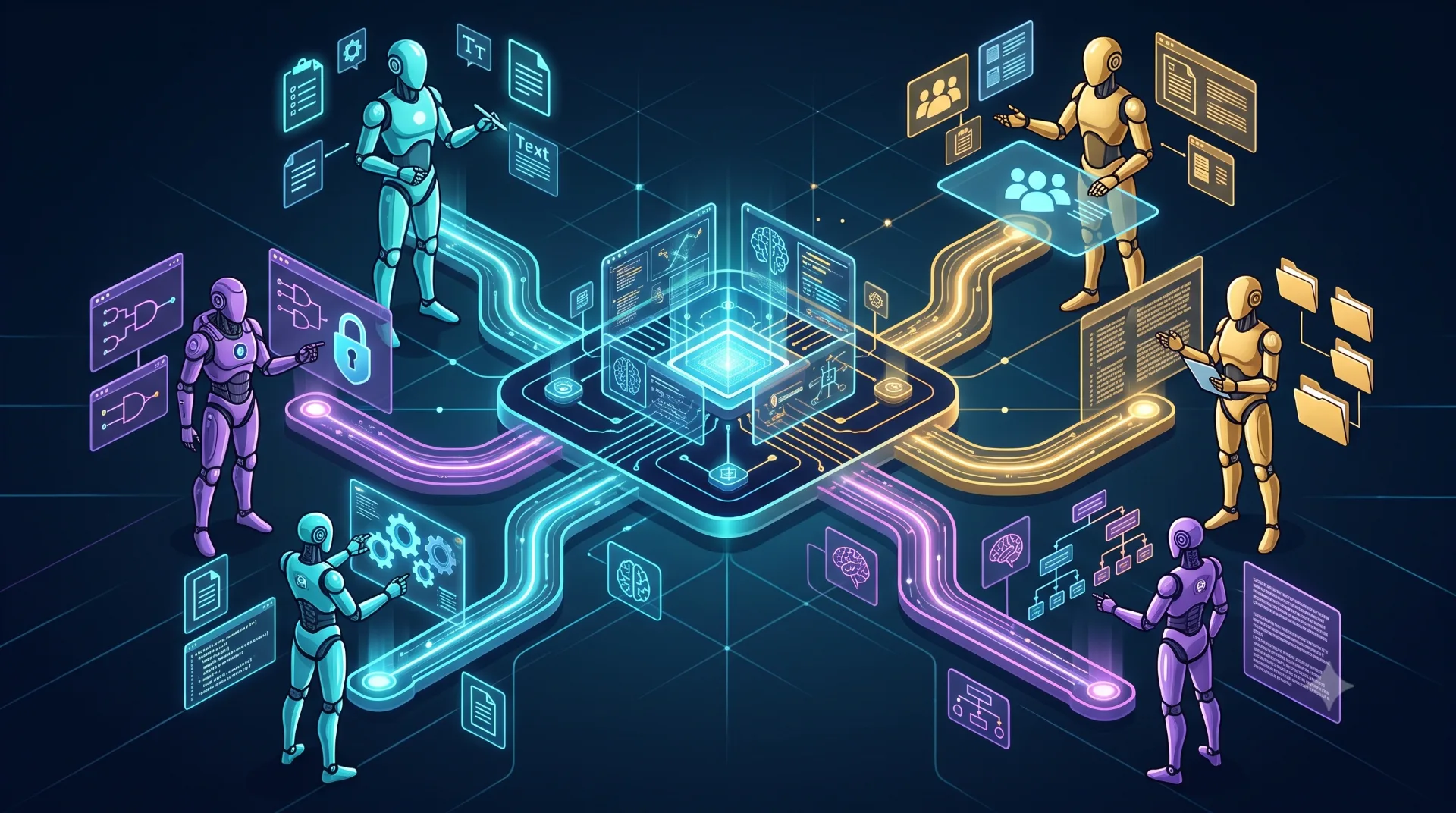
The path from a working prototype to a production-ready AI agent is wider than most teams expect, and a new guide from a practitioner on Towards Data Science maps six architectural patterns that bridge that gap. Our take is straightforward: the era of treating LLMs as black boxes that simply react to prompts is over, and the sooner engineering teams internalize these structured patterns, the sooner they can build agents that don't just demo well but actually endure real workloads. This isn't about chasing the next shiny agent framework, it's about understanding how to route, verify, and recover when models behave unpredictably, a topic we've explored in depth regarding the hidden instability beneath temperature zero The Hidden Instability Beneath LLM Temperature Zero and the importance of catching risky actions before they execute Why a Decision-First Model Can Rein In Risky AI Agent Actions.
The six patterns move well beyond the basic ReAct loop that most tutorials stop at. They tackle the hard questions: How do you handle a tool call that returns garbage without cascading into a broken chain? How do you parallelize agent work without losing reliability? The guide positions these patterns not as academic exercises but as production blueprints, each one addresses a failure mode that emerges when you scale from one user to one thousand. What resonates most is the emphasis on reliability as a design constraint, not an afterthought. Too many teams build agents that feel magical in a notebook but fall apart under the combinatorial weight of edge cases, malformed inputs, and service timeouts. These patterns offer a vocabulary for that reliability problem, and they align with our earlier guidance on starting your AI journey with a single tool call before layering complexity Start Your AI Journey With a Single Tool Call.
What this means for practitioners is concrete: you can stop guessing about architecture. If your agent today is a monolithic loop that hopes for the best, these patterns give you explicit options, separate verification from generation, introduce fallback handlers, or decompose tasks into specialized sub-agents. The guide doesn't claim one pattern is universally superior; it presents trade-offs, which is the mark of production thinking. The most valuable insight is that reliability in agent systems is not a property of the model alone, it emerges from how you structure the system around the model.
The specific detail to watch in your own work is the feedback loop. As your agent scales, the ratio of successful autonomous actions to interventions becomes your truest metric. One of the six patterns points toward using human-in-the-loop not as a crutch but as a signal generator for future automation. That is the pragmatic future: not replacing humans, but building systems that learn when and how to ask for help.