AI models
Beyond Market Intelligence keeps AI models in one place: 75 stories so far. The section currently leads with “Moonshot AI sets sights on $2 billion revenue as K3 daily token use stays strong”, “Suno shifts to licensed music training as copyright challenges mount”, and “Empowering defenders with unguarded AI to strengthen cybersecurity”. Moonshot AI is setting its sights on $2 billion in annual revenue, and the numbers suggest it's more than ambition. Suno's new model, v6, is trained entirely on licensed music, a direct response to the copyright lawsuits that have shadowed its earlier work. Acme AI is the next-generation, AI-powered spreadsheet platform built to replace Excel and redefine how analysts, data scientists, and enterprise teams work… The list below is every AI models story on Beyond Market Intelligence, newest first.

Moonshot AI sets sights on $2 billion revenue as K3 daily token use stays strong
Moonshot AI is setting its sights on $2 billion in annual revenue, and the numbers suggest it's more than ambition. OpenRouter data shows K3 models generating as many as 300 billion tokens daily, even as usage has dipped slightly in recent months. That scale signals real traction, though the dip raises questions about staying power. Growth like this isn't accidental, but it's also not guaranteed.

Suno shifts to licensed music training as copyright challenges mount
Suno's new model, v6, is trained entirely on licensed music, a direct response to the copyright lawsuits that have shadowed its earlier work. That's a meaningful step, even if the legal questions aren't fully settled. It's the kind of move that shows a company listening to the pressure around it, not just pushing forward blindly. For users, it signals a more sustainable path forward, one where AI's potential doesn't come at the cost of creators' rights.

Empowering defenders with unguarded AI to strengthen cybersecurity
Abliteration.ai is carving out a business by making powerful AI models without guardrails easier to access. It's a contentious stance, but the logic is sharp: if defenders can't experiment with the same tools as bad actors, they're always a step behind. That asymmetry is a real problem. We're not cheering for recklessness here. We're saying that restricting access doesn't make anyone safer, it just makes the knowledge exclusive.

Nvidia acquires Hugging Face, bringing 3 million AI models to its ecosystem
Nvidia's $12.9 billion move to acquire Hugging Face signals a clear bet on community-led AI development. With over 3 million models hosted and 18 million developers building on its platform, Hugging Face has become the default hub for open-source innovation. That scale is hard to ignore. For anyone wrestling with distributed training or model deployment, this acquisition could reshape how accessible those systems become. It's a confident step toward making AI infrastructure feel less like a hurdle and more like a foundation.

Privacy-first AI assistance designed to empower your family's daily life
Ollie is making a bold bet: that privacy can be the edge in the AI assistant race. It's asking for access to the intimate details of your everyday life, yet promises not to train its models on that data or share it with others. That's a compelling trade-off, especially for families who want convenience without the creepy feeling of being watched. Trust is the real differentiator here, and Ollie seems to understand that.

How recurrent depth lets AI think beyond linear reasoning.
OpenAI's Astra model is stepping outside the lines of sequential reasoning, and safety experts are paying close attention. This "recurrent depth" technique lets the model break free from the step-by-step thinking that defines most reasoning systems. It's a bold move, one that could unlock faster, more flexible AI. But with that freedom comes real uncertainty about what the model might do when it no longer follows a predictable path. We're not sounding alarm bells, but we are watching closely.
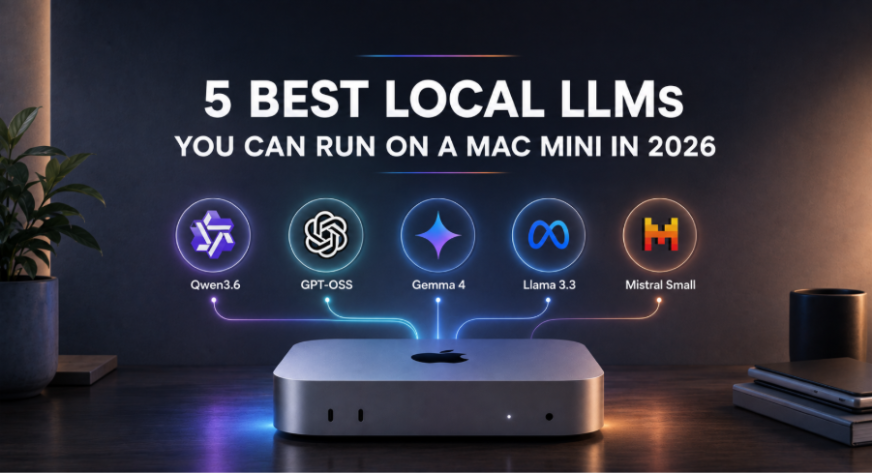
Run capable AI models locally on a Mac mini with these five tools.
Proprietary models deliver impressive results, but they often lock you into someone else's infrastructure. For those who value configurability over raw power, local LLMs are the answer. The Mac mini, with Apple Silicon and unified memory, has become a surprisingly practical host for on-device AI. If you are exploring distributed training to complement your local setup, our guide to distributed algorithms offers a solid next step. For now, discover which models run best on your Mac mini.
Discover how intentional friction with AI sharpens your thinking
We've all felt the pull toward endless AI-assisted shortcuts, but relying on them blindly can dull your edge. In *How I Fight AI Brain Rot*, the author pushes back with a practical tactic: friction maxxing, using Codex, Grok, and Claude not as crutches but as deliberate tools for sharper thinking. It's a refreshing, action-oriented approach that values effort over ease. If you're ready to rethink how you engage with these models, a straightforward path is available.

Explore How Bounded AI Agents Navigate Knowledge Graphs for Smarter Insights
Most of us hand our AI agents a search box and call it a day. The approach argues for something sharper: typed tools, hard bounds, and a gate the model cannot talk past. The payoff is letting the agent wander a knowledge graph on its own, within strict limits. Four models and one wrong prediction later, the question is whether that discipline is worth it. We think it is, and the reasoning here is worth your attention.

When AI Hesitates, Watermarks and Safety Checks Step In
Watermarks don't appear when a model is certain. They surface at the moment of doubt, which is exactly where AI mistakes hide. That overlap is worth pausing on. The same hesitation that trips a safety check can also trigger a visible marker, and understanding that connection helps us see where trust truly breaks down. It's a thoughtful look at a subtle mechanism, one that invites a deeper exploration of how models signal their own limits.

Give your AI agents context with structure, not just more strings
Flattening context into a single string is a recipe for confusion. When instructions, memory, and tool outputs lose their boundaries, the model has to guess what matters. That is why I appreciate this practical approach to typed context. The author built a zero-dependency Python runtime that keeps those semantic edges intact and rejects invalid transformations before they reach the model. It is a focused solution to a real problem. For more on how structured thinking applies elsewhere, *Exploring Paragraph Structure* offers a useful parallel.
When Authors Become Unwitting Trainers for AI
Every published author has unknowingly fed the machines now competing with their own work. That tension sits at the heart of a messy legal question: can AI companies train on copyrighted books without permission? It feels like infringement, but the law hasn't caught up to the reality. We dig into the nuance, and if you're curious how similar data problems skew models, our piece on catching AI slop offers a practical parallel.

Testing the boundaries of AI safety with Claude's content filters
Anthropic's Opus 4.6 is supposed to be a disciplined model, yet TechCrunch's tests reveal a glaring gap: a simple nudge was enough to bypass its guardrails and generate explicit content. That fragility matters because it shows how easily safety measures can be outmaneuvered, even by casual users. It's a reminder that robust AI governance isn't just about intent; it's about engineering resilience. For more on how Anthropic is navigating infrastructure bets, our piece on Akamai's cloud offers useful context.

Fickle enterprise loyalty signals a shift in how AI spending flows.
New data shows OpenAI gaining ground with business users as Anthropic holds its own, but the real story is how willingly companies switch between them. Each new model release prompts another flop, and that volatility should worry both investors. Enterprise AI spending looks less sticky than the hype suggests. For a deeper look at how these tools shape user trust, check out "Talking to My AI Clone Taught Me to Question the Tech." The takeaway: loyalty is provisional when every lab keeps raising the bar.

How AI quietly reshaped a third of the modern web
A third of web pages published since ChatGPT's launch now show signs of AI authorship. That's a striking signal about how quickly synthetic content has woven itself into the web's fabric. It raises a pressing question: how do we keep our data meaningful when machines are editing so much of what we read? This isn't about shaming the tools; it's about staying clear-eyed.

Explore how AI leaders compete to empower your data privacy.
OpenAI is raising the bar on enterprise data privacy, and it's about time. The company is moving to outflank Anthropic by offering stronger customer protections, a direct response to growing unease over how AI handles sensitive information. This competition is healthy, pushing both labs to treat privacy as a feature, not an afterthought. For businesses weighing their options, that's a win.

OpenAI restricts cyber program access, challenging trusted researcher partnerships
OpenAI has revoked researchers' access to its Trusted Access for Cyber program, a move that raises questions about how the lab balances security research with practical safeguards. The program's premise is sound: give capable defenders better models so they can report vulnerabilities faster, closing gaps before they're exploited. But cutting off access, even selectively, risks chilling the very collaboration that accelerates fixes. If the goal is safer AI, transparency about these decisions matters as much as the tools themselves.

Stripe's OpenRouter move is about practical AI infrastructure, not hype
When Stripe says it acquired OpenRouter because of "the singularity," that's a headline, not the whole story. The real motive is far more grounded: owning the payment rails for the exploding ecosystem of AI model routing. It's a smart, forward-looking play that prioritizes infrastructure over ideology. This isn't about chasing a sci-fi future. It's about positioning for the practical, messy reality of how AI is deployed today. For a deeper look at the underlying mechanics, our guide to distributed training algorithms offers useful context.

Berd open source gives teams a local workspace for AI agents
Block is open-sourcing Berd, a desktop workspace built to give teams one consistent surface for working with AI agents. It runs locally, stores conversation history on your device, and works across models and harnesses, Goose, Claude Code, Codex, or whichever you configure. Berd is available now under an Apache 2.0 license for macOS, Windows, and Linux. If you're managing fragmented agent workflows, it's worth exploring how a unified, inspectable environment can simplify the work.

Explore how local AI turns images into structured data with Gemma 4
Gemma 4 and Ollama bring image inputs and structured outputs together in a local setup, and that combination is worth exploring. It's a practical step toward multimodal workflows without relying on cloud dependencies. The process feels more accessible than you might expect, which is exactly the kind of progress that matters. If you're curious about how these pieces fit, this guide walks through it clearly.
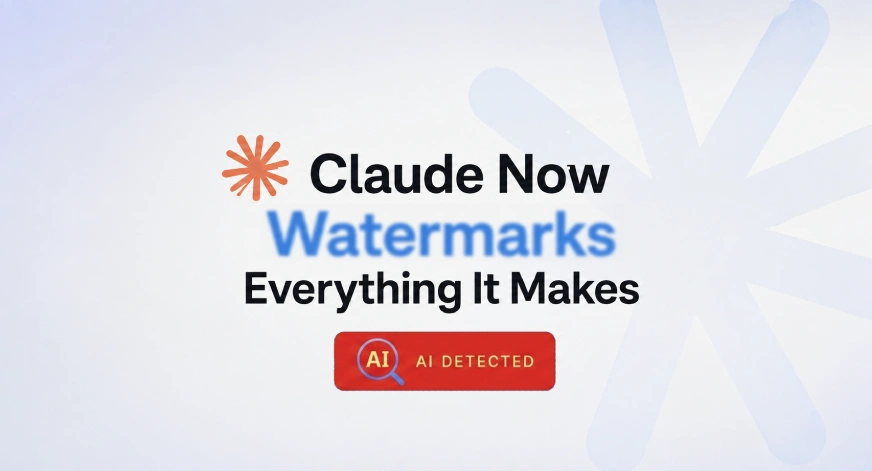
Explore how Claude's new watermarking builds trust in AI-generated content.
Since August 2nd, 2026, Claude has embedded a hidden watermark in all text it generates, while files receive a digital signature. This move aligns Anthropic with the EU AI Act's Code of Practice on Transparency. It is a straightforward step toward accountability, though the quiet nature of the tech raises questions about how users will actually perceive it. For deeper context on how we interact with AI outputs, our piece on talking to an AI clone offers a fitting companion.

Anthropic brings text watermarking to its AI models to ensure transparency
Anthropic is adding watermarks to text generated by its AI models, and it's extending that support to older versions too. That's a practical move toward transparency, one that acknowledges how easily synthetic content can blur into human work. We've long argued that trust in AI depends on clear attribution, and this feels like a step in the right direction. For more on how Anthropic is shaping its infrastructure bets, our piece on its Akamai cloud commitment offers useful context.
Three Lessons from 400,000 Sessions on What Actually Works
For years, we treated Claude Code workflows as personal preference. Pick your mode, set your memory, move on. That thinking was comfortable, but it was also wrong. Anthropic analyzed roughly 400,000 sessions from over 235,000 users, scoring them against hard evidence of success: passing tests, landed commits, and confirmed user satisfaction. The result? Best practices are not a matter of taste. They are measurable, and they can be learned. This is what the data actually shows, and it is worth your attention.

MacPaw brings on-device AI to developers with Liquid models
MacPaw is bringing its AI assistant Eney on-device, tapping Liquid AI's models to give developers in its app store a faster, more private path to inference. It's a practical move that sidesteps cloud dependency while keeping performance local. We see this as a natural step for tools that should feel responsive, not remote. For more on how adaptive systems behave in real settings, our piece "Evolve Your Recommendations: Real-World Insights on Adaptive Systems" offers useful context worth exploring.