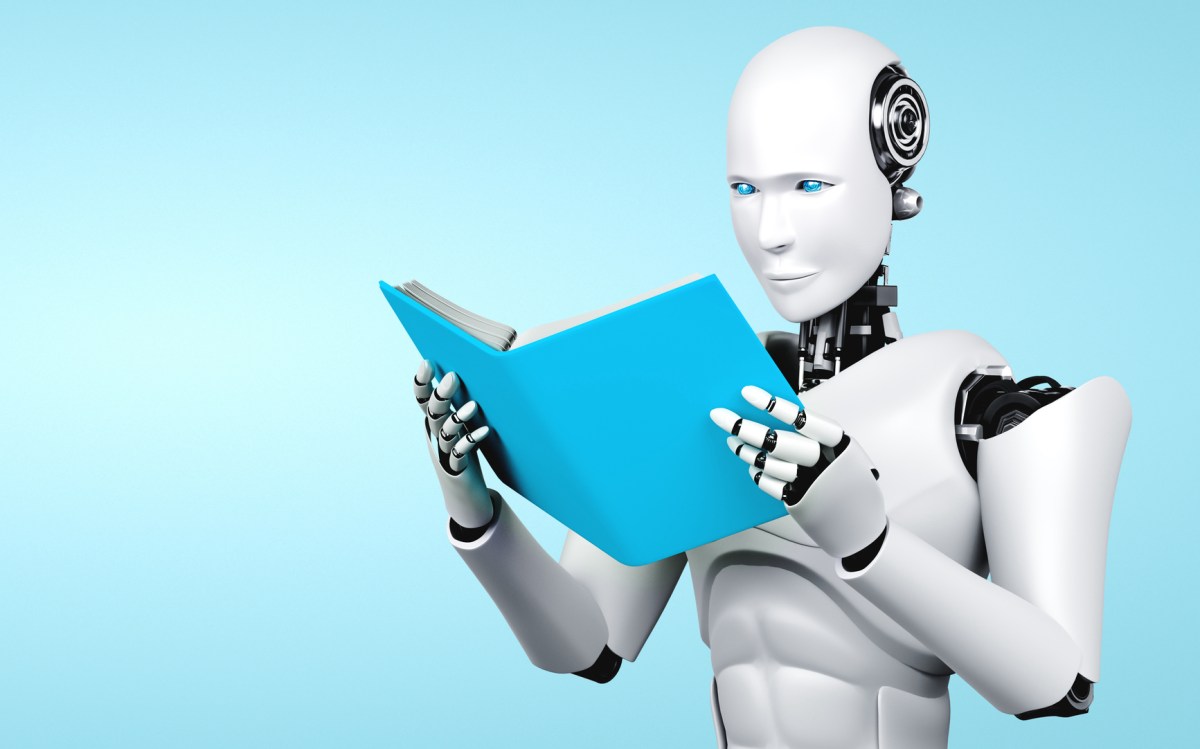
The question of whether AI models can legally train on copyrighted books is the wrong question. The better question is whether the people building these systems actually believe they can build the future on a foundation of taking something that was never offered to them. Most published authors have, without their knowledge or consent, contributed to the development of the same AI tools that threaten to undermine their livelihoods. That seems illegal, right? The honest answer is that it's complicated, but complicated isn't the same as defensible. We're watching a generation of AI tools get trained on borrowed work, and the industry is treating the moral weight of that decision like a legal footnote rather than the core issue it actually is.
For our readers who work with data and models every day, this isn't an abstract legal debate. It's the same problem you face when your training data contains AI slop before it skews your model. You wouldn't knowingly build a sentiment model on biased or mislabeled reviews and then act surprised when the results are unreliable. The same logic applies here. When a model is trained on thousands of copyrighted books, the output is not a neutral reflection of language. It's a reflection of specific voices, styles, and ideas that were absorbed without permission. The technical community has been quick to point out that models don't "copy" in the traditional sense, but that argument misses the point. The model doesn't need to reproduce a sentence to have internalized the structure, tone, and reasoning of an author. That's the uncomfortable truth that legal frameworks haven't caught up with yet.
This is where the conversation gets practical for the people building and deploying these systems. If you're relying on AI tools that were trained on unlicensed books, you're not just taking on legal risk. You're building on a shaky ethical foundation that will eventually crack. We've seen how computer vision models optimized for mobile face real-world constraints that no amount of clever engineering can fix. Similarly, no amount of fine-tuning or alignment will resolve the fundamental tension of using unauthorized work as a starting point. The authors who are being replaced by these tools are not anonymous data points. They're people with careers, families, and decades of craft. When you ignore that, you're not just making a legal mistake. You're making a human one.
What we would tell a reader who asks us directly is this: don't wait for the courts to decide whether this is ethical. The law will eventually catch up, but by then, the damage will already be done. The real question is whether you want to be on the right side of that line when it's drawn. We're not saying you should abandon AI tools altogether. That's not realistic, and it's not the point. But you should ask harder questions about where your models come from, who was involved in their creation, and whether the people whose work made them possible were ever given a seat at the table. The takeaway is simple: if you can't trace the origin of your training data, you're not managing risk. You're just hoping it doesn't catch up with you. And as the Forrester function shows in machine learning, the underlying assumptions matter as much as the output. The next time someone tells you this is just a legal gray area, remember that gray is easy to hide in. The question is whether you're willing to stand in the light.