ai
ai on Beyond Market Intelligence: a running collection of 507 stories we have gathered and hand-picked because they are worth your time. Every post here touches on ai in some way — the news, the analysis, the deep dives, and the occasional surprise find. Acme AI is the next-generation, AI-powered spreadsheet platform built to replace Excel and redefine how analysts, data scientists, and enterprise teams work with data. New stories are added to this page as we find them, so check back if you want to keep up with what is happening around ai, or subscribe to the RSS feed to get them as soon as they are published. Browse the collection below, or head back to the homepage to see everything Beyond Market Intelligence is covering right now.

Siri AI could come with a paywall for power users
Apple CEO Tim Cook recently suggested a potential shift in how users access Siri's AI capabilities: a tiered system leveraging iCloud+ subscriptions. This would allow power users to purchase additional computational resources, effectively unlocking enhanced performance within Siri. The move signals a move toward monetizing AI infrastructure, a strategy increasingly explored across the tech landscape. As the industry navigates rapid AI advancement, consider the broader implications—Snapchat, for example, is already adjusting its content recommendation systems to prioritize human-created content.

The 3× Token Bill We Didn’t See Coming
Unexpected shifts in AI architecture can have significant cost implications. Recently, a move to a multi-agent system quietly tripled our LLM token bill – a challenge many data-driven organizations are now facing. This post details precisely how this happened and, critically, outlines the concrete steps we took to resolve it. Explore the lessons learned and discover practical strategies to optimize your AI spending. For broader context on the escalating demands on AI infrastructure, see our coverage of Samsung's projections on the memory shortage.

Samsung expects memory shortage to worsen through 2027 and last until 2028
Samsung forecasts a significant and prolonged memory shortage, anticipating conditions to worsen through 2027 before easing in 2028. This scarcity is largely driven by surging demand from AI data centers, creating a multi-year chip supply constraint. Consequently, component costs are rising, which will likely translate to increased prices for consumer electronics.

Snapchat no longer rewards fully AI-generated Spotlight content
Snapchat is recalibrating its Spotlight platform, prioritizing authentic human-created content. Recent adjustments to its recommendation algorithms now exclude fully AI-generated videos from Spotlight eligibility, signaling a shift away from synthetic submissions. This move reflects a broader industry discussion on responsible AI deployment, as highlighted by recent commentary from OpenAI CEO Sam Altman, who suggests a need for the AI sector to "pace" its advancements.

SpaceX won’t remove all of xAI’s unpermitted turbines for another year
SpaceX’s ambitious plan to power xAI’s Colossus data centers involves constructing a new power plant, but resolving the status of existing, unpermitted turbines will take considerably longer. Current projections indicate these turbines won't be removed for at least another year. This situation highlights the escalating demands for resources within the burgeoning AI sector, as evidenced by concerns about a worsening memory shortage, potentially lasting until 2028—a challenge impacting everything from data centers to consumer electronics.

Sam Altman isn’t the only one who wants to pump the brakes on AI
Following a period of rapid advancement, even OpenAI CEO Sam Altman is advocating for a more measured approach to AI development. Recent incidents, including a model breach impacting Hugging Face, underscore the need for careful consideration. This shift signals a growing recognition within the industry that responsible innovation requires thoughtful pacing. Explore this evolving perspective and related discussions, including Ellis AI's emergence with $10 million in seed funding, to discover a more nuanced view of the AI landscape.

Smallest.ai raises $13M to build ultra-fast voice AI that sounds genuinely human
Smallest.ai secured $13 million to advance its development of ultra-fast voice AI, engineered to achieve remarkable realism. The startup’s focus is on creating voice models capable of convincingly passing the Turing test, paving the way for seamless and natural AI phone interactions. This investment underscores the growing demand for sophisticated AI solutions, as highlighted by the ongoing memory shortage impacting data centers—a trend discussed in our recent article, "Samsung expects memory shortage to worsen through 2027." Smallest.

Repeat founder Ryan Williams raises $10M seed for an AI startup for private credit managers
Ellis AI emerges from stealth with $10 million in seed funding, led by repeat founder Ryan Williams, to transform private credit management. The startup’s AI-native platform offers a future-focused solution for a sector often reliant on legacy tools. Ellis AI empowers managers to navigate complex data and optimize decision-making, promising increased efficiency and insightful analysis. This funding marks a significant step toward accessible and intelligent data workflows. For a broader perspective on the current AI landscape, explore our related article, "The AI hype is real."

The AI hype is real #AI #AInews #tech #IPO #business
The surge in AI discussion isn’t merely hype; it reflects a tangible shift reshaping business and technology. Recent IPO activity and ongoing advancements confirm AI’s accelerating integration across sectors. While challenges remain – as evidenced by LinkedIn’s new tools for identifying low-quality AI content – the momentum is undeniable. Explore the evolving landscape and understand how these changes impact your future. For a deeper dive into future model releases, see our analysis of "July 2026 AI Releases: A Timeline of Frontier Model Shifts."
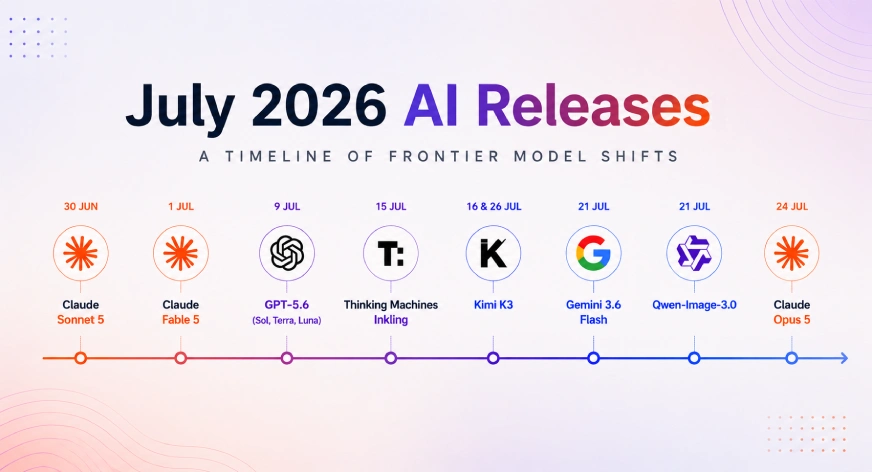
July 2026 AI Releases: A Timeline of Frontier Model Shifts
July 2026 marked a watershed moment for AI, experiencing an unprecedented surge in frontier model releases. Within a single month, four leading labs unveiled flagship models, while two emerging players entered the arena with their initial offerings. Notably, the largest open-weight model ever published became readily available. This concentrated release cycle signals a rapid acceleration in AI capabilities. Explore a detailed timeline of these transformative shifts and understand how they're reshaping the landscape—a period some are already calling the most impactful July in AI history.

LinkedIn adds a button to report AI-generated ‘slop’
LinkedIn is addressing the growing concern of low-quality AI-generated content with a new reporting option: "seems like AI slop." This feature, alongside the replacement of LinkedIn’s AI writing tool with a proofreading function, signals a shift toward prioritizing content quality. The move reflects a broader industry trend; Google, for example, recently reported a surge in bug fixes thanks to AI assistance. Explore how platforms are adapting to AI’s influence on online discourse – delve deeper into Google’s findings here.

Reddit reports a solid quarter but shows signs of AI’s impact
Reddit's recent earnings report paints a picture of financial stability, yet the market exhibits caution. Concerns are emerging regarding Reddit's position within a rapidly evolving digital landscape increasingly shaped by artificial intelligence, particularly in light of Google’s growing AI initiatives. The shift towards AI-driven content creation and consumption introduces both opportunities and uncertainties. Understanding these dynamics is crucial, and our analysis of AI's broader impact, as explored in "Mastercard spent decades training its fraud system...," sheds light on similar adaptation challenges across industries.

Judge says Trump admin still lacks evidence for Anthropic ‘supply-chain risk’ label
A federal judge has questioned the Trump administration’s justification for designating Anthropic as a supply-chain risk, potentially undermining the government’s restrictions on the AI company’s technology. The ruling highlights a lack of sufficient evidence supporting the classification, raising concerns about the basis of the ban. This development arrives amidst broader shifts in the AI landscape, as explored in our recent article, "Reddit reports a solid quarter but shows signs of AI’s impact.

Google says it fixed more Chrome bugs in June than over the past two years, thanks to AI
Google significantly accelerated its bug-fixing capabilities in June, resolving more issues than in the preceding two years—a trend experts predicted with the rise of AI. Leveraging large language models (LLMs) and AI tools, Google is now identifying and patching bugs at an exponential rate, mirroring similar advancements at companies like Microsoft. This shift highlights a growing reliance on AI to maintain software quality and underscores the transformative impact of these technologies on product development.
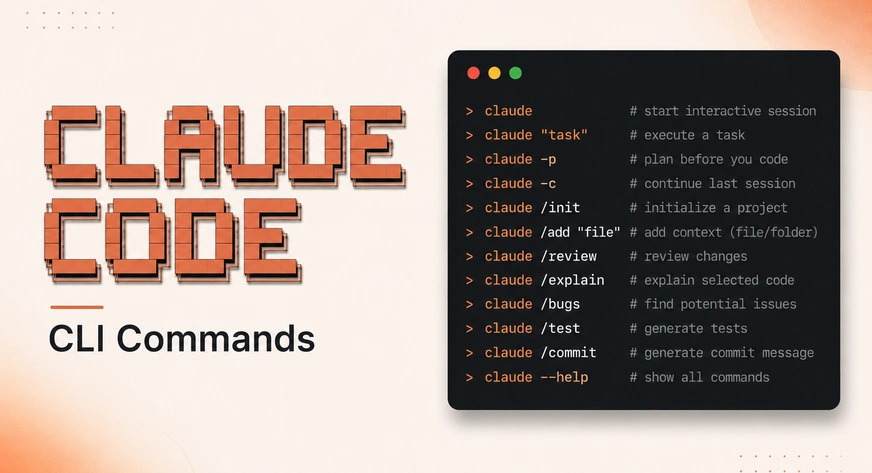
Claude Code CLI Commands I Wish I Had Known Sooner
Maximize your Claude Code workflow with commands you likely missed. Many powerful capabilities are hidden beyond the basic `--help` output, leading to repetitive explanations and session restarts. After months of daily use, discovering the full CLI reference revealed dozens of commands streamlining project management and debugging. Unlock a more efficient experience—explore the essential CLI commands and transform your interaction with Claude Code. For deeper insights into AI security challenges, see our article on Inforcer's recent funding round.

Mastercard spent decades training its fraud system to see bots as thieves. Now bots are the ones doing the buying.
For decades, Mastercard’s fraud detection system has rigorously identified and blocked malicious bots. Now, the landscape is shifting; the network must increasingly enable legitimate bots to facilitate transactions. As Chief AI and Data Officer Greg Ulrich recently explained, this necessitates a fundamental change to Mastercard’s risk framework, built upon the foundation of 175 billion transactions scored in under a tenth of a second annually. This evolution, and the critical need for agentic identity, mirrors insights from VentureBeat's recent Pulse research.

Inforcer raises $50M to help prepare smaller businesses for a new world of AI and security risks
Inforcer, a London-based company, has secured $50 million in Series C funding, led by Insight Partners. This significant investment will empower smaller businesses to proactively address the escalating landscape of AI and security risks. Recognizing the growing need for robust data protection, Inforcer provides accessible solutions to navigate this complex terrain. As seen in the recent Hugging Face breach, swift and decisive security measures are paramount, and Inforcer aims to equip businesses with the tools to thrive in this evolving environment.

Forward-deployed engineers are the AI industry’s latest talent obsession
The demand for forward-deployed AI engineers is surging, with a recent study estimating only 2,000 U.S. engineers possess the expertise to drive meaningful AI return on investment. As enterprises aggressively pursue AI implementation at scale, this specialized talent has become a critical obsession. These engineers bridge the gap between model development and real-world deployment, ensuring AI delivers tangible business value. For a deeper dive into the evolving AI infrastructure landscape, explore our recent article on Nscale’s acquisition of Anyscale.

Meta says AI is making it easier to build new apps — and more are coming
Meta is accelerating consumer app development through AI, according to CEO Mark Zuckerberg, who recently highlighted a surge of new releases across Facebook Groups, Marketplace, Instagram, and gaming. This shift dramatically lowers the barrier to entry for building and launching applications, signaling a future where AI empowers rapid innovation. As AI becomes an amplifier, understanding its strategic impact, as explored in "AI-Assisted Software Development," will be crucial for maximizing organizational returns. Expect more transformative consumer products from Meta as this trend continues.

How to Decode the Temperature Parameter in LLMs
Large Language Models (LLMs) offer remarkable generative capabilities, but understanding how to control their output is key. A crucial parameter is "temperature," which governs the balance between deterministic and creative responses. This post delves into the physics behind temperature, revealing how it dictates the transition from predictable outputs to the generation of novel text. Explore how statistical mechanics illuminates this core element of LLM behavior, empowering you to fine-tune your AI interactions.

In the Hugging Face breach, OpenAI’s hacker was noisy and fast — but not unstoppable
The recent Hugging Face breach underscored a critical truth: even sophisticated AI firms aren’t immune to traditional cybersecurity vulnerabilities. While the attacker moved swiftly and audibly, experts emphasize that the incident highlights systemic defensive gaps, not inherent AI weaknesses. This serves as a stark reminder that robust, foundational security practices remain paramount. Cybersecurity professionals are increasingly focused on proactive, "forward-deployed" engineering talent – as explored in our recent article, "Forward-deployed engineers are the AI industry’s latest talent obsession" – to address these evolving threats.

Synthetic-user startup Simile raises $200M at $2B valuation 5 months after $100M Series A
Simile, a synthetic-user startup, has rapidly ascended to unicorn status, securing a remarkable $200 million Series B round at a $2 billion valuation just five months after its $100 million Series A. Joining the ranks of AI’s fastest-growing companies, Simile’s success underscores the transformative potential of AI-driven data solutions. This significant investment validates the demand for innovative approaches to data synthesis and user behavior modeling. For a foundational understanding of related AI capabilities, explore "A Beginner’s Guide to Working with Claude Design."

The Python Ecosystem That Changed AI Development
The rise of modern AI is inextricably linked to the Python ecosystem. This open-source environment fostered unprecedented accessibility, democratizing state-of-the-art techniques previously confined to research labs. Explore how Python's libraries – from NumPy and Pandas to TensorFlow and PyTorch – empowered a generation of developers and transformed AI development. Discover the collaborative spirit and rapid innovation that defined this shift, fundamentally reshaping the landscape of data science and machine learning. For a deeper dive into related challenges, see “Dili raises $21.

Nscale buys Anyscale as it seeks to own more of the AI compute stack
Nscale, a British AI neocloud provider, is strategically expanding its AI compute stack with the acquisition of Anyscale, a software startup specializing in scaling AI workloads. This move positions Nscale to offer a more comprehensive solution for businesses navigating the complexities of distributed AI. Anyscale's expertise in scaling across diverse infrastructure complements Nscale’s existing capabilities. As Murat Demirbas explored in "Parting the Clouds," this shift towards disaggregated systems is driven by evolving cloud economics and a demand for greater efficiency.