Claude Code CLI Commands I Wish I Had Known Sooner
Our take
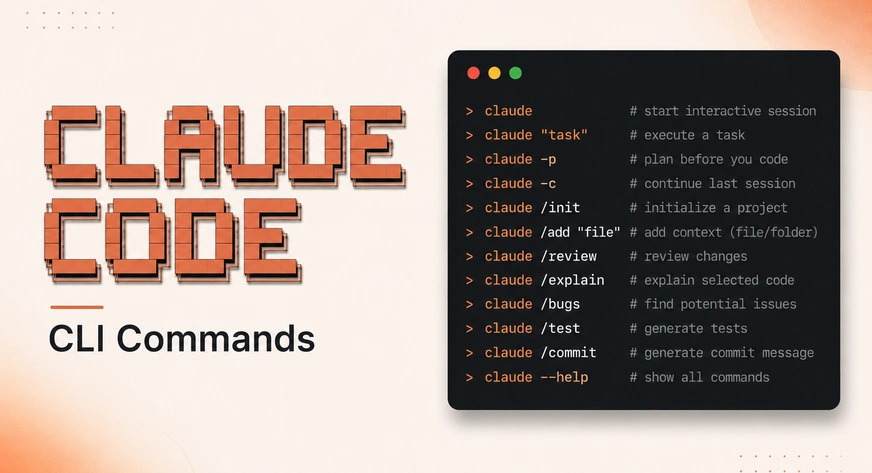
The frustration detailed in the Analytics Vidhya post, “Claude Code CLI Commands I Wish I Had Known Sooner,” resonates deeply with anyone venturing into the world of AI-assisted coding. It highlights a critical, often overlooked, challenge: the discoverability of powerful features within complex tools. For months, the author diligently used Claude Code, a valuable asset for developers, only to stumble upon a wealth of command-line interface (CLI) capabilities hidden beyond the basic `--help` output. This situation isn’t unique to Claude Code; it’s a recurring pattern across many AI platforms where the full potential remains locked away, requiring dedicated exploration and often, accidental discovery. This mirrors a broader trend where the user experience, particularly for power users, doesn't always prioritize surfacing the entire spectrum of functionality. The need for robust documentation and intuitive onboarding processes becomes paramount, especially as the AI landscape rapidly expands. Consider, for instance, how Mastercard spent decades training its fraud system to recognize bots, a sophisticated undertaking that required deep understanding and iterative refinement—a process that now finds itself facing a new challenge as bots themselves become purchasing agents [Mastercard spent decades training its fraud system to see bots as thieves].
The core issue isn't simply about the existence of hidden commands, but the impact on developer productivity and the overall adoption of these tools. Repeatedly re-explaining project structures and context to an AI assistant, as the author experienced, is a significant time sink. Imagine the cumulative effect across development teams. This points to an opportunity for significant improvement in how AI tools are designed and presented, focusing on proactive feature discovery and streamlining workflows. Companies like Inforcer, addressing the emerging AI and security risk landscape for small businesses, demonstrate a growing awareness of the need for user-friendly security and operational tools [Inforcer raises $50M to help prepare smaller businesses for a new world of AI and security risks]. The complexities inherent in AI adoption necessitate a shift towards simplifying the user journey, enabling developers to quickly grasp and leverage the full capabilities of available tools. The demand for forward-deployed engineers who can translate AI potential into tangible business value further underscores this need for accessible and efficient tooling [Forward-deployed engineers are the AI industry’s latest talent obsession].
The revelation about Claude Code’s CLI commands serves as a valuable reminder that even established AI platforms are not immune to usability shortcomings. It underscores the importance of continuous evaluation and refinement of user interfaces and documentation, particularly as AI models become increasingly sophisticated. While the initial promise of AI-assisted coding is compelling – boosting productivity, accelerating development cycles, and reducing errors – realizing that promise hinges on ensuring that users can easily access and utilize the full suite of available features. The incident highlights a gap between the powerful underlying technology and the user experience, a gap that needs to be addressed to maximize the value derived from these tools. It’s not enough to simply build powerful AI; it's equally crucial to design it in a way that empowers developers to harness that power effectively.
Looking ahead, it's likely we’ll see a greater emphasis on proactive feature discovery within AI development tools. Expect to see more intelligent onboarding experiences, contextual help systems, and intuitive interfaces that guide users towards advanced functionalities. Furthermore, the rise of community-driven documentation and shared workflows will play a crucial role in surfacing hidden capabilities and fostering a more collaborative development environment. The question now is: how quickly will AI tool developers prioritize usability and discoverability to ensure widespread adoption and truly unlock the transformative potential of AI-assisted coding?
I used Claude Code daily for months before realizing that claude --help hides many of its most useful capabilities. I kept restarting fresh sessions, repeatedly explaining the same project structure, simply because I did not know a better workflow existed. While debugging an unrelated issue, I discovered the full CLI reference: dozens of commands and […]
The post Claude Code CLI Commands I Wish I Had Known Sooner appeared first on Analytics Vidhya.
Read on the original site
Open the publisher's page for the full experience