July 2026 AI Releases: A Timeline of Frontier Model Shifts
Our take
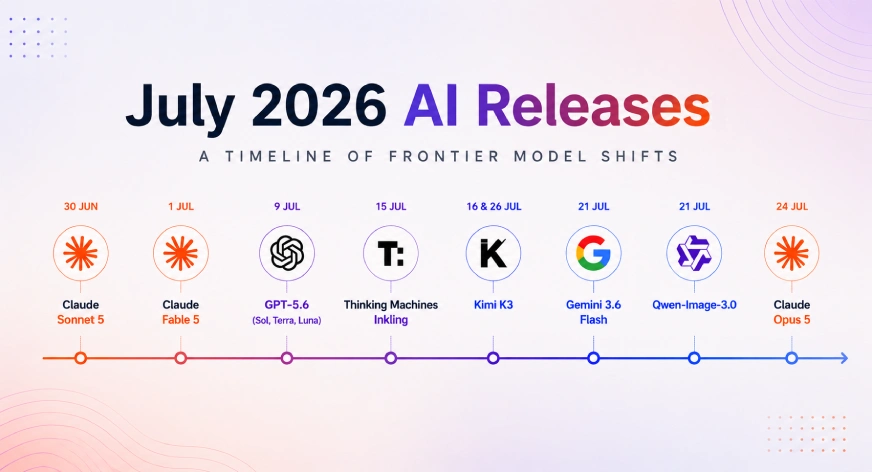
July 2026 was undeniably a watershed moment for the AI landscape, as evidenced by the sheer volume of frontier model releases detailed in Analytics Vidhya’s recent report. The rapid proliferation of these models – four flagship releases from established labs, debuts from two well-funded newcomers, and the unveiling of the largest open-weight model to date – signals a maturation of the field beyond the hype cycles of earlier years. This isn’t merely about more models; it’s about a diversification of approaches and accessibility, potentially reshaping how organizations leverage AI. The surge also highlights the ongoing tension between proprietary development and open-source collaboration, a dynamic we’re seeing reflected elsewhere, such as LinkedIn’s efforts to combat low-quality AI-generated content [LinkedIn adds a button to report AI-generated ‘slop’]. Furthermore, Reddit’s recent financial report, while generally positive, also reveals the early impacts of AI on content creation and user engagement [Reddit reports a solid quarter but shows signs of AI’s impact], demonstrating the tangible shifts already underway.
The significance of this flurry of releases extends beyond the technical specifications of individual models. It points to a broader acceleration in the democratization of advanced AI capabilities. Previously, access to these frontier models was largely confined to a handful of powerful organizations. The availability of a substantial open-weight model, in particular, lowers the barrier to entry for researchers, developers, and smaller businesses, potentially fostering innovation in unexpected corners of the market. This shift is occurring against a backdrop of ongoing regulatory scrutiny and debate, as exemplified by the recent judicial review of the Anthropic supply-chain risk label [Judge says Trump admin still lacks evidence for Anthropic ‘supply-chain risk’ label]. The legal landscape is struggling to keep pace with the technological advancements, creating an environment of both opportunity and uncertainty.
Looking beyond the immediate impact on model performance, the intensity of this release cycle underscores a fundamental change in the competitive dynamics of the AI industry. The traditional model of a few dominant players slowly releasing incremental improvements is giving way to a more aggressive, iterative approach. Companies are clearly feeling pressure to demonstrate progress and capture market share, leading to a rapid cycle of innovation and refinement. This intensification has implications for the resources required to stay competitive, potentially favoring larger organizations with deep pockets and extensive engineering talent. However, the increased accessibility of open-weight models also levels the playing field to some extent, allowing smaller teams to build on existing foundations and carve out niche applications. This accelerates the need for efficient data management and intelligent tooling to make sense of the output from these models.
Ultimately, July 2026’s AI model releases represent a pivotal moment—a clear indication that we’ve moved beyond the exploratory phase and are entering a period of rapid application and integration. The challenge now lies not just in building ever-larger and more powerful models, but in effectively deploying them to solve real-world problems and create tangible value. A crucial question to watch moving forward is how this proliferation of models will impact the development of AI-native applications—will it lead to a fragmentation of the ecosystem, or will it catalyze the emergence of new, more specialized platforms that can harness the power of these diverse capabilities?
July 2026 was the busiest month for frontier model releases the field has seen. Four major labs shipped flagship or near-flagship models, two well funded newcomers shipped their first, and the largest open weight model ever published went up for download, all inside thirty one days. Read as a list, the top AI models in July […]
The post July 2026 AI Releases: A Timeline of Frontier Model Shifts appeared first on Analytics Vidhya.
Read on the original site
Open the publisher's page for the full experience