algorithms
Beyond Market Intelligence keeps algorithms in one place: 82 stories so far. The section currently leads with “How AI is reshaping the music upload landscape at Deezer”, “From AI fundamentals to LLMs: a free five-course roadmap”, and “When Trust Fails, a New Framework for Data Decisions Emerges”. Deezer reports that over 50% of daily uploads are now AI-generated, with more than 90,000 such tracks landing on the platform each day in June. A five-course roadmap won't just hand you theory; it walks you from classical algorithms to training LLMs from scratch. Acme AI is the next-generation, AI-powered spreadsheet platform built to replace Excel and redefine how analysts, data scientists, and enterprise teams work… The list below is every algorithms story on Beyond Market Intelligence, newest first.

How AI is reshaping the music upload landscape at Deezer
Deezer reports that over 50% of daily uploads are now AI-generated, with more than 90,000 such tracks landing on the platform each day in June. That is a staggering volume of synthetic sound. It raises questions about what we are actually listening to and how we verify authenticity. This feels like the right moment to pause and examine our relationship with AI output. Our piece on talking to an AI clone offers a useful starting point for that reflection.
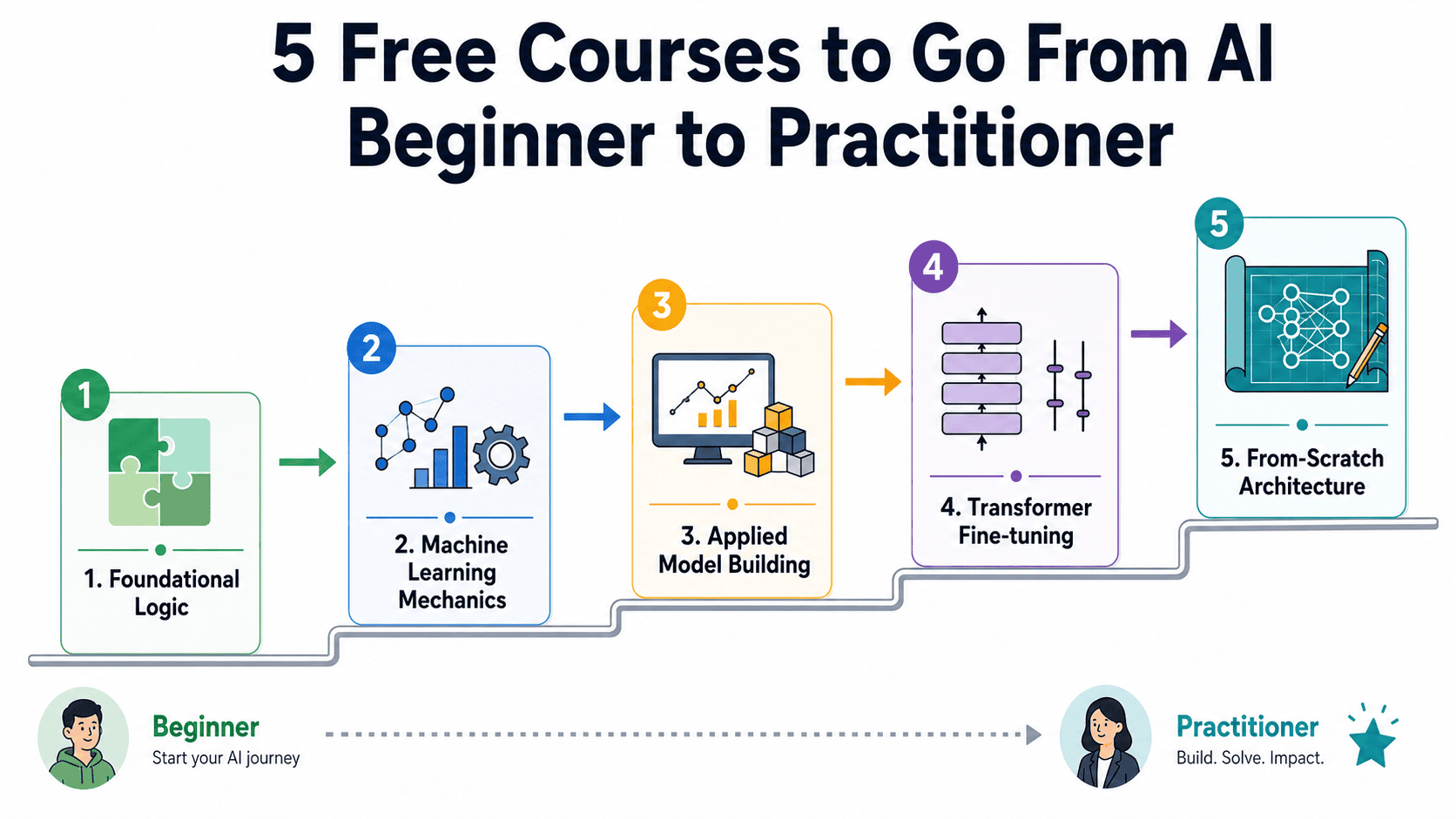
From AI fundamentals to LLMs: a free five-course roadmap
A five-course roadmap won't just hand you theory; it walks you from classical algorithms to training LLMs from scratch. That's the kind of practical progression that turns curiosity into real capability. If you've been hesitant about where to start, this is your entry point. And once you grasp the mechanics, you might find our piece on questioning AI clones a useful counterweight to the technical rush. Explore the courses, build the skills, and let the work speak for itself.

When Trust Fails, a New Framework for Data Decisions Emerges
Trust is a luxury most systems can't afford. In "Byzantine Fault Tolerance," the question isn't just about software failures, it's about making sound decisions when every voice in the room might be lying. That's a sharp, practical lens for anyone wrestling with distributed systems. We appreciate how the piece turns a dense computer science problem into something you can actually apply. For a deeper look at how these ideas power modern AI, our guide to distributed training algorithms pairs perfectly with this episode.

AI's hidden promise demands we look past the familiar surface.
Christopher Nolan calls AI an obvious "Trojan horse," and his warning lands with the weight of someone who knows how stories end. The "Odyssey" director's point isn't about fear, but about foresight. We all see the gift, yet the real question is whether we're paying attention to what's hidden inside. It's a reminder to stay curious, not complacent, about the tools we invite in.

Explore smarter Python patterns and real-world projects to transform your workflow
If-else chains slow you down, and this week we're showing you a cleaner path. The Registry Pattern in Python offers a smarter, more maintainable approach to dispatching logic, and we're glad to spotlight it. Alongside that, you'll find practical SQL projects to strengthen your portfolio and YouTube channels that keep your AI knowledge sharp. For a deeper reflection on where this technology leads, check out "Talking to My AI Clone Taught Me to Question the Tech" for a thoughtful counterpoint on human interaction with AI.
Stay Ahead Without the Overwhelm: Your AI News Strategy
Feeling left behind in the AI/ML news cycle is common, especially when a single newsletter only scratches the surface. The real challenge isn't finding more information; it's curating a stream that fits your time and focus. A complete approach layers a trusted daily digest with targeted X/Twitter lists of researchers, plus a weekly podcast for deep dives.

Physics-Based Computing Offers a New Path for AI's Energy Challenge
Analog chips are making a comeback, and it's about time we paid attention. The promise is real: computing with physics instead of digital logic could ease AI's energy hunger. But here's the catch, noise nearly killed this idea once before. That's the tension this piece explores with the clarity we need. It's a smart, grounded look at whether analog can finally deliver, or drown in its own signal.

A Practical 6-Week Blueprint for Data Structures and ML Interviews
Six weeks. That is the timeline one practitioner set for mastering data structures and algorithms specifically for machine learning interviews. The result was a clear, repeatable process built on targeted questions and deliberate practice. We appreciate the focus on strategy over rote memorization. It is a practical reminder that acing technical interviews is about method, not magic. For those exploring how mathematical concepts support ML, our related piece on the Forrester function offers a useful starting point.

Explore how AI unlocks new discoveries in life sciences funding
Miles Wang, an OpenAI researcher, is reportedly in talks to launch an AI-driven drug discovery startup with a $2 billion valuation. That's a striking signal of where the industry sees the next breakthrough. Investors are betting that AI can tackle the messy, high-stakes work of life sciences, not just automate spreadsheets. It's a bold move, and one that feels overdue. For anyone tracking how AI moves beyond data management into real-world impact, this is worth watching closely.

Unlocking Efficiency by Compressing Data Into Lower Dimensions
Compressing heavy, unstructured data is one of the biggest hurdles in modern machine learning, and autoencoders offer a surprisingly elegant way forward. By learning to squeeze inputs into a lower-dimensional latent space, they preserve the core context while slashing computational load. It's a practical, accessible approach that turns a complex problem into a manageable workflow. For readers ready to see how this fits into the broader AI toolkit, our guide on distributed algorithms for LLM training pairs naturally with this foundational idea.