algorithms
Beyond Market Intelligence keeps algorithms in one place: 82 stories so far. The section currently leads with “How Stripe Uses Graphs and State Machines to Automate Database Recovery”, “From Spotify to shopping: AI taste prediction arrives for e-commerce”, and “Find Your Next AI Project and Contribute with Purpose”. When Stripe's database misbehaves, they don't wait for a human to save the day. A group of former Spotify engineers has raised $10 million to apply the same recommendation engine that powers music discovery to online shopping. Acme AI is the next-generation, AI-powered spreadsheet platform built to replace Excel and redefine how analysts, data scientists, and enterprise teams work… The list below is every algorithms story on Beyond Market Intelligence, newest first.

How Stripe Uses Graphs and State Machines to Automate Database Recovery
When Stripe's database misbehaves, they don't wait for a human to save the day. Their engineering team models the entire global infrastructure as a graph, then lets search algorithms find the problem while state machines execute the fix. That's a smart shift from reactive firefighting to automated recovery. It's practical, and it shows how mature AI-assisted operations have become. For more on putting intelligent automation to work, our guide on unlocking ChatGPT for work is worth a look.

From Spotify to shopping: AI taste prediction arrives for e-commerce
A group of former Spotify engineers has raised $10 million to apply the same recommendation engine that powers music discovery to online shopping. Their platform predicts which product a shopper wants next, learns general taste, and fine-tunes in real time based on behavior. It is a practical step toward making e-commerce feel less like a search bar and more like a guide. If you are curious about the limits of such personalization, our piece on talking to an AI clone offers a useful counterpoint.
Find Your Next AI Project and Contribute with Purpose
Finding your footing in deep learning takes more than coursework; it takes real-world reps. This user gets that. Their offer to join an active project shows a practical understanding that skills grow fastest when they're tested collaboratively. It's a smart, humble approach. For anyone building AI/ML systems, a contributor who is both eager and self-aware is a rare asset. We hope they find the right team. For more on tackling complex data challenges, exploring the Forrester function might be a useful next step.
Transform raw CSV data into clear executive summaries with AI.
A messy CSV rarely tells a clear story on its own. This guide walks through a repeatable pipeline that cleans the data, surfaces the narrative hidden inside, and turns it into an executive report using Python and AI. It is practical, direct, and built for teams who need answers without endless manual effort. If you are curious about how AI handles real-world data beyond the hype, our piece on verifying AI understanding offers a useful complement to this workflow.
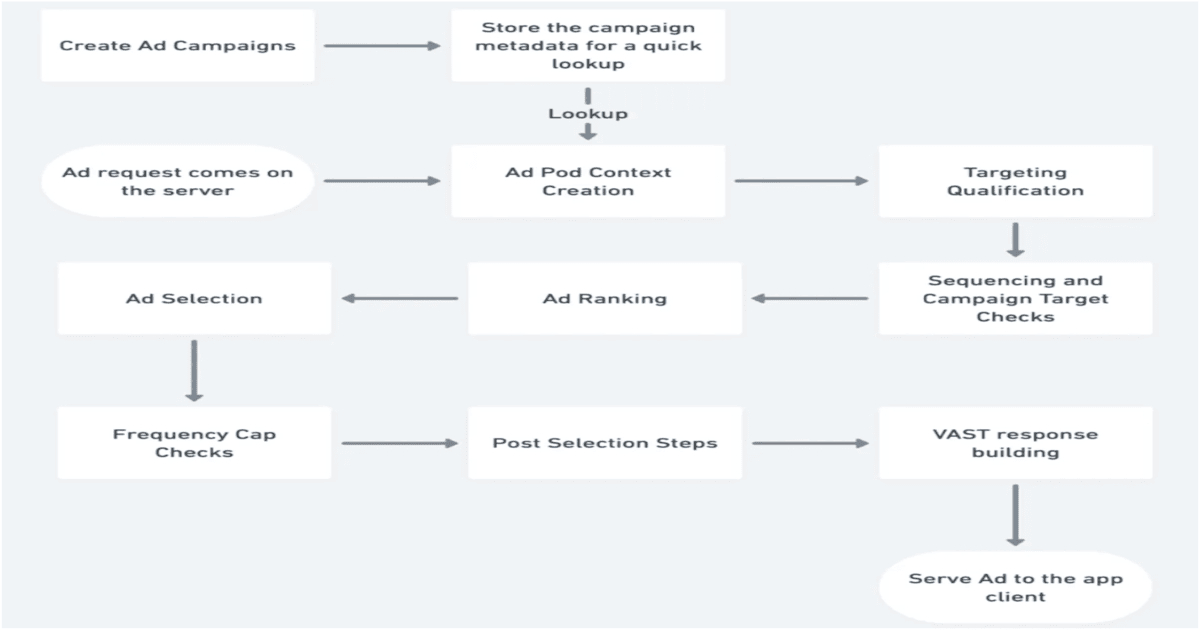
How JioHotstar Coordinates Distributed Systems for Real-Time Ad Selection
When a video streams, the ad request behind it is a distributed engineering feat. JioHotstar's Leela Kumili breaks down the real-time workflow, from ad decisioning and waterfall tiering to pacing algorithms and latency optimization. It's a clear look at how service coordination selects personalized ads without stalling playback. For more on how modern systems handle scale, our piece on the Stateless Model Context Protocol offers a useful counterpoint. This is practical, forward-looking engineering worth your attention.

Unlocking Data Potential by Combining Labelled and Unlabelled Insights
Most of your data sits unlabeled, and that's not a problem to solve, it's an opportunity to leverage. Semi-supervised learning sits between the fully labeled and the entirely unlabeled, using a small amount of guidance to make sense of the larger, messier whole. This primer walks through the algorithms that make that possible and, just as importantly, where they stumble. It's a practical read for anyone who wants to get more from their data without drowning in annotation costs.

Master reasoning budgets to make your AI work smarter, not harder
Controlling how much an LLM thinks before it answers is quietly becoming one of the most practical levers in AI. This post breaks down reasoning effort and token budgets with the kind of clarity that makes you wonder why it took so long to ask. It's not about hype; it's about giving users a dial they can actually turn. If you're tired of guessing why some responses feel overthought or rushed, this is worth your attention.

Beyond the Model: The Human Work That Powers Supply Chain AI
The engine stalled mid-route, and the spreadsheet that should have flagged the issue sat silent. That moment reveals the real work of a Forward-Deployed Engineer: not building the model, but untangling the messy, human systems around it. In one supply chain project, the AI was the easy part; the hard part was embedding it where decisions actually happen.
Demystifying the math behind the algorithms powering modern LLMs
If you've been following the technical reports from Kimi, DeepSeek, Qwen, and GLM, you've likely noticed how much on-policy distillation and GRPO-style algorithms now power the frontier. That's why this deep dive is so timely. It unpacks the maths and code behind these methods, then connects them back to pretraining and supervised fine-tuning. It's a practical resource for anyone wanting to move beyond the hype and actually understand how modern LLMs are trained.
Explore how deeper math in operations research can reshape your data career
You're weighing a real fork in the road: stay deep in data science or branch into operations research. That's not just a title decision; it's about how you want to solve problems. OR is math-heavy, but not beyond what you've already got. Calcs 1-3, linear algebra, and stats are the foundation. You'll add optimization and probability, which are more applied than theoretical. Earning potential is comparable, so let the work itself guide you.

June raises $20 million to make AI deployment simpler and more accessible
June emerged from stealth today with a $20 million pre-seed round, a clear signal that Marc Benioff-backed investors see real potential in simplifying AI adoption. The startup's premise is refreshingly direct: the hardest part of AI isn't building it, it's deploying it without drowning in complexity. That resonates. We've explored the human side of these tools before, like in our piece on questioning AI clones, and this feels like a natural next step.

Explore how AI is reshaping the path forward for autonomous mobility.
The robotaxi industry has reached a fork in the road, and TechCrunch Mobility is here to map both routes. This week, we're digging into how AI is reshaping transportation, from autonomous fleets to the tools we use to build them. It's a moment to explore what works, what doesn't, and what's next. If you're questioning how much trust to place in these systems, our piece on talking to an AI clone offers a grounded reality check.
Rethink your AI strategy for real competitive advantage
Most teams race to build bigger models or chase flashier features, yet they overlook the real advantage: how they frame the problem itself. In this piece, we explore why competing on raw capability misses the point. Instead, focus on what your data actually needs, not what the hype demands. It's a practical reframe. If you're questioning how deeply to trust AI outputs, our piece on verifying your AI's understanding offers a timely companion. The path forward is simpler than the noise suggests.
Explore practical AI tools that simplify data analysis and model understanding
This week's roundup starts with a practical truth: building and deploying your first autonomous agent is no longer a distant ambition. We also break down the machine learning algorithms that still earn their keep, offer a beginner's path to working with Claude, and highlight the best AI tools for data analysis in 2026. For those ready to go deeper, our guide to distributed algorithms pairs well with these beginner fundamentals.

The Autonomous Agent: Your Next Manager Lives in Shared Memory
The sharpest manager in your company might not sleep, and it won't need a coffee break. It will live in shared GPU memory, running a decentralized agentic loop. This systems-level view challenges us to rethink why middle management collapses into protocol and what breaks in today's AI stack. It's a bold, practical look at what autonomous agents need to actually run a business. For a deeper foundation on the mechanics, our guide to distributed training algorithms pairs well here.

From Physics to Prompts: Understanding Temperature in AI Models
The temperature parameter in large language models often reads as a dial for creativity, but its roots run deeper into statistical physics. It's the bridge between deterministic predictions and the generative spark that makes AI feel alive. We find this framing refreshingly clear, cutting through the usual jargon to show how a simple adjustment reshapes output. For more hands-on applications of AI's practical edge, our piece on Meta's AI turning a dull task into $5,350 in yearly savings is worth exploring alongside.
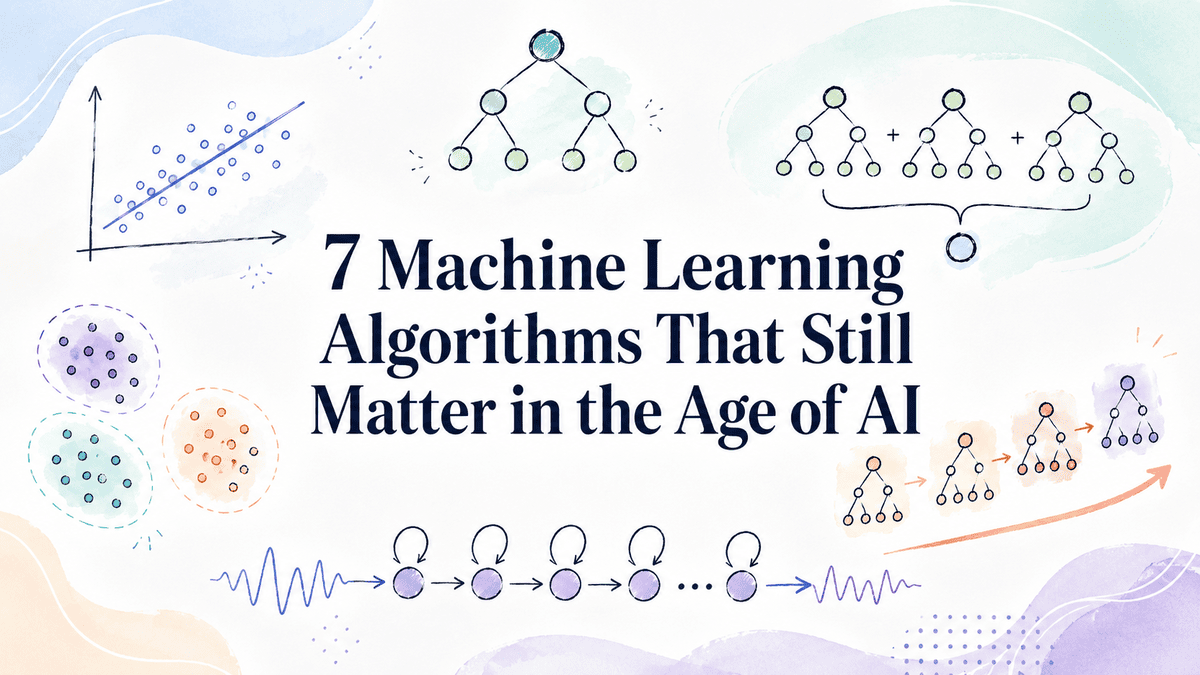
7 Machine Learning Algorithms Powering Smarter Data Workflows
Machine learning is vast, but the fundamentals still carry the weight. Before you reach for LLMs or generative AI, these seven algorithms deserve your attention. They are not flashy, but they are practical, and they handle the heavy lifting in everything from regression to clustering. If you are feeling overwhelmed by the pace of AI, this guide cuts through the noise with clear, working Python code. It is a grounded reminder that mastery starts with the basics.

Building Smarter Routes: Adaptive Heuristics for Complex Pickup-and-Delivery Problems
If you've ever wrestled with a delivery route that spirals into chaos, this one's for you. Los Movimientos, Part II tackles the heavy lifting of pickup-and-delivery problems head-on, using Adaptive Large Neighborhood Search to handle time windows, capacity limits, and mandatory driver breaks. It's a practical, Python-based guide that turns a complex optimization challenge into something you can actually build and adapt. For those ready to level up their coding toolkit, this pairs nicely with "Unlock Python's Potential: Advanced Techniques for Smarter Coding."
Six Principles for Smarter Data Science Beyond the Hype
Harvard Business School Online cuts through the noise with a grounded take on data science and AI. The real insight? It's not about the flashiest algorithm. Clear business goals, trustworthy data, and simple models still carry the day. Careful validation and honest cost assessments keep projects realistic, while human judgment remains the anchor. We appreciate that focus on fundamentals over hype. It is a refreshing, practical counterweight to the constant chase for novelty.

Pangram secures $9M to help you identify AI-generated content
Pangram's $9 million raise lands at a moment when AI-generated text is blurring the line between useful and noisy. The startup's new Pangram 4 model targets that problem directly, with an image detection tool also in research preview. That matters because the real cost of AI slop isn't just clutter; it's the silent skewing of models trained on it. We've seen how easily false positives muddy the data, as our own piece on catching AI slop showed.
From Python to weights: a compiler proves what transformers can express
Most people assume a transformer's capabilities come from training. Rob's compiler challenges that assumption directly. He built a tool that takes a computation graph written in ordinary Python and outputs the weights for a standard Phi-3 model, loadable in vanilla Hugging Face with zero training involved. It's a clever way to isolate what these architectures can express, separate from what they can learn. For a deeper look at how he constructs these proofs, the write-up is worth your time.
The Global Shift in AI Leadership: What It Means for You
The US no longer holds the crown in AI, and that's not a warning, it's an observation worth acting on. Global competitors are closing the gap with faster adoption and bold experimentation, leaving American tech to play catch-up. We've seen how quickly assumptions about AI's limits fall apart, whether it's in training models or questioning what our own tools say back to us. If you're still leaning on legacy systems, this shift should feel like a nudge.

How optimization tames complex delivery routes and restores your sanity
Some problems look simple until they refuse to bend. That's the story behind "Los Movimientos," a pickup-and-delivery puzzle with time windows that pushed its solver to the edge. It's not about the frustration, though; it's about how mathematical optimization turns chaos into a workable route. For anyone who's felt spreadsheet limits, this is a satisfying look at structured problem-solving. And if you're curious how AI handles structure differently, our piece on paragraph navigation in LLMs pairs nicely with it.

How AI is reshaping streaming into one unified experience
For a decade, streaming platforms carved out their own corners: music here, video there. That era is closing. As AI simplifies how we create, organize, and recommend content, those walls are dissolving. Spotify, Netflix, YouTube, and TikTok are no longer just specialists; they are racing to become universal entertainment hubs. It is a bold move toward convenience, and one that could genuinely redefine how we consume media.