automation
automation at Beyond Market Intelligence is a file of 255 stories. The newest of them: “Transform raw CSV data into clear executive summaries with AI.”, “Stop wasting hours on AI output that misses the mark”, and “Musk's focus shifts from cars to AI in Tesla earnings calls”. A messy CSV rarely tells a clear story on its own. Every hour spent untangling AI-generated filler is an hour you don't get back. Acme AI is the next-generation, AI-powered spreadsheet platform built to replace Excel and redefine how analysts, data scientists, and enterprise teams work… The list below is every automation story on Beyond Market Intelligence, newest first.
Transform raw CSV data into clear executive summaries with AI.
A messy CSV rarely tells a clear story on its own. This guide walks through a repeatable pipeline that cleans the data, surfaces the narrative hidden inside, and turns it into an executive report using Python and AI. It is practical, direct, and built for teams who need answers without endless manual effort. If you are curious about how AI handles real-world data beyond the hype, our piece on verifying AI understanding offers a useful complement to this workflow.
Stop wasting hours on AI output that misses the mark
Every hour spent untangling AI-generated filler is an hour you don't get back. This story calls out the real cost of sloppy outputs, and it's not just about wasted minutes. It's about the mental drag of cleaning up noise. We appreciate the push toward sharper, more intentional use of AI. For a deeper look at how AI can mislead even its creators, check out "Talking to My AI Clone Taught Me to Question the Tech." The fix starts with demanding better.

Musk's focus shifts from cars to AI in Tesla earnings calls
Elon Musk now spends half of Tesla's earnings calls talking about robots and AI, not cars. An analysis of the past seven years shows how far the conversation has drifted from the company's core business. That focus is bold, but it raises a real question: what happens to the vehicles while he chases the next machine? For a clearer look at where this tech obsession can lead, our piece on talking to an AI clone offers a grounded counterpoint.

Simplify Your Python Workflow With One Unified Tool
Managing Python dependencies has always meant juggling pip, virtualenv, and Poetry, each with its own quirks. This developer traded all three for a single tool called uv, and the simplicity is hard to argue with. One fast utility now handles package installation, virtual environments, lock files, and even Python version management. It is the kind of consolidation that removes friction without demanding a rewrite of your workflow. If you are tired of context-switching between tools, this approach is worth a closer look.

Explore how internal platforms reduce cognitive load for microservices teams.
Microservices deliver real value only when teams can sustain their pace, and Chris Richardson's presentation gets straight to that challenge. He pairs Team Topologies with internal platforms to cut through complexity, focusing on six concrete patterns, from security to deployment, that keep stream-aligned teams moving. The payoff is a clear strategy for shrinking cognitive load while sidestepping the usual platform traps. It's a practical, grounded take on acceleration. For more ways to simplify technical workflows, our guide, "Unlock ChatGPT for Work," offers a useful parallel.

Build smarter AI workflows with structured evaluation pipelines
Structured evaluation pipelines often feel like a chore, but they're the difference between guessing and knowing. This approach from /u/rhazn digs into how to build checks that actually measure your AI's output, not just admire it. It's practical, and that's what we need. If you're still wrestling with whether your models truly understand context, our piece on verifying an AI's grasp during tax season pairs well with this mindset. Test, learn, and refine.

Wispr Flow expands capabilities with upcoming AI meeting notetaker
Wispr Flow's updated terms point to a new notetaker designed to turn meetings into summaries and action items. That is a practical step toward reducing the busywork that follows every call. We are encouraged to see the company extend its focus from dictation to follow-through, where so many workflows stall. For readers tracking similar productivity shifts, our piece on Muju Earth Technologies' soil aeration pod shows how simple tools can deliver outsized results. This move feels like a natural next chapter for Wispr Flow.
Build a smarter analytics team by choosing tools that grow with your needs
You're running a one-person analytics operation, and you're asking the right question: not "what's new," but "what's next." Moving from SQL and Snowflake toward a team-ready stack means shifting from writing queries to building systems. Focus on version control, orchestration tools, and cloud-native data engineering. That's where automation lives. Pair it with a solid understanding of MLOps practices. It's less about chasing every package and more about creating reliable pipelines.

Beyond the Model: The Human Work That Powers Supply Chain AI
The engine stalled mid-route, and the spreadsheet that should have flagged the issue sat silent. That moment reveals the real work of a Forward-Deployed Engineer: not building the model, but untangling the messy, human systems around it. In one supply chain project, the AI was the easy part; the hard part was embedding it where decisions actually happen.

Build a free local CLI agent with Python and Ollama from scratch
Building a CLI agent from scratch sounds like a focused challenge, and this guide takes you through it using Python and Ollama without spending a dime. It's a practical, hands-on approach for anyone tired of clicking through menus when a command line could do the work faster. The steps are clear enough to follow, yet they leave room for your own tinkering.

June raises $20 million to make AI deployment simpler and more accessible
June emerged from stealth today with a $20 million pre-seed round, a clear signal that Marc Benioff-backed investors see real potential in simplifying AI adoption. The startup's premise is refreshingly direct: the hardest part of AI isn't building it, it's deploying it without drowning in complexity. That resonates. We've explored the human side of these tools before, like in our piece on questioning AI clones, and this feels like a natural next step.

Explore how AI is reshaping the path forward for autonomous mobility.
The robotaxi industry has reached a fork in the road, and TechCrunch Mobility is here to map both routes. This week, we're digging into how AI is reshaping transportation, from autonomous fleets to the tools we use to build them. It's a moment to explore what works, what doesn't, and what's next. If you're questioning how much trust to place in these systems, our piece on talking to an AI clone offers a grounded reality check.

Build a stateful support agent to transform a 15-minute booking into seconds.
Fifteen minutes to book an appointment is fifteen minutes too many when you know the process can be automated. This guide walks through building a stateful customer support agent with Python, LangGraph, and Langfuse, showing exactly how to replace a tedious workflow with something that actually works. It's a practical, hands-on look at what AI-native tooling can do for everyday tasks. For more on the human side of these systems, check out "Talking to My AI Clone Taught Me to Question the Tech."

How ChatGPT helps parents explore new ways to answer tough questions
Sam Altman is still out here pitching ChatGPT as a parenting tool, and honestly, the enthusiasm is hard to fault. OpenAI's CEO recently floated a "cool use case" for moms and dads, betting that conversational AI can help navigate the messy, unstructured chaos of raising kids. It's an intriguing pitch, even if it raises more questions than answers about dependency and trust.
Why I Stopped Installing Skills and Found a Smarter Workflow
There's a quieter path past the constant churn of installing Claude Skills. I stopped adding them to my workflow, and the shift has been liberating. Instead of stacking tools, I'm focusing on direct conversations with the model, letting it adapt to my specific needs in the moment. It feels less like managing a toolbox and more like collaborating. If you're curious about the limits of this kind of interaction, our piece on talking to an AI clone offers a useful counterpoint.

The Autonomous Agent: Your Next Manager Lives in Shared Memory
The sharpest manager in your company might not sleep, and it won't need a coffee break. It will live in shared GPU memory, running a decentralized agentic loop. This systems-level view challenges us to rethink why middle management collapses into protocol and what breaks in today's AI stack. It's a bold, practical look at what autonomous agents need to actually run a business. For a deeper foundation on the mechanics, our guide to distributed training algorithms pairs well here.

LinkedIn empowers users to flag low-quality AI content with a simple tool
LinkedIn now lets you flag a post as "seems like AI slop," a blunt but practical addition to its reporting tools. It's also swapping its AI writing assistant for a proofreader, which feels like a step toward quality over gimmick. We're glad to see platforms addressing the flood of low-effort content, though the real test is enforcement. For a deeper look at how AI shapes our digital instincts, try "Talking to My AI Clone Taught Me to Question the Tech."

AI tools help Google patch more Chrome bugs in a single month
Google says AI helped it fix more Chrome bugs in June than in the prior two years combined. That is a striking signal, not just about volume, but about how quickly large language models are reshaping the mundane work of security. For two years, experts have warned this day was coming. It is here. The shift is practical, not theoretical. If you are curious how AI is changing the tools you rely on daily, this is worth exploring.
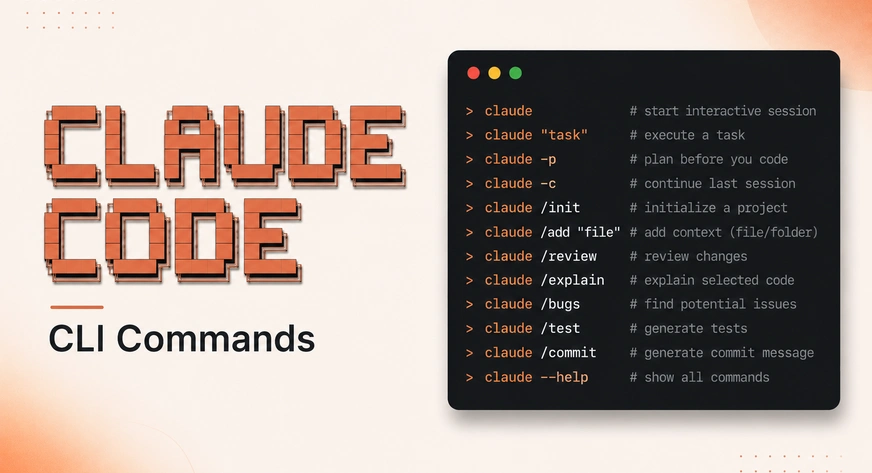
Unlock Hidden Commands to Transform Your CLI Workflow
Months of daily use, and the real power of Claude Code only surfaced by accident. This author kept restarting sessions, re-explaining the same project structure, simply because `claude --help` hides the full picture. It's a familiar frustration, and their discovery of a deeper CLI reference is a practical win for anyone tired of repetitive setup. Digging past the surface reveals a smoother workflow. For more on questioning AI's limits, our piece on talking to an AI clone offers a fitting follow-up.

Streamline Your Coding Agent Workflow for Smarter Task Management
If you're juggling multiple coding agents, the chaos of scattered tasks can quickly become its own project. This guide cuts through the noise, offering a practical way to organize every request and keep your workflow moving. It's a straightforward approach for anyone tired of losing track of what each agent should be doing. For more on how AI handles structured work, our related piece on paragraph structure is worth a look.

When humans must step in, hybrid robotics keeps AI data clean
The Hybrid BRC is Bright Machines' answer to a problem most of us never see: the human hand that breaks the digital record. The company's CEO puts the stakes bluntly, manual assembly can start with first-pass yields as low as 20%. That number is the story. This isn't a hardware tweak. It's an admission that even the most automated factories need people, and the winners will be those who keep humans in the loop without losing the data thread.

New import ban reshapes access to humanoid robots and solar tech
The U.S. government has banned new foreign-made humanoids, robot dogs, and solar inverters, citing national security risks. It's a decisive move that largely targets imports from China, which dominates production in these categories. We see this as a necessary step toward securing critical infrastructure, even if it disrupts supply chains. For a closer look at how automation is evolving elsewhere, check out our piece on "Automate Pipefitting Tasks with a Compact, AI-Powered Robot." The landscape is shifting, and we're tracking what it means for you.

Turn Repetitive Prompts into Reusable Workflows with Custom Skills
If you're tired of re-entering the same validation rules and company standards into Claude for every project, custom Skills offer a more efficient path. This guide walks through packaging reusable instructions and templates so your team stops repeating the busywork. It's a practical fix for inconsistent outputs, and we appreciate how it keeps the focus on productivity rather than hype. For a deeper look at how AI can adapt through context, check out our piece on how agents learn by editing context, not model weights.

Your prompts need a safety net before one rename breaks production.
One variable rename broke every live call. That's the failure mode prompt engineering can't solve. Writing better prompts matters, but managing them safely at scale is where production systems actually live. Treating prompts like contracts, backed by lightweight static analysis that catches breaking changes before they ship, prevents production failures. It's a practical, grounded take on a real operational gap. For a deeper look at how LLMs navigate structure, our related piece on paragraph token space pairs well here.