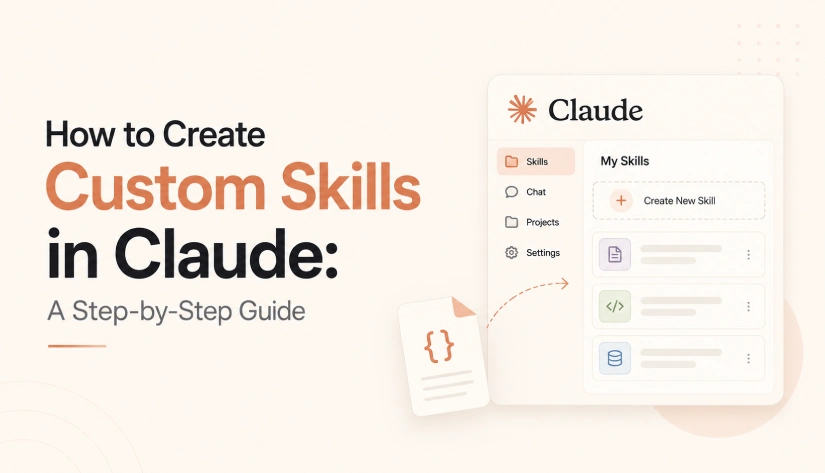
There's a quiet inefficiency hiding in plain sight for most teams using AI tools like Claude. You ask it to review data, check code, or draft a report, and it delivers. But then you notice the pattern. Every new request requires re-explaining your company's format, your validation rules, your definition of "done." Creating custom skills in Claude points straight at this friction, and it's a reminder that the real bottleneck isn't the AI's capability. It's the manual labor we accept as normal. This resonates with a theme we've been tracking, like in Explore how AI agents learn by editing context, not model weights, where the focus shifts from retraining to refining how an agent operates. The logic is similar: stop repeating yourself, and start shaping the system to remember.
Custom Skills are essentially a packaging problem solved well. Instead of pasting the same prompt template and hoping for consistency, you bundle the instructions, the reference files, the scripts, and the examples into a reusable unit. This is framed as a way to save time, and that's true. But the deeper value is consistency. When you rely on memory or a shared document, standards drift. One person's "final check" is another person's "quick glance." By codifying those expectations into a skill, you're not just making the AI smarter; you're making your team's output predictable. That matters more than speed. And it's worth asking whether we're building these skills thoughtfully or just automating our own blind spots. That caution is familiar territory for us, especially when we consider how Talking to My AI Clone Taught Me to Question the Tech forced a hard look at what happens when we hand over too much agency without understanding the trade-offs.
For a reader asking if this is worth their time, the answer is yes, but with a condition. The condition is that you treat skill creation as a design task, not a technical one. Start with the output you want to see consistently, not with the tools you think are clever. The step-by-step guide is useful, but the real insight is that skills force you to articulate what you actually do. That process of writing down your validation rules, your report structure, your final-check criteria, is where the value lives. It's an exercise in clarity that benefits the human before it benefits the model. And here's the specific thing to watch: as you build more skills, you'll notice which ones you stop using. That's your signal. It means either you solved the problem, or you're falling back into old habits. The teams that succeed will treat skills as living documents, reviewed and pruned, not as set-and-forget solutions. The question is whether you'll treat them that way, or let another layer of automation harden into routine.