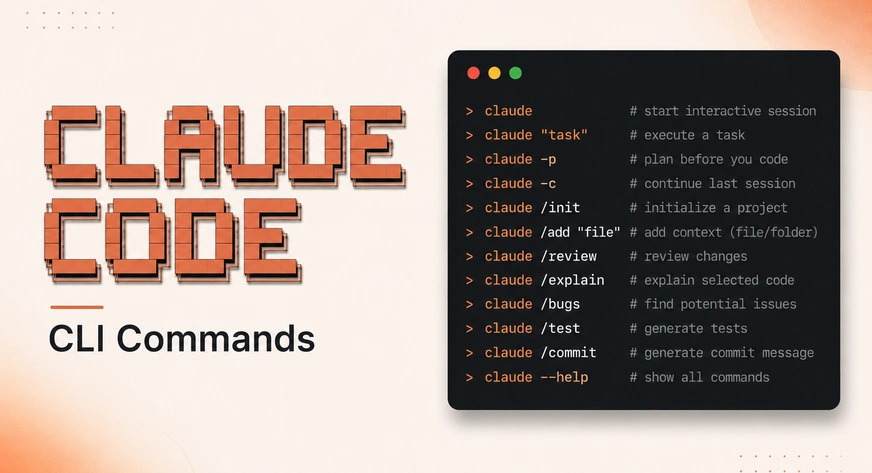
There is a quiet tragedy in using a powerful tool at half its capacity. The account of discovering hidden Claude Code CLI commands after months of daily use will resonate with anyone who has settled into a familiar but inefficient workflow. The author kept restarting fresh sessions, re-explaining the same project structure, because they didn't know a better path existed. That friction wasn't a failure of effort; it was a failure of discovery. This is the same tension behind Talking to My AI Clone Taught Me to Question the Tech, where the novelty of interaction gives way to a deeper curiosity about what is actually happening under the hood. In both cases, the initial experience is just the surface, and the real value lies in digging past it.
The practical lesson here is uncomfortable. The most obvious interface, the one that greets you on the first run, is rarely the complete one. `claude --help` hides many of the most useful capabilities. That is not a bug in the documentation; it is a reminder that the command line, like any sophisticated tool, rewards those who read further. It is easy to assume that what you see is what you get. But that assumption leaves you locked in a cycle of manual repetition. The same principle applies to how we think about AI agents that learn by editing context rather than model weights, as explored in Explore how AI agents learn by editing context, not model weights. The visible output is only a fraction of the process, and understanding the underlying mechanics changes how you use the tool.
Our honest take is that this story is less about a specific CLI and more about the discipline of seeking out the full reference. If you have ever felt constrained by a tool, the answer is not always to switch tools. It is often to look for the commands you have not tried. The author stumbled onto the full reference while debugging an unrelated issue, which suggests that serendipity helps, but structured exploration is more reliable. We would tell a reader who asks about this: do not wait for the happy accident. Set aside time to read the manual, the help flags, and the changelogs. Treat the tool as a system to be mastered, not a black box to be tolerated. For a deeper look at why verification and understanding matter, the piece on Verify Your AI's Understanding: A Simple Check for Tax Season reinforces the idea that checking your assumptions is never wasted effort.
The specific consequence to watch for is your own habit formation. If you have used the same command or workflow for more than a week, that is the signal to interrogate it. Ask yourself what you are not seeing. The next time you feel the urge to restart a session and explain the same context again, pause. The answer is likely already in your terminal, waiting for you to find it.