autonomous systems
Beyond Market Intelligence keeps autonomous systems in one place: 8 stories so far. The section currently leads with “Keeping up with faster AI agents requires smarter oversight tools”, “How Frontier AI is quietly reshaping robot learning from demonstration”, and “GPT-6 Astra arrives, marking a new chapter in how we work with data”. AI agents are being handed longer, more complex tasks, but their speed creates a blind spot: they act faster than any human can review. Roboticists in Learning-from-Demonstrations and Behavioral Cloning are asking a timely question: are frontier LLMs reshaping their field, or is it charting its own course? Acme AI is the next-generation, AI-powered spreadsheet platform built to replace Excel and redefine how analysts, data scientists, and enterprise teams work… The list below is every autonomous systems story on Beyond Market Intelligence, newest first.

Keeping up with faster AI agents requires smarter oversight tools
AI agents are being handed longer, more complex tasks, but their speed creates a blind spot: they act faster than any human can review. That gap is the real problem, and the solution feels counterintuitive. We need more AI to oversee it. Not to replace human judgment, but to keep pace with the machine's output. It's a pragmatic step toward making autonomy safe. For a deeper look at how these systems behave in the wild, our piece on shared user images highlights the stakes.
How Frontier AI is quietly reshaping robot learning from demonstration
Roboticists in Learning-from-Demonstrations and Behavioral Cloning are asking a timely question: are frontier LLMs reshaping their field, or is it charting its own course? The answer is nuanced. These models are influencing how demonstrations are encoded and generalized, yet core LfD principles remain independent. ViTs and VLAs are creeping into pipelines, offering new perceptual grounding. For a deeper look at how distributed systems underpin such training, our guide, *Unlock LLM Training: A Practical Guide to Distributed Algorithms*, is worth exploring.

GPT-6 Astra arrives, marking a new chapter in how we work with data
The rumors were true, all of them, and then some. OpenAI has released GPT-6 Astra, a frontier model the company believes marks the onset of the AGI era. For enterprises, the immediate shift is concrete: Astra operates computers the way people do, navigating browsers, spreadsheets, and applications to execute multistep workflows. This moves us beyond prompting AI to supervising it, delegating complex work while humans direct at a higher level. Explore what delegation means when agents handle the work between your objectives and the outcome.
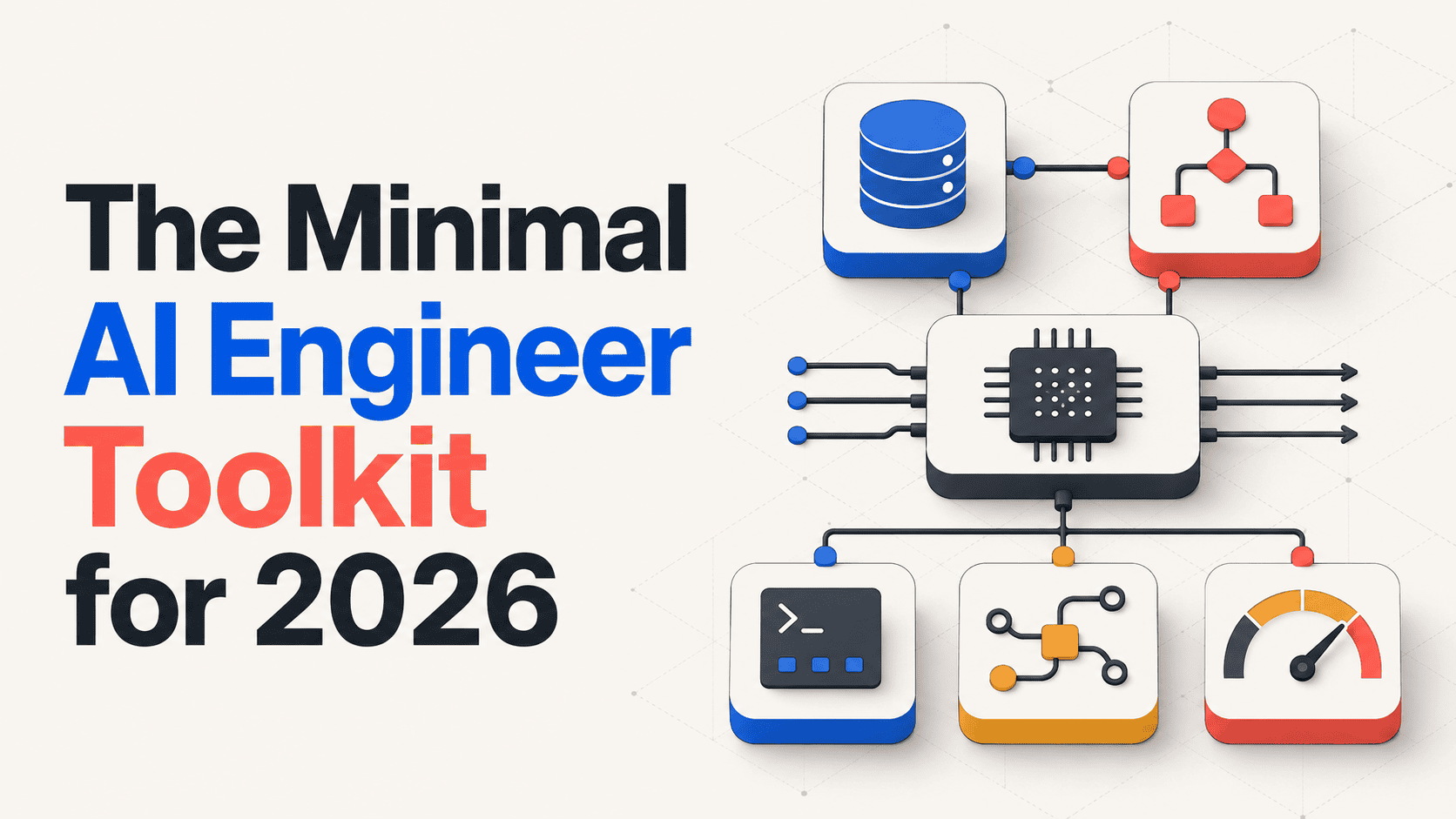
Six Tools to Empower Your AI Engineering Workflow in 2026
Building production-grade autonomous systems in 2026 isn't about hoarding the flashiest tools. It's about choosing a focused set that moves your work forward without the noise. We've identified six essential pieces for AI engineers who want to ship reliable, scalable systems, and we're confident this toolkit strips away the friction. If you're weighing priorities for the year ahead, this is a practical starting point.

Beyond identity: securing enterprise AI agents for real-world resilience
Shared credentials are a known risk, but at VB Transform 2026, NTT DATA AIVista and Snowflake made the case that fixing identity alone won't secure enterprise AI agents. Mukesh Karki and Mayank Upadhyay argued for action-level authorization and tamper-resistant audit trails built into every interaction. That provability, as Karki put it, is your license to operate. It's a practical framework for scaling autonomous systems safely, and it pairs well with our coverage of recent agentic security incidents.

Enigma's $71M seed round aims to make robot control as intuitive as volume
Enigma's $71M raise signals something practical: making robot control feel as intuitive as turning a dial. Led by Index Ventures and Ribbit Capital, with Sarah Guo's Conviction Partners joining, this seed round backs a simpler interaction model. We're encouraged by the focus on accessibility over flashy claims. It aligns with our own explorations, like the piece on questioning AI clones, where ease of use meets ethical nuance. For those tracking how humans interface with intelligent systems, this is a step worth watching closely.

Natural raises $30M to build financial infrastructure for AI agents
Natural raises $30M to reimagine payments for AI agents, a bold bet on financial architecture built for autonomous transactions. At one year old, the startup is positioning itself to challenge Stripe by focusing on what happens when machines, not humans, handle the money. That is a compelling direction, though it asks us to trust systems we barely see. If you are questioning how deeply AI should integrate into your own workflows, our piece on talking to an AI clone offers a timely counterpoint.

Kimi's new model invites a closer look at AI's role in shared productivity.
Moonshot AI's new Kimi model lands with a weighty label attached: "full AI communism." That phrase signals more than a tech update. It points to a future where AI handles the grunt work of data, not just for individuals but across systems. The concern feels premature, yet understandable. We've seen how quickly AI can distort reality, as our piece on AI clones and data slop shows. Kimi deserves scrutiny, but let's explore what it actually does before we sound alarms.