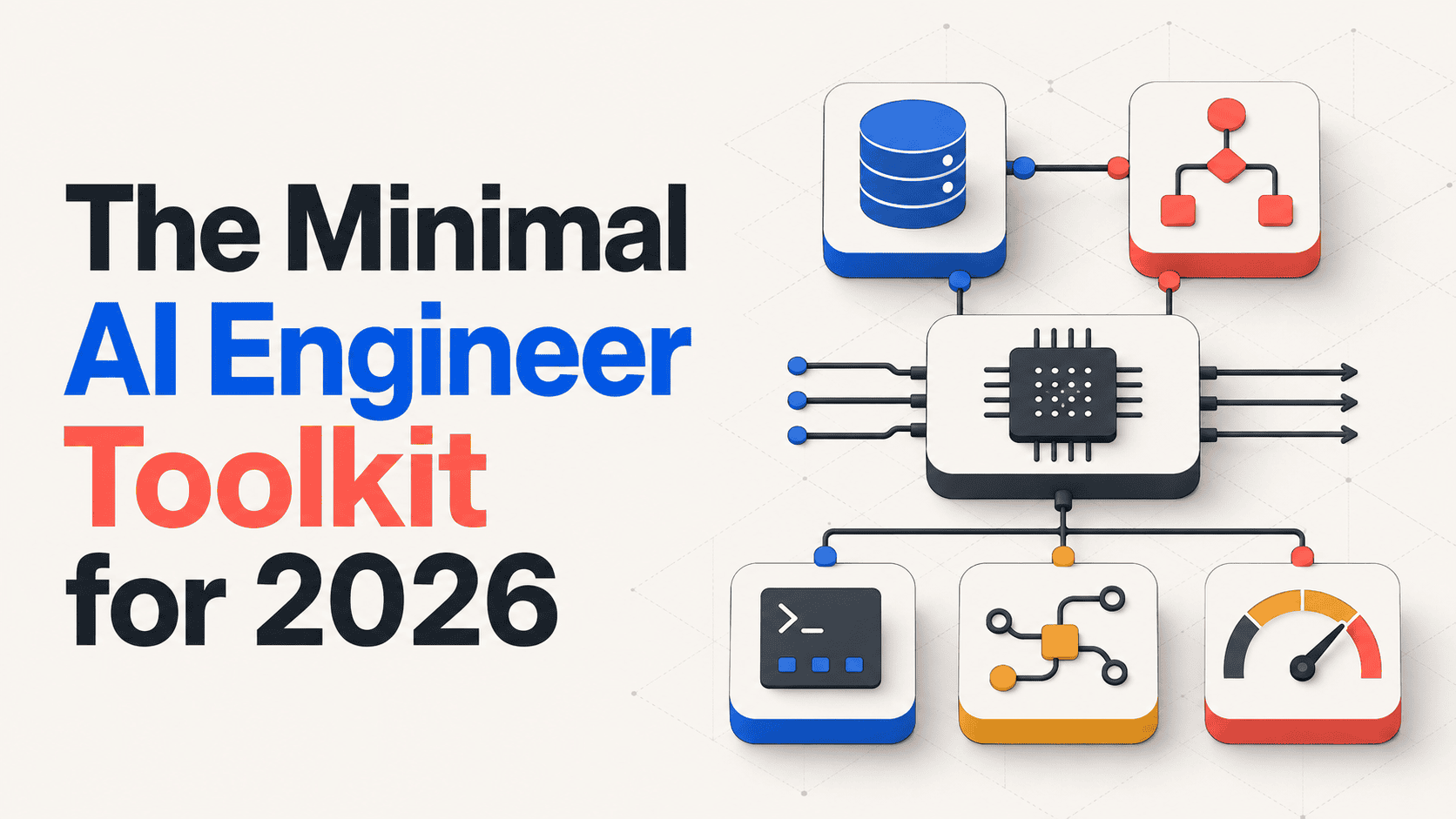
The promise of a "minimal" toolkit for AI engineers in 2026 is exactly the kind of signal we need to pay attention to. It suggests a maturity that has been missing from the conversation. For too long, the narrative around building production-grade autonomous systems has been about acquiring more: more frameworks, more vector databases, more orchestration layers. It flips that script by asking a more useful question: what can you remove before the complexity starts to hurt? That is not just a technical stance; it is a philosophical one. It aligns with the move toward accessible, human-centered technology that we have been tracking across our coverage, whether that is in Unlock ChatGPT for Work: A Practical Guide to Getting Started or the discussions happening around production readiness at Explore the Future of AI Deployment: Key Topics at QCon AI New York.
Our take is this: the "minimal" in the title is doing a lot of heavy lifting, and that is a good thing. It is not a call for austerity or a return to simpler, less capable tools. Instead, it is a recognition that the barrier to entry for building autonomous systems has dropped. When the underlying models handle the heavy lifting of reasoning and code generation, the engineer's role shifts from hand-crafting every component to curating a small set of reliable primitives. This is a direct challenge to the instinct to over-engineer. We would tell a reader asking about this that the six tools matter less than the principle of constraint they represent. If a tool does not earn its keep by enabling a specific, critical capability, it is likely adding cognitive load without a proportional return. The goal is to build a system you can reason about end-to-end, not one that requires a team to maintain.
This also dovetails with the practical guidance we have shared on getting started with AI in the workplace. The mindset is similar: start with a clear outcome and use only what is necessary to achieve it. The engineer who adopts this 2026 toolkit is not just learning new software; they are adopting a discipline. They are saying that their attention is the most valuable asset in the build process, and they are protecting it. The related piece on NeurIPS 2026: Sydney or Atlanta—Which Conference Destination to Choose? touches on a related tension: the pull between staying current and making deliberate choices. This toolkit is a deliberate choice, distilled into a shortlist.
The concrete point to watch is the evolution of these tools over the next twelve months. The specific list of six is a snapshot; the real test is whether the community treats minimalism as a default constraint or just a trend. If the conversation shifts from "what can we add?" to "what can we cut?" on a regular basis, then we have made progress. For anyone preparing for 2026, the actionable takeaway is to audit your current stack and ask a pointed question: which of these tools would I fight to keep if I had to rebuild tomorrow? The ones you would not fight for are likely the ones adding the least value. That is the lens we should all be using.