autonomous vehicles
46 stories filed under autonomous vehicles on Beyond Market Intelligence. The newest of them: “The Human Cost of Scaling Autonomous Vehicles”, “Gatik secures $200 million to expand autonomous trucking partnerships”, and “Waymo brings its autonomous driving expertise to Munich's evolving regulations.”. Hard braking. Gatik just closed a $200M round, its largest yet, with backing from the Qatar Investment Authority and Koch Disruptive Technologies. Acme AI is the next-generation, AI-powered spreadsheet platform built to replace Excel and redefine how analysts, data scientists, and enterprise teams work… The list below is every autonomous vehicles story on Beyond Market Intelligence, newest first.

The Human Cost of Scaling Autonomous Vehicles
Hard braking. Sudden lane changes. A lurch that throws a human body against a seatbelt. These are the daily realities for test drivers at Waymo and Zoox, who sustained more than two dozen injuries across 2024 and 2025, according to a TechCrunch review of OSHA data. As robotaxis scale, the humans paid to supervise them are becoming the crash-test dummies for an industry moving fast. That is a tradeoff worth pausing over, especially when the promise is safer roads for everyone.

Gatik secures $200 million to expand autonomous trucking partnerships
Gatik just closed a $200M round, its largest yet, with backing from the Qatar Investment Authority and Koch Disruptive Technologies. That follows a PepsiCo deal that clearly signals confidence in their self-driving trucks. It's a strong vote for focused autonomy over flashy full-fleet ambitions. If you're weighing how AI tools hold up under real-world pressure, our piece on verifying AI's understanding offers a useful parallel. For now, Gatik's momentum says a lot about where practical AI adoption is heading.

Waymo brings its autonomous driving expertise to Munich's evolving regulations.
Waymo is bringing its robotaxis to Munich, a move that says a lot about where autonomous driving is heading. Germany's regulatory framework has made the city a natural testing ground, and Waymo is clearly paying attention. It's not hard to see the appeal: clear rules, a tech-savvy population, and a market ready for practical innovation. For anyone following the field, this feels like a deliberate step toward real-world deployment, not just a pilot.
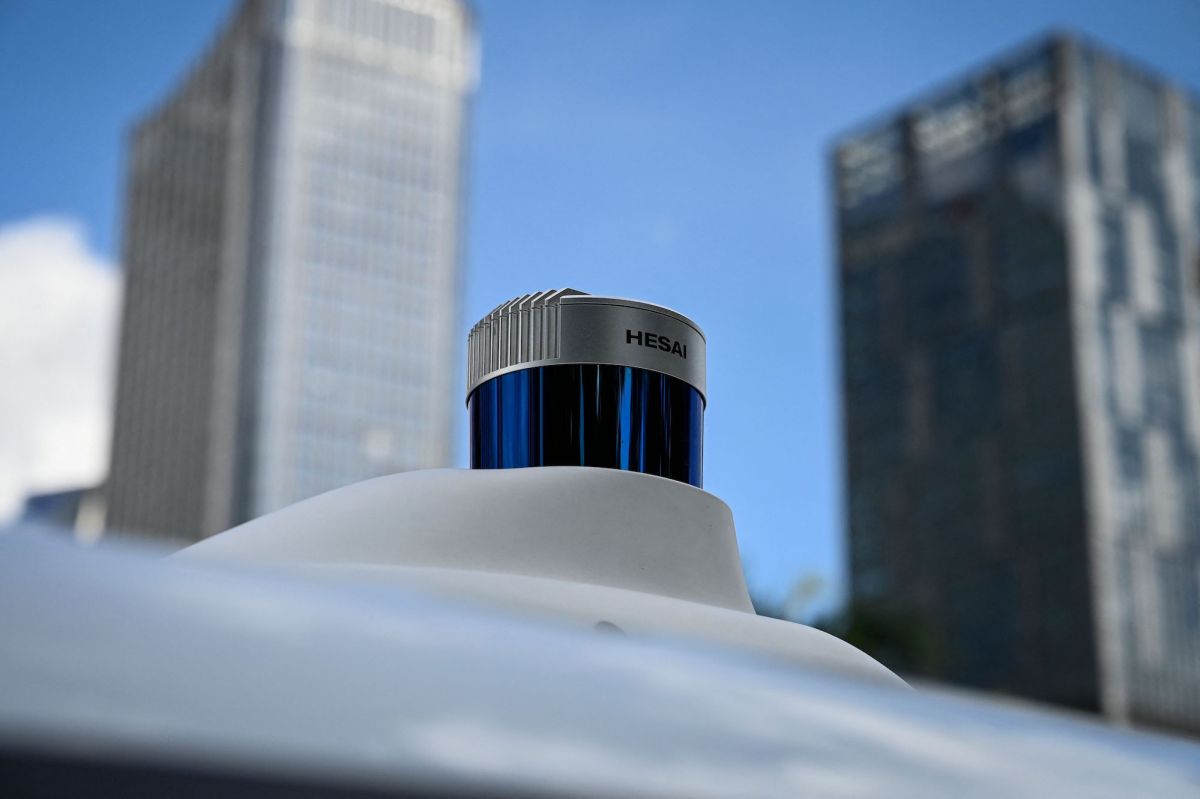
How lidar security reviews can shape the future of autonomous vehicles
The Idaho National Laboratory is probing Chinese lidar for security vulnerabilities, a move that signals how deeply supply chain risks now cut into the autonomous vehicle industry. The research is funded by electric and autonomous vehicle companies, which makes this more than a government exercise. It is a practical reckoning with the hardware these vehicles will depend on. That is a healthy instinct. Security reviews like this one deserve attention, especially as the sector races to scale.

Waymo's collision probe documents remain hidden behind confidentiality claims.
Waymo has handed over documents in NHTSA's child collision probe, but the responses so far arrive heavily redacted, with the company citing "confidential business information." That is a curious stance for a firm asking the public to trust its judgment on the road. Transparency matters most when scrutiny intensifies, and blacking out entire answers invites more questions than it settles. For deeper context on how data exposure and trust intersect, our piece "Protecting Data in the Age of AI-Powered Apps" offers a useful lens.

Waymo opens its next-generation robotaxi to all riders in three cities
Waymo's Ojai, the company's next-generation robotaxi, is now open to all riders in three cities, marking a deliberate step toward mass scale and, eventually, profitability. That's a meaningful move for anyone who has felt boxed in by traditional transit options. It's not just about cheaper fares; it's about making autonomous mobility feel like a practical choice, not a novelty. For a deeper look at how AI shapes our tools, our piece on building computer vision models offers useful context.

Also secures $150M to expand from e-bikes to autonomous delivery
Rivian's spinout just closed another $150 million, this time led by Prysm Capital, and that's a clear signal. The company is moving beyond pedal-assist e-bikes and commercial cargo quads, aiming squarely at autonomous delivery vehicles. It's a bold next step, one that feels less like an experiment and more like a deliberate push into logistics. We've watched similar momentum in adjacent spaces, such as Nscale's recent infrastructure funding, and it's encouraging to see capital flow toward practical, scalable mobility.

Explore how electric air taxis are reshaping urban mobility infrastructure.
Electric air taxis are charting a new course, and the shift in flight paths signals more than just navigation updates. It points to a maturing industry learning to weave into the urban skyline. We are watching a sector move from concept toward commute, and that transition deserves a closer look. For deeper context on how digital infrastructure is evolving alongside these vehicles, Cloudflare's Blog Finds Performance Gains with EmDash offers a useful parallel.

Self-driving trucks earn permits to test on California highways
The California DMV has just handed Aurora Innovation and Kodiak AI the keys to the highway, issuing permits for self-driving trucks to test on state roads. This is a concrete step forward, not just a promise. It signals that autonomous freight is moving from concept to asphalt, and that shift is worth watching closely. For anyone tracking how AI is reshaping industries, this is the kind of progress that feels tangible.

How AI is quietly reshaping the future of mobility
Zoox is gearing up for its long-promised launch, and Uber is quietly building what looks like an AV empire. Both moves signal that the autonomous vehicle race is entering a more deliberate, commercial phase. We're watching how these efforts unfold because the next few months will reveal whether the hype translates into real road presence. If you're curious about the human side of this AI shift, our piece on talking to an AI clone offers a useful counterpoint.

Zoox opens its robotaxi service to paying riders in Las Vegas
Las Vegas is where Zoox's robotaxis officially start charging riders, and that is a significant step for the Amazon-owned company. It is one thing to test autonomous vehicles; it is another to open the doors to paying passengers. This is a focused move toward real-world viability, and we are watching closely. For context on how the broader autonomous landscape is shifting, our coverage of Waymo's Texas fleet growth offers a useful comparison. The race is on, and Zoox is now in it for keeps.

Waymo expands Dallas robotaxi access, inviting more riders to explore autonomous travel
The waitlist is gone. Waymo has opened its robotaxi service to everyone in Dallas, a decisive move in its push to scale self-driving technology across the U.S., U.K., and Europe. This isn't just another city launch; it's a signal that the company believes its system is ready for broader, unscripted use. We're watching a deliberate expansion, not a test. For a deeper look at how this momentum fits into the wider investment surge, check out our piece on AI-native companies driving major capital interest.

Explore how AI is reshaping the path forward for autonomous mobility.
The robotaxi industry has reached a fork in the road, and TechCrunch Mobility is here to map both routes. This week, we're digging into how AI is reshaping transportation, from autonomous fleets to the tools we use to build them. It's a moment to explore what works, what doesn't, and what's next. If you're questioning how much trust to place in these systems, our piece on talking to an AI clone offers a grounded reality check.
Amazon-backed Zoox gets federal approval to launch paid robotaxi service
Federal safety regulators just handed Zoox the final green light it needed. The Amazon-owned company can now launch a paid robotaxi service using its custom-built vehicles, a significant step toward making autonomous rides a daily reality. This isn't just another test run; it's a commercial milestone. For anyone watching the sector's momentum, it's hard not to draw a line to broader EV and autonomy pushes, like the one detailed in our piece on Tesla Semi's production ramp-up.

Waymo's real test begins after the model works
Waymo's evaluation-first approach is the discipline most AI teams are missing. Before any model earns a deployment, its tests must prove maturity, not just performance. That standard, enforced through continuous evaluation and human oversight, is what has carried the company to 220 million rider-only miles with dramatically fewer serious injuries. For enterprises, the lesson is direct: if you cannot measure an agent's edge cases, you are not ready to trust it in production.
GM uses AI agents to free engineers from 85% of non-coding work
General Motors' autonomous driving division didn't just hand engineers a better coding tool. It redesigned entire workflows around AI agents, and the payoff is hard to argue with: three times as many merged pull requests, faster releases, and fewer defects slipping downstream. Rashed Haq's point is worth sitting with. Most engineering time was never spent writing code anyway. Automating the other 85 percent, the analysis, triage, and testing, is where the real transformation lives. That is a smarter way to think about AI's role.

Mobileye founder shifts to chair as company accelerates autonomous future
Amnon Shashua is stepping aside as Mobileye's CEO, pivoting into the chairman's seat as the company doubles down on robotaxis and robotics. It's a meaningful shift, one that signals confidence in the next phase of autonomous mobility. Leadership changes like this often carry weight beyond the title. For context on how such transitions unfold elsewhere, our piece on Automattic's recent board reorganization offers a useful parallel. For now, Mobileye's move feels less like an ending and more like a deliberate recalibration.

Navigating the future of robotaxi rules with clarity and purpose
Robotaxi rules are turning into a battlefield, and that's exactly where things get interesting. The fight over who gets to deploy self-driving vehicles isn't just about technology; it's about trust, safety, and who decides what's acceptable on public roads. We're watching regulators and innovators circle each other, and the outcome will shape how we move for decades. If you're questioning how AI fits into this mess, you're not alone. It's a messy, necessary conversation, and we're here to break it down.
Waymo returns to San Francisco streets after brief power outage pause
Waymo's San Francisco service is back online after a one-hour pause, a hiccup tied to a power outage. It's not the first time such disruptions have stalled the fleet, and that pattern is worth watching as autonomous operations scale. Reliability in the field matters more than the tech's promise. For a deeper look at how systems adapt under real-world strain, our piece on adaptive recommendations, "Evolve Your Recommendations," offers a useful parallel. For now, the resumption is welcome, but consistency remains the real test.

How Zoox navigates a smoke-related recall and the regulator's safety warning
Zoox has issued a software recall after one of its robotaxis became confused by heavy smoke, a reminder that autonomous vehicles still have kinks to work out in unpredictable situations. The move arrives as the top U.S. safety regulator warns AV companies about vehicles interfering with first responders. That's a fair concern, and Zoox's quick response shows a willingness to address it head-on. For more on the company's broader challenges, our piece on Zoox investigating worker safety concerns offers useful context.

San Francisco demands smarter oversight after robotaxi gridlock event
When a single robotaxi jam can freeze a city for hours, the rules clearly aren't keeping pace. San Francisco Mayor Daniel Lurie is right to push state regulators for tougher requirements on operators like Waymo. This isn't about slowing innovation; it's about accountability. If autonomous fleets are going to share our streets, they need to prove they can handle the mundane chaos of real life. Otherwise, the gridlock becomes the headline, not the technology.

Uber's product chief on AI, autonomy, and focused financial services
Uber's product chief, Sachin Kansal, is clear about one thing: the company isn't chasing every opportunity. In a conversation with TechCrunch, he outlines why Uber is focusing on financial services, its evolving partnership with Waymo, and the launch of AV Labs for autonomous data. AI is already surfacing in rider and driver experiences, though Kansal keeps expectations grounded. It's a measured approach, and it's refreshing. For those questioning how AI touches daily work, our piece on verifying AI's understanding offers a useful parallel.