AWS
AWS at Beyond Market Intelligence is a file of 32 stories. The newest of them: “AWS Agent Pinpoints Cloud Fixes Before You Deploy”, “AWS Tests European Cloud Independence Without Global Network Link”, and “Aurora PostgreSQL Gains DuckDB's Analytical Power in New AWS Acquisition”. AWS's Well-Architected Agent preview points to a smarter path forward for cloud teams: catch issues before they reach production. On October 24, AWS will sever its European Sovereign Cloud from the global network backbone, running on EU hardware, software, and local staff. Acme AI is the next-generation, AI-powered spreadsheet platform built to replace Excel and redefine how analysts, data scientists, and enterprise teams work… The list below is every AWS story on Beyond Market Intelligence, newest first.

AWS Agent Pinpoints Cloud Fixes Before You Deploy
AWS's Well-Architected Agent preview points to a smarter path forward for cloud teams: catch issues before they reach production. By analyzing environments against established best practices, it surfaces prioritized fixes across cost, security, performance, and reliability, then suggests remediation steps. Reviewing infrastructure-as-code pre-deployment is especially practical, shifting quality checks earlier in the workflow. For those exploring how such agents reason, our interactive 3D visualization of an AI agent's inner workings offers a useful companion perspective.

AWS Tests European Cloud Independence Without Global Network Link
On October 24, AWS will sever its European Sovereign Cloud from the global network backbone, running on EU hardware, software, and local staff. The company insists neither system is operation-critical, yet practitioners remain split on whether this test actually addresses customer concerns. It is a deliberate exercise in independence, but the question lingers: does isolation prove sovereignty? For deeper context on shifting AI alliances, see our coverage of Replit pivoting from Anthropic to OpenAI.

Aurora PostgreSQL Gains DuckDB's Analytical Power in New AWS Acquisition
Amazon's acquisition of DuckLabs signals a serious bet on analytical horsepower for its database ecosystem. By bringing DuckDB's co-founders Hannes Mühleisen and Mark Raasveldt under AWS, the company is investing in open-source innovation without compromising DuckDB's independent spirit. Aurora PostgreSQL now gains its first DuckDB-powered feature, blending transactional reliability with analytical speed. For anyone exploring how AI agents unlock hidden insights in compiled binaries, this move reinforces the value of purpose-built tools for modern data challenges.
Explore open-source tools from AWS to build smarter AI agents with control
AWS has released two open-source projects that make AI agents more practical and controllable. Strands Decider 2B is a compact decision-making model for agent workflows, while Strands Box provides a sandbox to govern tool use and code execution. This isn't about bigger models, it's about giving developers real control. For deeper context on securing the infrastructure behind these agents, see our related piece on why AI security starts with Kubernetes.

AWS Smooths Event-Driven Growth with Unified EventBridge Custom Buses
Event-driven architectures scale fast, but the event infrastructure itself often doesn't keep up, especially when multiple teams or AWS accounts are involved. AWS's enhanced Custom Event Bus for Amazon EventBridge directly addresses this fragmentation, offering a unified path forward for growth. It's a confident step toward making distributed event systems feel less like a patchwork and more like a purposeful design. For another take on managing complexity at scale, see how EVE Online tames 20 years of telemetry data.
Navigate cloud setup your way: portal autonomy or formal request
Cloud provisioning lives on a spectrum, and your question captures it perfectly. Some teams enjoy full portal autonomy, clicking through Azure's GUI to spin up SQL Servers on demand. Others operate under stricter governance, submitting formal requests to an Architecture team before anything touches Dev. Architecture-as-code sits somewhere in between, offering reproducibility when you can commit config files freely. There's no universal answer, and that's fine. Your company's workflow likely reflects its risk tolerance more than its technical capability.

AWS event buses gain cross-account sharing with smarter event management
Amazon EventBridge now lets organizations share custom event buses across accounts, a practical step toward smarter event management. With ordered delivery, simplified subscriber management, and content-based deduplication, this isn't just a feature update; it's a thoughtful rethinking of how teams handle complex event-driven architectures. The new publisher/subscriber pricing model makes adoption more predictable. For organizations wrestling with decentralized event systems, this is an invitation to centralize without losing control.

A self-hosted inbox for background AI agents is now open source
A team of developers at AWS has open-sourced Pizza Bot, a self-hosted inbox designed for background AI agents. It lets agents run scheduled or webhook-triggered tasks, delegate work to specialized workers, and pause for human approval when needed. This is a practical step toward making autonomous agents more controllable and transparent. For more on how AI agents are reshaping workflows, see our coverage on shrinking the window for open source vulnerability fixes.

Aurora DSQL now enforces data integrity with foreign key support
Aurora DSQL's new foreign key support closes a gap that was blocking adoption for many teams. This isn't a small update, enforcing referential integrity directly in the database, with CASCADE and SET NULL actions, makes the platform feel more mature. It's the kind of practical improvement that turns a promising tool into a dependable one. For those exploring how modern infrastructure choices impact performance, Cloudflare's experience with EmDash offers a related look at moving beyond legacy systems.
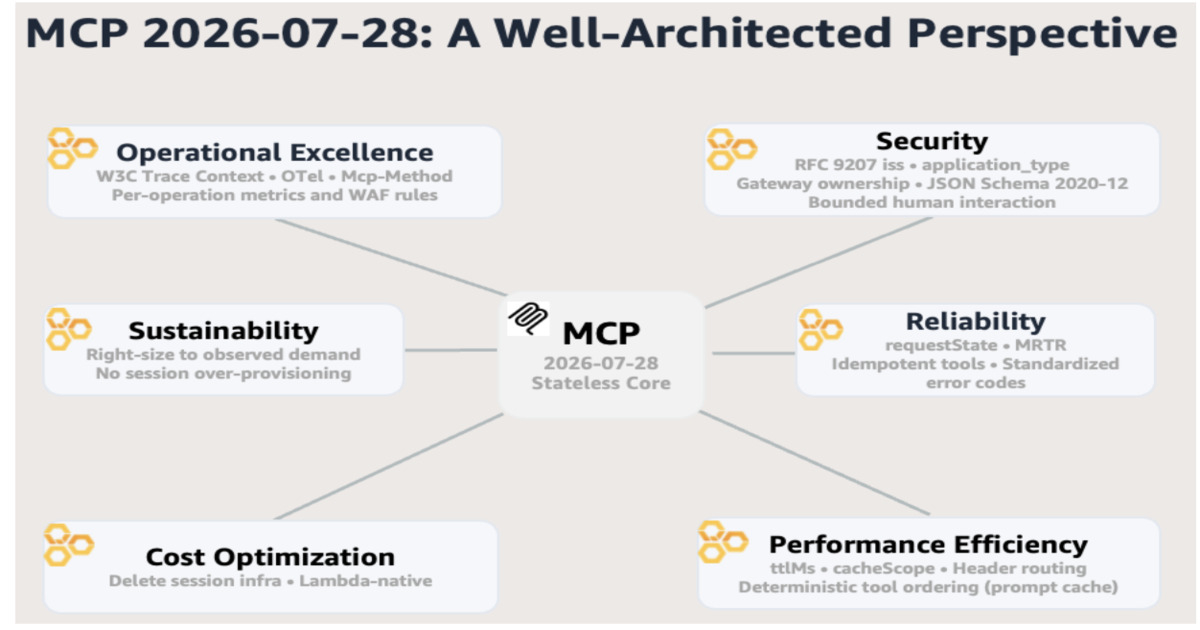
Scale AWS Server Deployments Effortlessly with Stateless Model Context Protocol
The latest Model Context Protocol specification strips away session-level overhead, and that matters for anyone running remote MCP servers at scale. By removing sticky-session requirements and session storage, AWS enables independent request routing, which makes horizontal scaling far more straightforward. The trade-off is real: application state, retries, and observability now live in other layers. That shift feels like a mature step forward, not a workaround.

Simplify EKS Management: Elastic Beanstalk Now Runs on Shared Clusters
AWS has added Cluster Mode to Elastic Beanstalk, letting it run applications on EKS clusters the service creates and manages. That is a practical step for teams wanting Kubernetes without the operational overhead. The catch: clusters are tied to subnet sets permanently, and direct access stays service-controlled. AWS also recommends separate clusters for untrusted or regulated workloads, and the new mode adds EKS and Auto Mode fees that EC2 discounts will not touch.

Explore AI Safety Insights from Disrupt 2026's Leading Experts
AI safety is moving from the background to the main stage at TechCrunch Disrupt 2026, with five dedicated sessions featuring leaders from Anthropic, Nvidia, AWS, and Waabi. That focus matters because the conversation around AI is shifting from capability to accountability. We're seeing the ripple effects elsewhere, like how Meta's AI turned one dull task into $5,350 in yearly savings, which shows the practical stakes. Register before September 25 to save up to $200, and explore these critical discussions while you still can.

From Spreadsheets to AI Assistants: A Principal Scientist's Journey
James Gung, a principal applied scientist at AWS, is opening the floor to questions about building AI services like Amazon Bedrock and Lex. His work spans agent evaluation and conversation simulation, and he's offering a candid look at the day-to-day reality behind those systems. It's a useful chance to separate the substance from the job-title noise. For anyone navigating similar roles, his perspective on interviews and career paths is worth exploring, especially when the AI job market feels muddled.

Navigating AWS Complexity with Smarter Terraform Infrastructure Management
The Terraform AWS Provider's v6.62.0 release lands as infrastructure grows more intricate, adding support for new capabilities while sharpening how Terraform reads existing resources. That dual focus, forward momentum and deeper comprehension, matters for teams juggling complexity. It is not about chasing novelty; it is about making the provider a more reliable partner in daily work. For a broader look at simplifying cloud workflows, our guide "Unlock ChatGPT for Work" pairs well with this momentum.
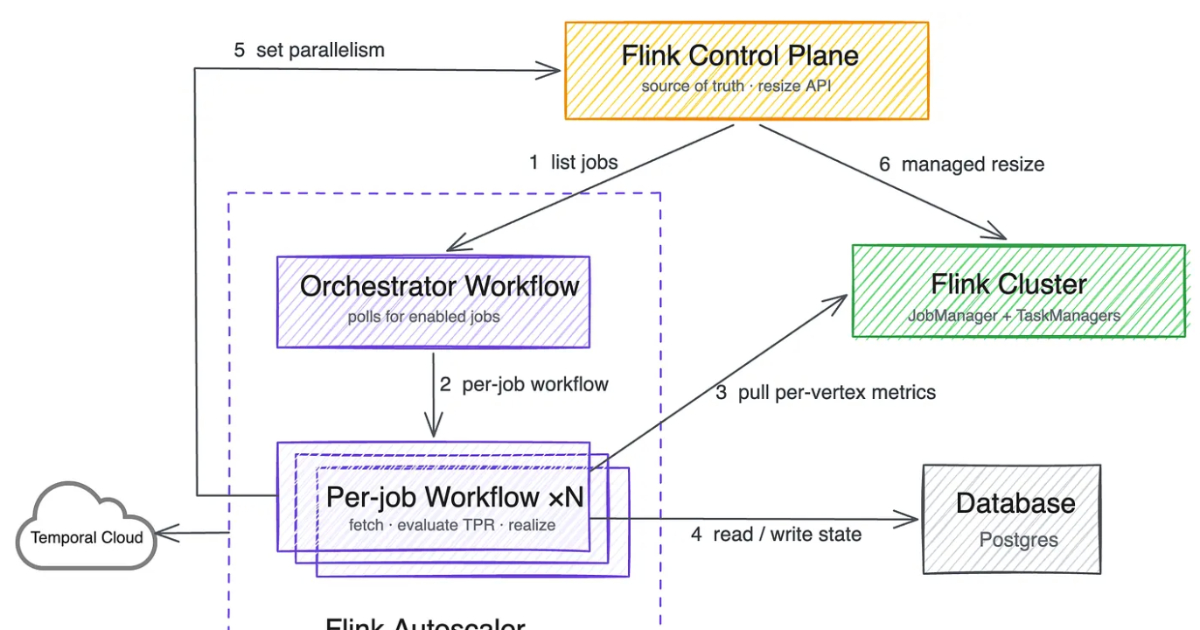
Netflix's Open Source Flink Autoscaler Cuts Streaming Costs by 58 Percent
Netflix is moving toward the open-source Apache Flink Autoscaler for more than 30,000 streaming jobs across multiple AWS regions, and the numbers make a compelling case. The operator-level approach tackles the limitations of its cluster-level autoscaler for complex, stateful pipelines. One team saw a 58% reduction in annualized Flink compute costs, saving roughly $1.1 million. That's not just incremental progress; it's a meaningful shift in how large-scale data operations can run more efficiently.
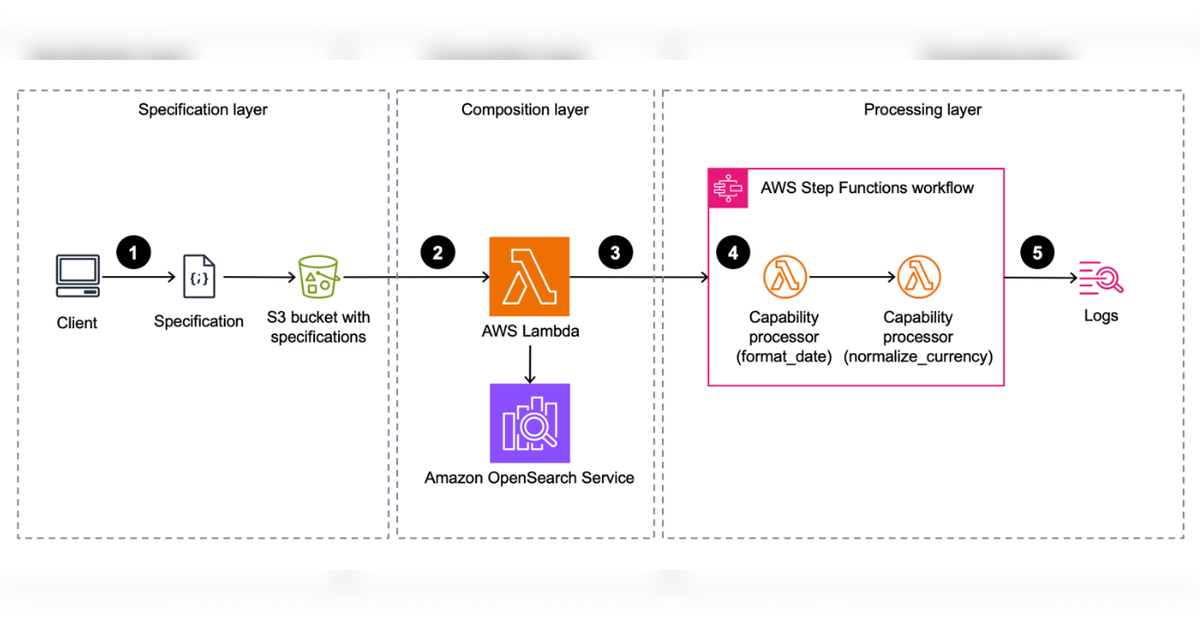
Declare Your Data Intent: Flexible Workflows Without the Bottleneck
Declarative specifications are the quiet workhorse behind flexible data workflows, and AWS is proving it. By separating intent from processing logic, this approach lets teams define what they need while reusing proven capabilities, with validation catching issues before execution runs. The payoff is tangible: dataset onboarding shrinks from weeks to days, without sacrificing traceability or governance. It is a practical, human-centered answer to a complex problem.

Progressive Deployments for Stateful Infrastructure That Actually Works
Core infrastructure fails differently than applications, and pretending otherwise is how outages happen. In this presentation, Ian Nowland, drawing from his leadership at AWS and Datadog, confronts why conventional CI/CD practices break down for stateful, foundational platforms. He offers actionable techniques for safe progressive deployments and synthetic testing in production, all aimed at mitigating blast radius. It's a grounded, practical look at a complex problem.

S3 Compatible Doesn't Mean Secure: What Neoclouds Miss
S3 compatibility has become the default promise for object storage, but as Wiz's research shows, that promise stops short of security. Examining six popular neoclouds, the team found meaningful gaps compared to Amazon's protections. It's a useful reminder that API familiarity isn't the same as hardened infrastructure. For teams evaluating options, the question isn't just whether it works, but what's actually enforced underneath. If you're weighing storage trade-offs, our piece on Cloudflare's EmDash migration offers a related look at how infrastructure choices carry hidden implications.

Persistent compute gives AI agents the stamina for complex workflows.
Amazon Bedrock AgentCore now gives AI agents persistent compute through runtime instances, a practical upgrade for teams wrestling with long-running workflows. This isn't about flashy demos; it's about infrastructure that finally keeps up with multi-agent coordination without constant hand-holding. We see this as a step toward less friction in complex data tasks, which pairs well with our own exploration of AI's limits, like in "Talking to My AI Clone Taught Me to Question the Tech.

DynamoDB Unifies Data and Vector Search Without a Separate Database
DynamoDB now lets developers store embeddings right alongside their application data and run approximate nearest-neighbor queries without spinning up a separate vector database. That's a meaningful simplification for teams building semantic search features. Filtered similarity searches and configurable indexes make it practical, not just theoretical. It's the kind of move that reduces operational overhead while keeping workflows familiar. If you're exploring how far native database capabilities can stretch, this is worth a look.

AWS Opens Dogwood to Give Agents Smarter Permission Chains
AWS's open-source Dogwood takes a meaningful step beyond single-request policies. By extending Cedar with temporal conditions, it lets rules reason about an agent's prior tool calls, covering approvals, rate limits, and running totals. That's a practical answer to a real gap in AI governance. The Apache 2.0 release is solid, though the reference interpreter isn't production-ready yet.

How Pinterest Built Guardrails for Safer, Scalable AWS Infrastructure
Pinning down least-privilege access across sprawling AWS environments is a challenge, and Pinterest's new Resource Provisioner Pipeline tackles it head-on. Their Terraform execution engine enforces dual-control reviews, adding strict guardrails to GitHub Actions workflows. It's a practical, no-nonsense approach to infrastructure security that prioritizes safety without sacrificing speed. For teams wrestling with similar scale, this is a smart model worth examining. And if you're exploring how AI can streamline other workflows, our guide to unlocking ChatGPT for work offers a useful starting point.

Superblocks embeds into AWS private clouds, decoupling apps from models
AWS's decision to let Superblocks embed its vibe-coding platform directly into customer private clouds is a meaningful step toward loosening the grip of locked-in models. It's not just about convenience; it's about giving teams more control over where and how their applications run. That's the kind of flexibility that turns experimentation into real workflow. If you're exploring how AI tools are reshaping infrastructure, our piece on Nscale's recent funding offers another angle on where this momentum is heading.

Explore how free sandboxes remove friction from learning AWS
Setting up a sandbox for a workshop used to mean handing over your own AWS account and crossing your fingers. That friction is gone. The AWS Builder Center now provides free, time-limited environments, so developers can learn without watching their credit card or worrying about surprise charges. It is a practical fix for a long-standing community request, and it removes a real barrier to hands-on learning. For anyone exploring new AWS technologies, this makes building and experimenting feel far more accessible.