AWS Introduces Specification Driven Composition for Flexible Data Workflows
Our take
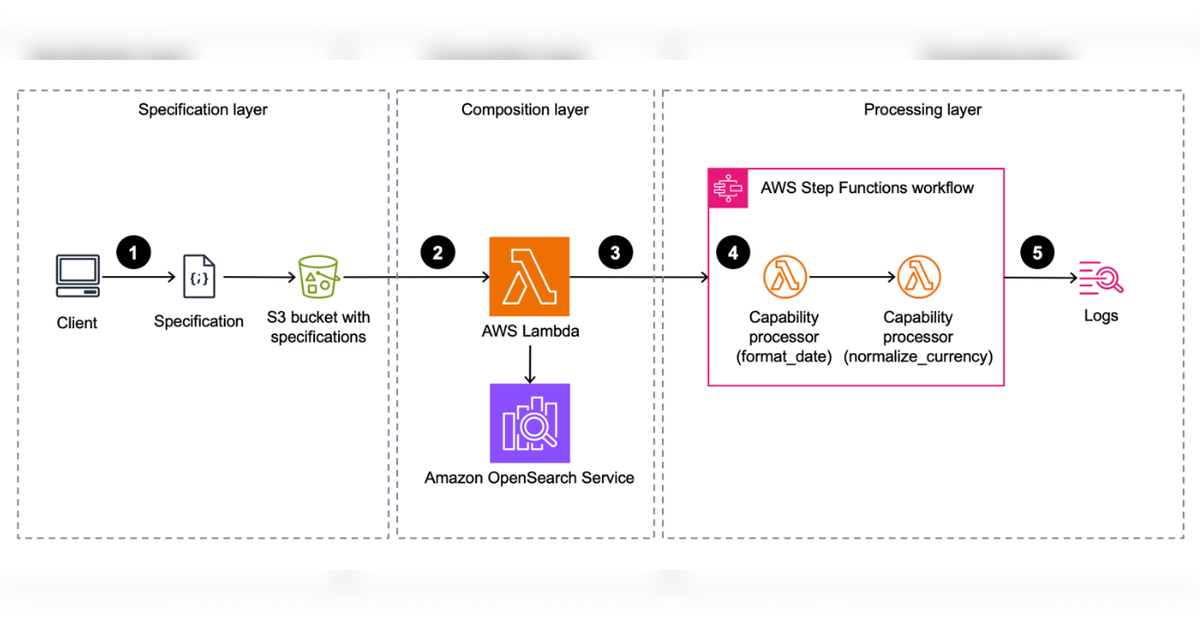
AWS’s introduction of Specification Driven Composition for data workflows represents a significant shift towards more agile and governed data environments, and one that resonates deeply with the challenges many organizations face. The core concept – separating intent from processing logic through declarative specifications – is a smart evolution. We’ve seen similar patterns emerge in other areas of software development, and applying this to data workflows is a logical next step. The promise of reducing dataset onboarding from weeks to days is compelling, especially when considering the increasingly rapid pace of data ingestion and the need for immediate insights. It’s easy to see how this approach alleviates bottlenecks and allows data teams to focus on higher-value tasks. This aligns with concerns explored in Is Agentic AI Just Automation?, where we discussed the limitations of overly complex automation flows and the need for clarity and control. A specification-driven approach inherently promotes this clarity, allowing for easier debugging and modification of workflows.
The inclusion of traceability, versioning, data classification, and governance within this framework is crucial. Data governance isn’t just a compliance checkbox anymore; it's a foundational requirement for building trustworthy AI and deriving meaningful insights. The ability to validate workflows *before* execution is a particularly valuable feature, preventing costly errors and ensuring data quality from the outset. This focus on proactive validation echoes the principles of robust model evaluation discussed in How Does a RAG Reranker Really Work?, where understanding the inner workings of a system is paramount to ensuring reliable results. The shift to declarative specifications moves away from the often-opaque, procedural logic that plagues many existing data pipelines, fostering a more transparent and auditable system. The reusability aspect is also key; building blocks of processing logic that can be combined and recombined dramatically speeds up development and reduces redundant effort.
However, the success of this approach hinges on the accessibility and usability of the specification language itself. Declarative systems can be powerful, but if the specification language is too complex or requires specialized expertise, it risks becoming a bottleneck in its own right. AWS will need to invest heavily in tooling and documentation to ensure that a broad range of data professionals can effectively leverage this new capability. The potential for increased agility and governance is undeniable, but the ease of adoption will be the determining factor in widespread adoption. It’s worth noting that the rise of robotics startups like Generalist, as detailed in Robotics startup Generalist reaches $3B valuation, sources say, highlights a broader trend towards automating complex tasks – and data workflow management is a prime candidate for this type of intelligent automation.
Ultimately, AWS's Specification Driven Composition represents a significant step towards a more modern, flexible, and governed data landscape. It's a move that acknowledges the increasing complexity of data environments and the need for tools that can adapt to rapidly changing requirements. The potential to streamline data onboarding, enhance data governance, and empower data teams is substantial. The real test will be how effectively AWS can make this powerful technology accessible and practical for organizations of all sizes. One key question to watch is whether this approach will inspire similar declarative models across other data platforms and tools, potentially leading to a standardization of data workflow definition and a more interoperable data ecosystem.
AWS describes a specification-driven approach for composing flexible data workflows by separating intent from processing logic. Architecture uses declarative specifications, reusable processing capabilities, and validation before execution. AWS reports that the approach can reduce dataset onboarding from weeks to days while supporting traceability, versioning, data classification, and governance.
By Leela KumiliRead on the original site
Open the publisher's page for the full experience