Presentation: Continuous Delivery for Foundational Platforms
Our take
The challenges Ian Nowland outlines regarding continuous delivery for foundational platforms resonate deeply with the current state of data infrastructure evolution. Traditional CI/CD pipelines, while incredibly effective for stateless applications, often falter when applied to the complex, stateful systems that underpin modern businesses. This isn't a simple matter of scaling existing practices; it requires a fundamental rethinking of deployment strategies and testing methodologies. The need for this shift is becoming increasingly apparent as organizations grapple with the complexities of managing data pipelines, core services, and the ever-growing interconnectedness of their platforms. As we’ve seen in discussions around the evolving role of the Forward Deployed Engineer [What is a Forward Deployed Engineer? Role, Skills & Salary], proximity to the operational realities of these systems is becoming a key differentiator for engineering success. Similarly, Microsoft's move to runtime enforcement for AI governance [Microsoft Moves AI Governance From Policy to Runtime Enforcement] highlights the broader trend toward embedding controls directly within operational workflows, a principle equally applicable to foundational platform deployments.
Nowland’s emphasis on safe progressive deployments and synthetic testing in production is particularly insightful. The concept of progressively rolling out changes, coupled with rigorous synthetic testing that mimics real-world user behavior, provides a crucial safety net. Blast radius mitigation, a core concern when dealing with stateful systems, is addressed directly through these techniques. The old approach of large, infrequent deployments simply isn't sustainable for platforms that power critical business functions. Instead, we’re seeing a move toward smaller, more frequent releases, enabling faster feedback loops and reducing the potential impact of failures. This shift also necessitates a greater investment in observability and monitoring – the ability to quickly detect and respond to issues is paramount. The rapid advancements in generative AI, as explored in [‘The world seems to be ready’: An interview with OpenAI head of product Thibault Sottiaux], further underscores the importance of robust and reliable foundational infrastructure to support increasingly sophisticated applications.
The core of Nowland’s argument – that conventional CI/CD breaks down – isn’t a criticism of the CI/CD philosophy itself, but rather a recognition that it needs to adapt to the unique characteristics of foundational platforms. These platforms often manage sensitive data, support critical business processes, and have complex dependencies. Deployments can't be treated as isolated events; they need to be carefully choreographed and continuously monitored. This necessitates a cultural shift within engineering teams, emphasizing collaboration between development, operations, and security. The techniques he outlines—progressive deployments, synthetic testing, and blast radius mitigation—represent a practical roadmap for achieving this. It’s about building a deployment process that is not just automated, but also resilient, observable, and inherently safe.
Looking ahead, the evolution of CI/CD for foundational platforms will be inextricably linked to the rise of AI-powered automation and observability tools. We can anticipate a future where AI algorithms automatically detect anomalies, predict potential failures, and even orchestrate rollbacks, all while minimizing human intervention. The challenge will be to ensure that these AI systems are themselves reliable and trustworthy, particularly when managing critical infrastructure. The ongoing debate around AI governance and runtime enforcement will continue to shape this landscape, demanding a proactive and thoughtful approach to automation and deployment. A key question to watch is how organizations will balance the benefits of AI-driven automation with the need for human oversight and control, ensuring that foundational platforms remain stable and secure as they become increasingly complex.
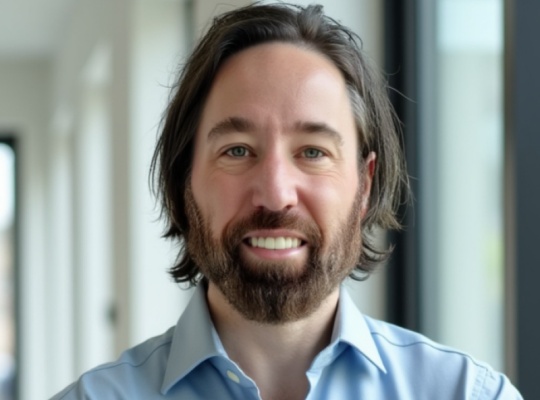
Ian Nowland discusses why conventional CI/CD practices break down for stateful, core infrastructure. Drawing from his leadership at AWS and Datadog, he shares actionable techniques for safe progressive deployments, synthetic testing in production, and mitigating blast radius in complex software platforms.
By Ian NowlandRead on the original site
Open the publisher's page for the full experience