bias
17 stories filed under bias on Beyond Market Intelligence. The newest of them: “Measurement error can make nonlinear data look deceptively linear”, “Why Small Decision Models Beat LLMs for AI Answer Evaluation”, and “Neural architecture search promised progress, but transformers emerged elsewhere”. Measurement error can quietly disguise nonlinear data as a straight line, and that deception has real consequences for anyone building models on shaky foundations. Jev takes a different path in the AI evaluation debate. Acme AI is the next-generation, AI-powered spreadsheet platform built to replace Excel and redefine how analysts, data scientists, and enterprise teams work… The list below is every bias story on Beyond Market Intelligence, newest first.
Measurement error can make nonlinear data look deceptively linear
Measurement error can quietly disguise nonlinear data as a straight line, and that deception has real consequences for anyone building models on shaky foundations. When your visual patterns look tidy but the underlying relationships aren't, your analysis inherits that hidden distortion. It's a reminder that data hygiene matters as much as algorithm choice. For those exploring how modern tools handle these nuances, our related piece on Polars 2.0 offers a practical look at what thoughtful engineering can bring to your workflow.

Why Small Decision Models Beat LLMs for AI Answer Evaluation
Jev takes a different path in the AI evaluation debate. Where LLM-as-a-Judge generates full responses for every check, Jev returns a short choice with a confidence score. That is a leaner, faster route to the same destination. Teams feeling the cost and delay of large-model judging should explore this approach. It keeps the evaluation simple without sacrificing reliability. For more on how small decision models fit into the broader routing conversation, our piece on model routing as a design choice pairs well with this discussion.

Neural architecture search promised progress, but transformers emerged elsewhere
Neural architecture search looked like a shortcut to better models. Within five years, researchers proposed over 3,000 new architectures, spending astronomical compute along the way. Yet the transformer, the field's biggest win, came from elsewhere. NAS then quietly faded. Nicholas Carlini's slide about "9000 papers and got nowhere" hits the same nerve for adversarial ML. We should ask hard questions about where effort goes. If you're entering this space, treat momentum as a warning sign.
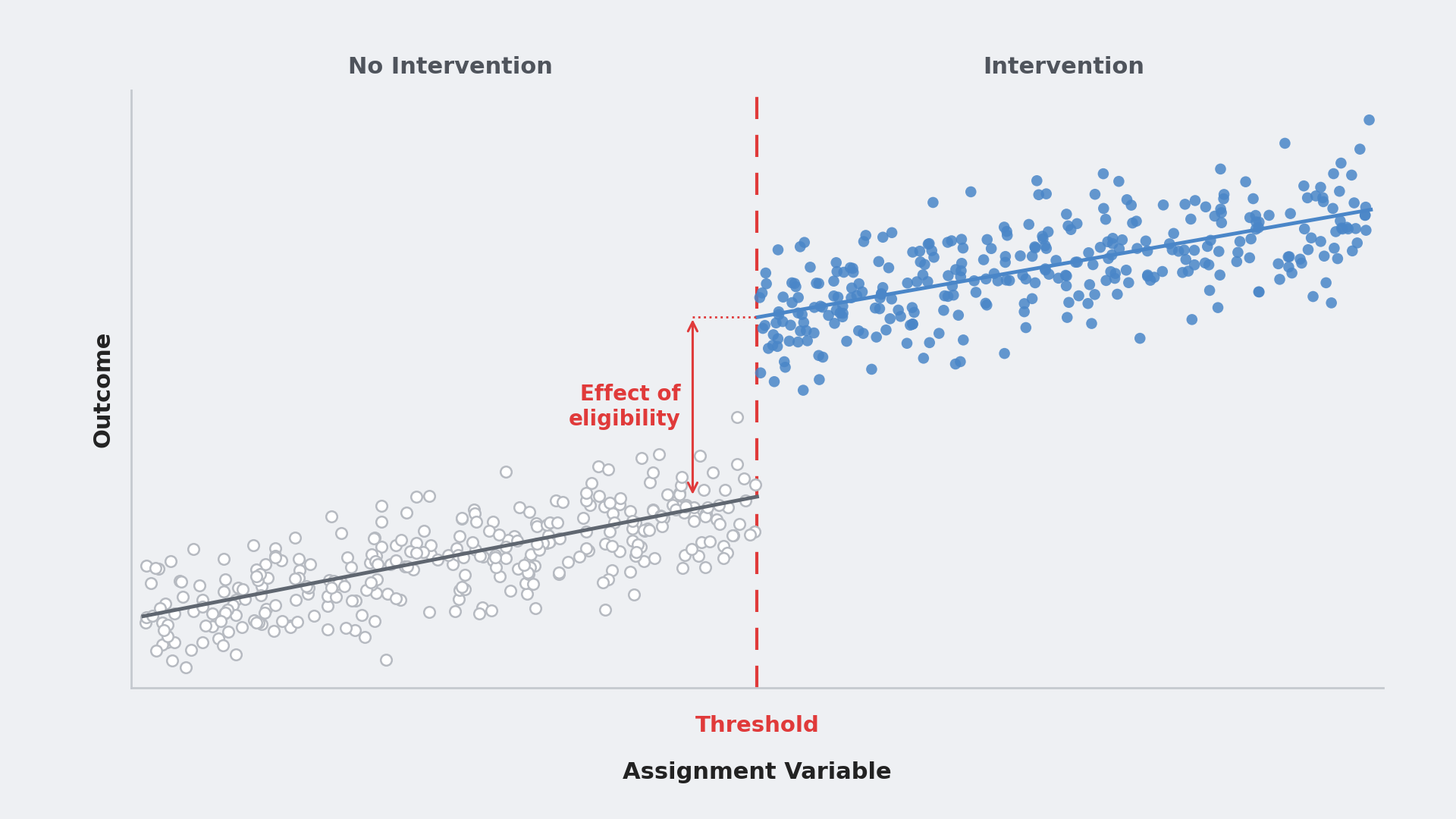
See Through the Hype of Your AI Feature's Adoption Numbers
When a team opts into an AI feature, the lift you measure isn't just the tool's effect. It's a selection effect, a reflection of who chose to engage. This guide offers a practical framework for estimating what that opt-in feature actually did, even without randomization. It's a sharp, honest look at a messy problem. For practitioners ready to dig deeper into the mechanics of modern AI systems, our guide to distributed algorithms pairs well with this mindset.

Test your model's foundation before trusting its results
Every model leans on assumptions, but how often do we pause to check if they still hold? This piece tackles that question head-on, arguing that reliability isn't a one-time achievement but a habit of revisiting what we take for granted. It's a sharp reminder that data work rewards curiosity over complacency. If you're building systems, this is worth your attention. For a deeper look at how similar principles apply in practice, our related article on real-world computer vision deployments offers a fitting follow-up.

What Hidden Gaps in Your Data Reveal About Your Assumptions
We often treat missing values as a glitch, a blank cell to be filled or dropped. But that silence carries its own message, hiding assumptions we rarely question. This piece on Towards Data Science digs into what we overlook when data goes unrecorded, challenging us to see absence as part of the story. It is a thoughtful, grounded read for anyone who has ever trusted a dataset too quickly.
When a scientific calculator becomes a platform for AI discovery
A 67% accuracy on handwritten digits sounds unimpressive, until you remember the entire model fits in your head. This builder trained a binary classifier on the Casio FX-82CE X, hand-punching weights from just six images. The architecture is brutally simple: a 3x3 grid feeding one neuron. That it works at all is a quiet win for minimalism. The real lesson? Even a clunky, manual process reveals how much signal lives in raw data.

When Value Falters, Public Skepticism of AI Takes Hold
People accept tradeoffs when the value is clear. But when they don't see that value, resistance builds, and that's exactly where public opinion turns. This piece digs into why anti-AI sentiment persists, and it's a conversation worth having on your own terms. If you're curious how even early adopters wrestle with similar doubts, our related piece, *Talking to My AI Clone Taught Me to Question the Tech*, offers a personal look at that tension.
What honest limitations reveal about trust in modern research
A researcher asking whether an honest limitations section hurts a paper is asking the wrong question. The real issue isn't bias; it's trust. Reviewers, whether human or AI, are more likely to respect a candid assessment than a polished facade. Hiding flaws invites skepticism, not approval. If anything, a thoughtful limitations section signals rigor. It shows you know what you don't know. That builds credibility. So no, it won't hurt. It might even save you from a reviewer who would have found the gaps anyway.
Theory guided machine learning: A practice worth rediscovering.
The gap between machine learning theory and practice has never been wider, and the confusion is understandable. Many of the field's most famous guidelines, like avoiding overfitting or trusting only certain optimizers, started as narrow mathematical results but became rigid folklore. We now know breaking these rules often works better, yet no one formally retracts the old lessons. This leaves practitioners questioning whether any theoretical guidance still holds, or if empirical trial-and-error is the only honest approach.

From One Gradient to Every Gradient: How Backpropagation Connects the Dots
Backpropagation often feels like a leap from theory to math, but this guide closes that gap with clarity. The guide walks you from a single gradient to the full chain, showing how errors flow backward through each layer. It is practical, grounded, and surprisingly intuitive for such a technical topic. If you are ready to move past intuition and see the mechanics clearly, this is the right next step.
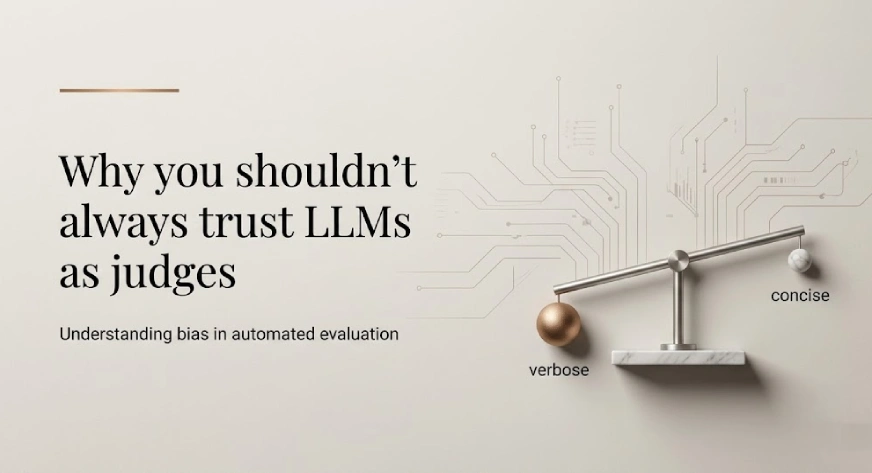
When AI Judges the Evidence, Watch for the Bias in the Verdict
At a DHS 2026 workshop, Bhaskarjit Sarmah posed a challenge we should all take seriously: can we truly trust LLMs as judges? They are fast and cheap, but speed doesn't equal fairness. When we outsource evaluation, we inherit hidden biases that shape outcomes. This is a needed reality check for anyone automating judgment. For a deeper dive into how AI systems adapt, explore how AI agents learn by editing context, not model weights.
Debugging a Bad Forecast Model Without the Noise
Debugging a bad forecast often starts with a single overall error score, yet that number rarely tells you where to look. Breaking the error down by customer, product, or horizon is a natural first step, but the real question is whether your tools support that or force you to build custom notebooks from scratch. That gap matters. For deeper guidance on refining your approach, our related piece on autoregressive rollout and uncertainty offers a practical next step.

Why Prediction Alone Fails to Uncover True Causal Effects
A model that predicts an outcome with high accuracy can still mislead you on treatment effects. That is the uncomfortable truth this piece tackles. The issue is variable selection: predictive models chase correlation, not causation, so they often drop confounders that matter for estimating impact. Bayesian Adjustment for Confounding offers a more principled path forward. It is a technical fix, but the lesson is practical. If your data strategy is off, even the smartest model will lead you astray.

Discover the core insight that makes backpropagation truly work.
If you've ever watched a neural network struggle through training, you know the feeling: there has to be a better way. This second part of our beginner's guide gets to the heart of that intuition, unpacking the core idea that makes backpropagation possible. The guide offers a clear, accessible look at a concept that often feels abstract, and it does a fine job keeping the explanation grounded. For those ready to push further, our guide on distributed algorithms offers a natural next step.
Six frontier LLMs show measurable left-leaning bias across eight fairness benchmarks
Six frontier models walked into a bias benchmark, and the results defy the usual left-right script. In a solo evaluation spanning roughly 20,600 examples across eight datasets, GPT-5.4, three Claude variants, two Gemini models, and Grok 4.3 were tested on political, gender, and racial bias. The standout finding: Grok self-identifies as right-leaning, yet behaves left-leaning when classifying content or answering policy questions. Refusal rates on race-related questions also varied sharply, with GPT-5.4 declining 20.3% of the time.

How Neural Networks Learn: Building Intuition for Backpropagation
Backpropagation often feels like a black box, but this guide pulls back the curtain without drowning you in math. The author builds intuition step by step, showing how neural networks learn by adjusting weights through error feedback. It's a practical starting point for anyone ready to move past surface-level understanding. If you're curious about how these concepts scale, our related guide, "Unlock LLM Training: A Practical Guide to Distributed Algorithms," offers a natural next step.