big data performance
big data performance at Beyond Market Intelligence is a file of 71 stories. The newest of them: “What Legacy Digital Shifts Can Teach Us About Smarter AI Adoption”, “Explore how distance shapes radar classification and what it means for your models”, and “OpenClaw 2.0 brings collaborative AI agents to your everyday messaging apps”. Paul Boag revisits his own book, *Digital Adaptation*, to argue that the best guide to AI adoption is already written in the history of digital transformation. A model that scores higher every time range is added should raise an eyebrow, even when validation looks clean. Acme AI is the next-generation, AI-powered spreadsheet platform built to replace Excel and redefine how analysts, data scientists, and enterprise teams work… The list below is every big data performance story on Beyond Market Intelligence, newest first.
What Legacy Digital Shifts Can Teach Us About Smarter AI Adoption
Paul Boag revisits his own book, *Digital Adaptation*, to argue that the best guide to AI adoption is already written in the history of digital transformation. The lessons are there, if we choose to learn them. Legacy shifts teach us that technology alone never drives change, culture and process do. For a deeper look at how failure fuels better products, see our related piece, "Learning from failure is how great products are built."
Explore how distance shapes radar classification and what it means for your models
A model that scores higher every time range is added should raise an eyebrow, even when validation looks clean. The concern here is legitimate: radar returns fewer points from distant objects, so the model may be latching onto distance as a proxy for size or class. Stress testing means breaking the data so range distributions differ between training and validation sets. That reveals whether the model generalizes or memorizes the environment. Dropping the feature entirely is also worth exploring if the performance gap remains acceptable.

OpenClaw 2.0 brings collaborative AI agents to your everyday messaging apps
OpenClaw 2.0 marks a deliberate shift from personal agent harness to shared enterprise infrastructure. The update introduces multiplayer sessions, a rebuilt browser interface, and granular security controls, moving the platform closer to a deployable organizational layer rather than a developer-only tool. While isolation defaults still require deliberate configuration, the expanded permissions, sandboxing, and auditing capabilities give enterprises a credible path forward.

IBM's new mainframe chip runs Z and Arm workloads on the same cores.
IBM's next-gen mainframe chip is the first to run both Arm and Z workloads on the same cores, switching between them in nanoseconds. That's not a small technical trick; it's a direct answer to a question that has shadowed the mainframe for years. By making every core bilingual rather than bolting on a few Arm processors, IBM is betting that the machine running the world's banks can also run the AI era's software. It's a bold, practical step, and one worth watching closely.
When AI Spending Runs Ahead of Your Controls, Three Platforms Won't Help
Enterprise AI teams are done betting on a single orchestration platform. The median enterprise now runs three at once, not by accident, but because no one fully trusts one vendor. Security concerns and a desire for their own permissioning controls drive this hybrid approach. Microsoft leads today, but Anthropic dominates future consideration. Yet visibility remains a problem: one in five still can't stop a runaway agent's spending in real time. That gap between ambition and control is where the real work begins.
Meet Catalyst, the AI agent that fixes IT issues before they happen.
Serval's Catalyst is now generally available and enabled by default, moving beyond simple workflow creation. It acts as an administrative super agent that analyzes ticket history and SOPs to identify repetitive work, then builds the automations to resolve it. More importantly, it deploys background agents that monitor connected systems for emerging issues, proposing fixes before an employee ever files a ticket. This shifts the focus from managing requests to preventing them, turning operational history into a continuous engine for new automation.
Theory guided machine learning: A practice worth rediscovering.
The gap between machine learning theory and practice has never been wider, and the confusion is understandable. Many of the field's most famous guidelines, like avoiding overfitting or trusting only certain optimizers, started as narrow mathematical results but became rigid folklore. We now know breaking these rules often works better, yet no one formally retracts the old lessons. This leaves practitioners questioning whether any theoretical guidance still holds, or if empirical trial-and-error is the only honest approach.

Capital One's open-weight models power a scalable multi-agent AI platform
Capital One isn't waiting for a better off-the-shelf model. At VB Transform 2026, Kel Vanee described how the bank built a multi-agent platform by deeply customizing open-weight models with proprietary data, treating that data as an advantage no frontier model can match. The approach scales beyond one use case, lifting performance across the portfolio. It's a practical blueprint for financial services, and for readers exploring how AI agents handle complex workflows, our related piece on bridging retrieval and action offers a useful parallel.

Open video creation meets open weights in a faster, more accessible AI model
LTX-2.5 turns a single image into a 10-second video in under seven seconds on Nvidia superchips, and it's open weights. That speed, paired with native ComfyUI integration, gives builders a direct path from experimentation to production without locking data or IP into a closed API. For teams testing the edges of real-time video, this is the practical next step. Explore what an open model can do when the infrastructure finally catches up.

Meta brings agentic AI to local machines with open source Muse Glimmer
Meta is putting its weight behind open source again. Today marks the release of Muse Glimmer, a 30-billion-parameter model designed to run autonomous AI agents directly on high-end consumer hardware. It's a meaningful step toward moving agentic workloads off the cloud and onto local machines, but the license is the real headline. Glimmer arrives under Apache 2.0, a permissive standard with no usage restrictions. For developers, that means freedom to modify, deploy, and commercialize without legal friction. The weights are available now.
Hark Handoff lets AI navigate the web to automate your daily tasks.
Most AI agents promise to handle the web for you. Hark Handoff actually delivers on that ambition, and it does so at a fraction of the cost of its biggest rivals. The startup's new computer use agent navigates sites like DoorDash and LinkedIn autonomously, posting a top score on a key benchmark. But the comparisons skip the newest models from OpenAI and Anthropic, leaving its "best-in-world" claim unverified against current leaders. Still, the pricing is hard to ignore.
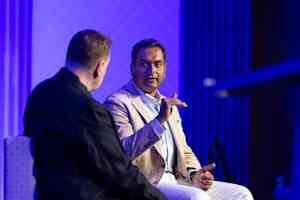
Asana's AI agents share team memory without exposing your secrets
Asana's new Agentic Work Management platform attacks a real problem: AI agents that can't remember what happened five prompts ago. The company built AWM on its 18-year-old Work Graph, turning a static database into shared memory for AI teammates. That's the smart bet, context is the moat, not the model. Bose's guardrail for confidential projects is the detail worth noting; it keeps shared memory from leaking into unauthorized hands. For teams tired of stateless chatbots, this is a practical path forward.

When humans must step in, hybrid robotics keeps AI data clean
The Hybrid BRC is Bright Machines' answer to a problem most of us never see: the human hand that breaks the digital record. The company's CEO puts the stakes bluntly, manual assembly can start with first-pass yields as low as 20%. That number is the story. This isn't a hardware tweak. It's an admission that even the most automated factories need people, and the winners will be those who keep humans in the loop without losing the data thread.

Microsoft's new AI model redefines security value by prioritizing efficiency over size
Microsoft is betting that the smartest model no longer wins. With MAI-Cyber-1-Flash, the company pairs a compact, cost-efficient security model with its MDASH harness, letting a smaller system handle 90% of threats while escalating the hard 10% to OpenAI's GPT-5.4. That's a pragmatic wager: cut costs by half and beat frontier rivals on the same benchmark. It's a sharp reminder that in enterprise AI, the best system, not the biggest brain, often delivers the strongest defense.

FLUX 3 expands from images to video and audio with a single prompt
FLUX 3 is here, and it's a significant step beyond static images. Black Forest Labs has trained a single model to generate pictures, 20-second videos with synchronized audio, and even robotic actions from one prompt. It's an ambitious move toward what they call visual intelligence. The catch? Access starts gated, with no public API or pricing yet. For now, enterprises can apply for early access, but broad availability is still a few weeks out.
How React Server Components expose a critical deserialization risk
React Server Components promise a smoother path to interactive UIs, but that same Flight protocol hands attackers a surprisingly deep bag of tricks. Durgesh Pawar digs into the mechanics of "React2Shell," a CVSS 10.0 flaw where deserialization sinks turn protocol manipulation into remote code execution. It is a sharp reminder that convenience often carries hidden weight. For more on turning complex data challenges into practical wins, our piece on deduplicating supplier lists with deterministic stages pairs well with this mindset.

Slackbot now pulls your CRM data and charts directly from a chat message
Unlock a new level of productivity with Slack’s latest integration, connecting Slackbot directly to the Salesforce platform. Now, from a simple chat message, you can pull CRM data, generate insightful charts, and even send DocuSigns—all without leaving Slack. This marks a significant step toward a unified system, leveraging Salesforce’s extensive data and AI capabilities within the familiar Slack workspace. Discover how this transformative change can streamline workflows and empower your team, echoing insights explored in our recent article, "Information Theory and Ensemble Models."
Explore how AI-native tools are reshaping modern business transformation
The era of AI experimentation is evolving. Microsoft and NVIDIA are partnering to accelerate the shift from isolated demos to scalable, production-ready agentic AI—a critical step for businesses seeking transformative results. This collaboration delivers a unified platform, combining Microsoft's enterprise control plane with NVIDIA’s intelligence and acceleration, to empower developers and build agent factories. Join us to discover how this architecture unlocks a new level of efficiency and collaboration across your organization. Learn more about this evolution in agentic AI and its implications.

Google delivers faster, cost-effective image generation for enterprise teams
Google today introduces Nano Banana 2 Lite (NB2 Lite), designated Gemini 3.1 Flash-Lite Image, a significant advancement in AI image generation designed for enterprise efficiency. This model delivers images in a remarkably fast 4 seconds at a competitive $0.034 per 1,000 images. Optimized for high-throughput workflows, NB2 Lite outperforms its predecessor while offering cost savings compared to other Gemini models. Explore its capabilities now via Google AI Studio, the Gemini API, and GEAP—a practical solution for rapid prototyping and automated asset generation.

Choosing the Right Data Skills Platform for Your Growth in 2026
Navigating the world of data skills requires choosing the right learning platform. DataCamp and Coursera are both popular options, but cater to different needs. DataCamp focuses exclusively on data science and analytics, while Coursera offers a vast marketplace of courses across numerous disciplines. This comparison weighs pricing, course catalogs, and more to determine which platform delivers the most value in 2026. For deeper insights into related AI challenges, explore "Your RAG Pipeline Is Probably Useless. Here’s a Better Alternative."
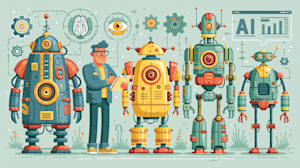
Build an AI stack that adapts when your models don't survive
Shopify has pioneered a progressive approach to AI infrastructure, building a resilient LLM proxy that grants engineers access to multiple providers—automatically shifting workloads during outages or model updates. This strategy, detailed in a recent VentureBeat podcast, mitigates risk and unlocks reporting capabilities, enabling seamless transitions like the switch from Claude Fable to Opus. Distillation, utilizing smaller, task-specific models like Sidekick, further optimizes performance, achieving up to 30x cost and speed improvements while maintaining accuracy.

When Data Paths Break, AI Inference Stalls in Production
Moving AI workloads from pilot to production often reveals a critical bottleneck: data delivery. While demonstrations thrive on direct storage-to-compute connections, these "point-to-point" architectures crumble under the weight of sustained production traffic, leading to stalled inference pipelines and underutilized GPUs. F5 emphasizes that successful AI operationalization demands infrastructure engineered to withstand real-world failures, not just ideal conditions. Building a resilient, observable data delivery layer is paramount for unlocking AI's full potential.

Small model, big questions: Weibo's 3B AI challenges reasoning benchmarks.
The AI world is buzzing over Sina Weibo’s VibeThinker-3B, a surprisingly potent 3-billion parameter language model that’s challenging the conventional wisdom around AI scaling. Achieving benchmark scores rivaling those of significantly larger models from industry giants like Google and OpenAI, VibeThinker-3B demonstrates a compelling case for "Parametric Compression-Coverage," suggesting verifiable reasoning can be remarkably efficient. While real-world utility remains a subject of debate, this development compels a critical question: can focused innovation on smaller models unlock AI capabilities previously confined to massive, expensive systems?

AI's real risk is making expertise obsolete, not just tasks easier
Satya Nadella cautions that unchecked AI concentration risks hollowing out entire industries, drawing a parallel to the disruptive effects of globalization. He introduces a framework centered on “human capital” and “token capital,” emphasizing that AI should empower, not replace, human expertise. Nadella advocates for businesses to build proprietary learning loops, decoupling institutional intelligence from specific models to ensure resilience and prevent value capture by a few dominant systems. For deeper insight into related tech trends, explore TechCrunch's coverage of SpaceX's recent IPO.