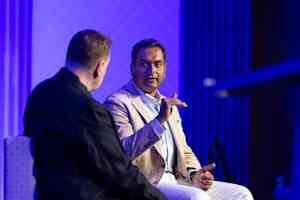
The real problem with enterprise AI was never the model. It was the memory. Any developer can wire a large language model into Slack or Google Drive and call it an agent, but as Asana's chief product officer Arnab Bose explained at VB Transform 2026, those integrations are stateless. They answer a prompt, then forget it. They cannot tell you whether last month's version of the workflow actually worked, and they certainly cannot learn from the five people who asked it questions yesterday. That is the wall every team building AI agents hits, and it is why Unlock ChatGPT for Work: A Practical Guide to Getting Started feels like a tutorial for a different era. The guide assumes you are the one prompting. Asana's bet is that the future belongs to systems that prompt themselves, against a shared ledger of company reality.
That ledger is the Work Graph, an 18-year-old architecture Asana has repurposed into what Bose calls the Pyramid of Clarity. Tasks roll into projects, projects into portfolios, portfolios into goals. When an AI teammate is plugged into that graph, it is not just reading a prompt. It sees the whole company. It knows that a delayed design task threatens a revenue target. It carries context from one assignment to the next. That is the difference between a chatbot and a colleague. But the harder problem is not building the graph. It is keeping it honest. Bose was explicit about the boundary: if an executive uses an AI teammate to build a workflow for a confidential M&A project, the system must ensure that memory does not leak to an unauthorized employee who later touches the same agent. Asana engineered access controls to govern when a memory is created versus when a task is simply executed. That is not a technical footnote. That is the difference between an agent that helps the company and one that gets you sued.
The other thing Asana got right is billing abstraction. Most agentic platforms charge by the token or by the model, which means your finance team has no idea what a month of AI work will cost. Bose said Asana charges a static cost per task completion, absorbing the complexity of dynamic model routing. That matters more than most buyers realize. If your employees are afraid to run an agent because they might burn through a credit cap, the agent is useless. By making pricing predictable, Asana removes the friction that kills adoption. CoreWeave is already using this to launch products, where a product manager writes a Google Doc and the system spins up finance, marketing, and hardware tasks without a single form. That is the practical promise here: not magic, just the busywork disappearing.
What remains unresolved is the frenemy problem. The same frontier models powering Asana's agents, Anthropic and OpenAI, are shipping their own competing tools inside Slack. Bose's answer is that Asana has 18 years of workflow data and prebuilt standard operating procedures that raw models do not have. He is right, but only until the models get better at remembering. The question to watch is whether Asana can keep its data moat deep enough to matter. For our readers, the takeaway is concrete: when you evaluate an AI agent platform, do not ask what model it runs. Ask what it remembers, who controls that memory, and what it costs when the task is done. That is the whole game.