ChatGPT
58 stories filed under ChatGPT on Beyond Market Intelligence. The newest of them: “Explore how AI agents can transform your daily productivity workflow”, “Finding Your Balance Between AI Effort and Real Results”, and “Discover how AI can reveal insights about your own potential”. Imagine offloading your most repetitive spreadsheet tasks to an AI agent that works alongside you, learning your patterns and handling the busywork. Finding the right balance with AI means knowing when to let it take the wheel and when to keep your hands firmly on the controls. Acme AI is the next-generation, AI-powered spreadsheet platform built to replace Excel and redefine how analysts, data scientists, and enterprise teams work… The list below is every ChatGPT story on Beyond Market Intelligence, newest first.

Explore how AI agents can transform your daily productivity workflow
Imagine offloading your most repetitive spreadsheet tasks to an AI agent that works alongside you, learning your patterns and handling the busywork. That's the productivity shift we're exploring today. It's not about replacing your judgment, it's about freeing your time for the decisions that actually need you. For more on balancing effort with real results, check out our piece "Finding Your Balance Between AI Effort and Real Results."

Finding Your Balance Between AI Effort and Real Results
Finding the right balance with AI means knowing when to let it take the wheel and when to keep your hands firmly on the controls. Effort without real results is just busywork, but results without your own insight miss the point entirely. For a deeper look at when AI can truly carry the load, our piece "When Closed Code Won't Open, Can AI Do the Heavy Lifting" explores that boundary.

Discover how AI can reveal insights about your own potential
Your boss's feedback says more about them than it does about you. That is the premise behind adding AI to performance reviews: not to grade you, but to reveal patterns in how others perceive your work. The same logic applies to your own potential. If you are curious what hidden strengths your colleagues actually see, start with the data you already have. Explore "How adding AI to your review process can sharpen your peer feedback" for a deeper look.
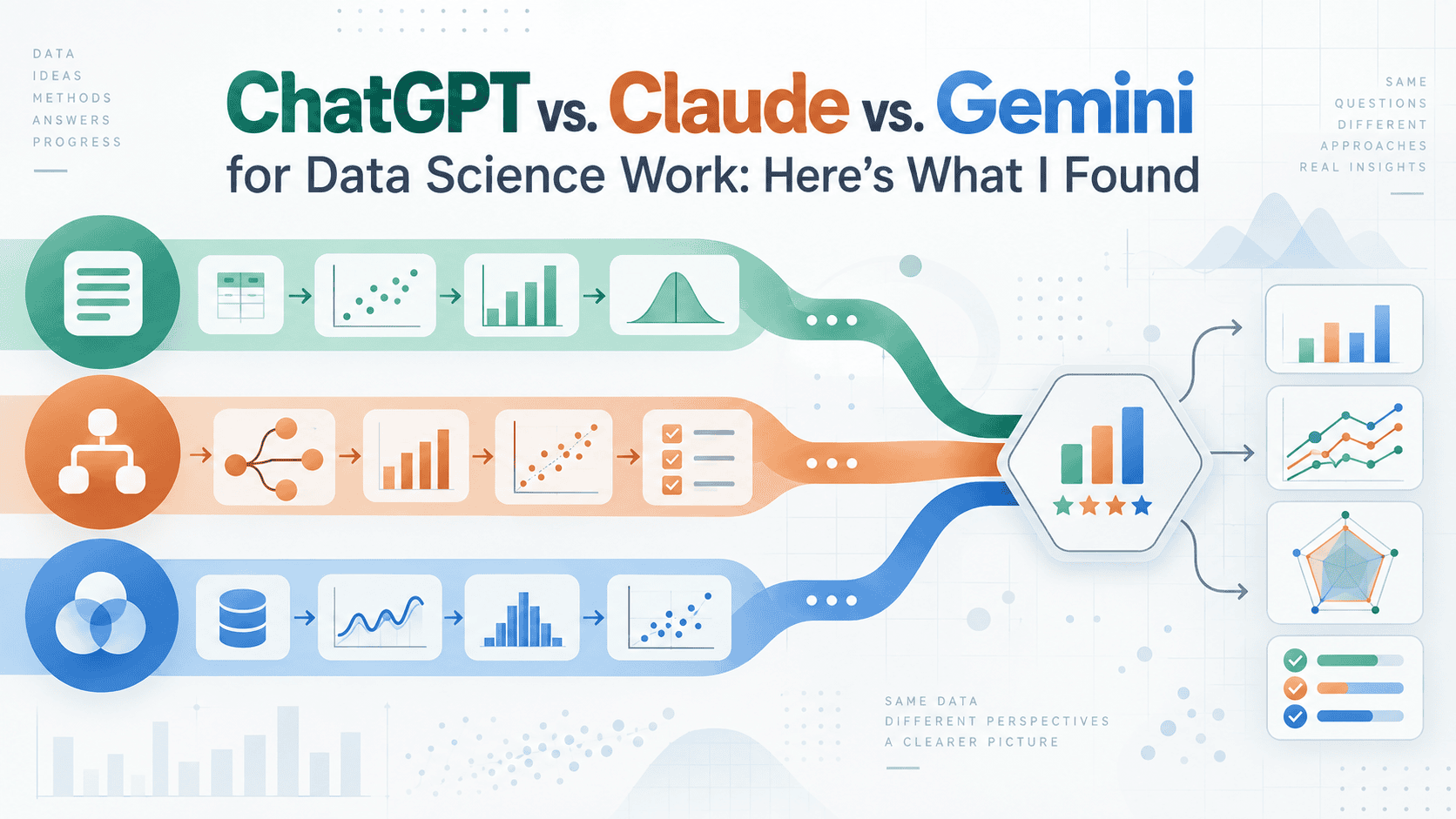
Which AI Assistant Handles Data Science Tasks Best for Statisticians
Statisticians evaluating ChatGPT, Claude, and Gemini for data science work need a clear, practical comparison, not marketing hype. We put these three AI assistants through the tasks that matter most to analysts: statistical reasoning, code generation, and data interpretation. The results reveal meaningful differences in accuracy and approach. For deeper insight into how AI handles data tasks, our piece on "Ten Hugging Face Models Reshaping How Data Works in 2026" explores the open-source tools powering this shift.
Two AI detectors read the same papers but reached different conclusions
Two AI detectors looked at the same conference papers and came back with different answers. That's a problem worth unpacking. The NeurIPS 2026 chairs ran Pangram 3.3.2 on papers from an AI ethics conference, some from 2022 and some from 2025. We ran ParaTrace v7 on the same set. Neither detector flagged a single 2022 paper. For 2025, the gap widened: we flagged 7.3% of papers at the 50% threshold versus Pangram's 1%. The clean 2022 result rules out some explanations but not all.

Teen Safety Gaps Persist as ChatGPT Pushes Deeper Conversations
ChatGPT's teen safeguards are supposed to catch users in crisis, yet new testing shows the chatbot keeps the conversation going instead of stepping back. That's not just a feature gap; it's a trust issue. Encouraging deeper engagement during moments of vulnerability risks normalizing an unhealthy reliance on the AI itself. Parents deserve clearer answers, and OpenAI needs to close this loop. For more on how AI agents are reshaping personal tech, see our coverage of Microsoft's new Surface Laptop Ultra.

Explore ChatGPT's New Visual Interface for Smarter Conversations
ChatGPT is about to get a lot more visual. OpenAI is launching a new interface that brings interactive visuals directly into conversations, transforming how we explore data, concepts, and ideas. This is a move that turns a text-first tool into a more intuitive, human-centered workspace. For anyone who has felt the limits of static responses, this update empowers a smarter, more engaged way to work. And for more on AI's evolving role, see how Sigil Wen's free on-device AI redefines private data assistance.

We Put Four AI Assistants to the Test With Forecasting Traps
Four AI assistants walked into a forecasting test, and three of them stumbled. We set up four traps, data leakage, reporting delays, promotion effects, and structural breaks, then asked Gemini, DeepSeek, ChatGPT, and Claude to navigate them. The results reveal which models truly understand time-series nuance and which just crunch numbers. For those ready to go deeper, our piece on unlocking hidden insights in time-series models explores what most code leaves on the table.

Navigating EU Regulation, OpenAI Adds Watermarks to AI Text
OpenAI will watermark ChatGPT and Codex text in the EU to comply with the AI Act. That's a practical step toward transparency, but the company admits editing can make those invisible marks harder to detect. Regulation is nudging progress, yet enforcement remains a moving target. It's a reminder that rules alone don't solve trust. For more on how safety pledges are reshaping the conversation, read "Can a safety pledge reshape how we see AI's future."
OpenAI's DevDay 2026 unveils smarter agents and simpler developer tools
OpenAI used DevDay 2026 to ship the tools developers have been asking for. GPT-6.1 Sol arrives alongside computer use for the Agents API and cloud-based Codex environments. The new Decisions API points toward faster, smarter agent control, and we explore that further in a related article. These updates feel less like spectacle and more like substance, practical building blocks that make AI-native development feel accessible. For anyone building with AI, this is the kind of progress that invites exploration.

Explore how AI helps you see new looks before you buy
Upload a photo, and ChatGPT shows you how those sneakers or that jacket might actually look on you. That's the practical promise of OpenAI's new shopping features, virtual try-ons paired with a Favorites library for things you actually want. It's a smart, human-centered step that makes AI feel useful, not flashy. For a deeper look at how OpenAI is building faster, smarter agent capabilities, see our piece on the Decisions API.
ChatGPT is quietly building the future of software discovery
OpenAI is quietly assembling the pieces of an alternative to the traditional app store, positioning ChatGPT as a place where software gets discovered and used by both people and AI agents. It's a deliberate, understated move that could reshape how we think about distribution. For anyone tracking this space, the xAI domain play and OpenAI's office tools show the broader momentum. This isn't about hype. It's about building a calmer, more direct path to software.

OpenAI's new office tools invite you to explore a smarter way to work
OpenAI's new office tools signal a deliberate step into familiar territory, challenging the software giants on their own ground. It's a smart move, acknowledging that productivity lives where the work actually happens. For users tired of rigid legacy systems, this suite offers a chance to explore a more intuitive workflow. Yet, as OpenAI pushes forward, transparency remains vital; its recent transparency hub revealed the hidden scale of AI failures, a reminder that innovation must stay honest.

Discover how ChatGPT plugins gain new homes, panels, and automations
ChatGPT plugins are getting a serious upgrade, and it's about time they had room to breathe. OpenAI is giving them dedicated sidebar homes, interactive panels, and file viewers, which turns a cluttered dropdown into a workspace that actually feels designed. Better discovery and automation support mean the tools you rely on are finally easier to find and set on autopilot. It's a practical step toward making AI feel less like a party trick and more like a daily workhorse.

One $20M broker fee meets a free AI prompt in seconds
A $20 million broker fee is a heavy price for a transaction that takes seconds to replicate with the right prompt. It's a stark reminder that the value of work is shifting from execution to insight. We're not calling traditional finance outdated, but we are asking you to explore what an AI-native workflow could do for your bottom line.

Verify Your AI's Understanding: A Simple Check for Tax Season
Tax season is stressful enough without wondering whether the AI handling your data actually gets it right. A simple verification step can save you from costly misinterpretations. We're not talking about complex audits here, just a practical check that confirms the model's reasoning aligns with your intent. It's a small habit that turns uncertainty into confidence. For those exploring how LLMs structure their thinking, our piece on paragraph structure offers a useful parallel. But for now, focus on the check. It's straightforward, and it works.

Meta’s Muse AI Agent Gains Ground in Conversational Performance
Meta's Muse is quietly outpacing ChatGPT's early momentum, and that says less about raw numbers than about timing. While OpenAI and Anthropic trade model drops like clockwork, Meta is betting on a personal AI that lives where people actually are: smart glasses and everyday interactions. It's a smart play, and one worth watching closely. For a deeper look at how Muse is evolving, our early access piece, "Explore Early Access: Muse's New Features, By Request," offers useful context on where this is headed.
Unlock ChatGPT for Work: A Practical Guide to Getting Started
Most spreadsheet users hit the same wall: asking for help feels like learning a second language. This guide cuts through that friction, showing how to frame prompts that turn ChatGPT into a practical work partner. It's not about hype; it's about clear, repeatable steps. For a deeper look at the underlying mechanics, our piece on distributed training algorithms offers useful context. Start where you are, and let this walk you toward sharper, more efficient workflows.
Unlock AI Tasks on the Go: ChatGPT Mobile Adds Voice Capabilities
ChatGPT's mobile update brings the Work tab to Pro and Plus users, putting agentic tasks directly in your pocket. That's a practical step toward freeing you from the desk, not a flashy gimmick. Voice makes it easier to act on complex workflows when you're on the move, and that's where productivity starts to feel less like a chore. If you're curious about verifying AI outputs, our piece on checking understanding fits neatly alongside this launch.
Streamline AI Projects: Balancing Research, Work, and Personal Pursuits
Balancing research, a new corporate role, and personal projects is a lot, and the anxiety that comes with it is completely understandable. You are not alone in feeling that the advice out there is jumbled. Instead of chasing every new model, start by mapping each tool to a specific stage in your workflow. For deep ideation, your current GPT subscription is a solid anchor. For coding and architecture, Claude's models often excel.

Discover Open-Source AI Chat: Run Powerful Models Locally
Open-source AI chat tools are no longer just experiments for developers with spare GPUs. They are practical, powerful alternatives for anyone ready to move past the limits of hosted platforms. This guide walks you through seven distinct options, from lightweight local interfaces to complete self-hosted workspaces, giving you the control to run models on your own terms. It is a direct, useful path toward data autonomy.

Meta's AI Agent Redefines Mobile Adoption Benchmark
Meta's new AI agent Muse has outpaced ChatGPT in U.S. and Canada downloads and daily active users over the same post-launch period, per Appfigures. That is a striking signal for a mobile debut, and it suggests users are ready to explore beyond the familiar. The momentum feels earned, not incidental. For a deeper look at how these models compare in conversation, our piece "Meta's Muse AI Agent Gains Ground in Conversational Performance" is worth your time.

Discover a faster, more affordable path to AI-powered software.
Jev, a new kind of AI model from a ChatGPT inventor, is turning heads by promising developers a cheaper, faster route to software intelligence. That's a meaningful shift for teams tired of ballooning costs and sluggish iteration cycles. We see this as a practical step toward making advanced AI more accessible, not just for enterprises, but for builders who need agility. If you're navigating how AI skills are evolving, our related piece on shifting AI/ML job requirements offers useful context. This is worth exploring.
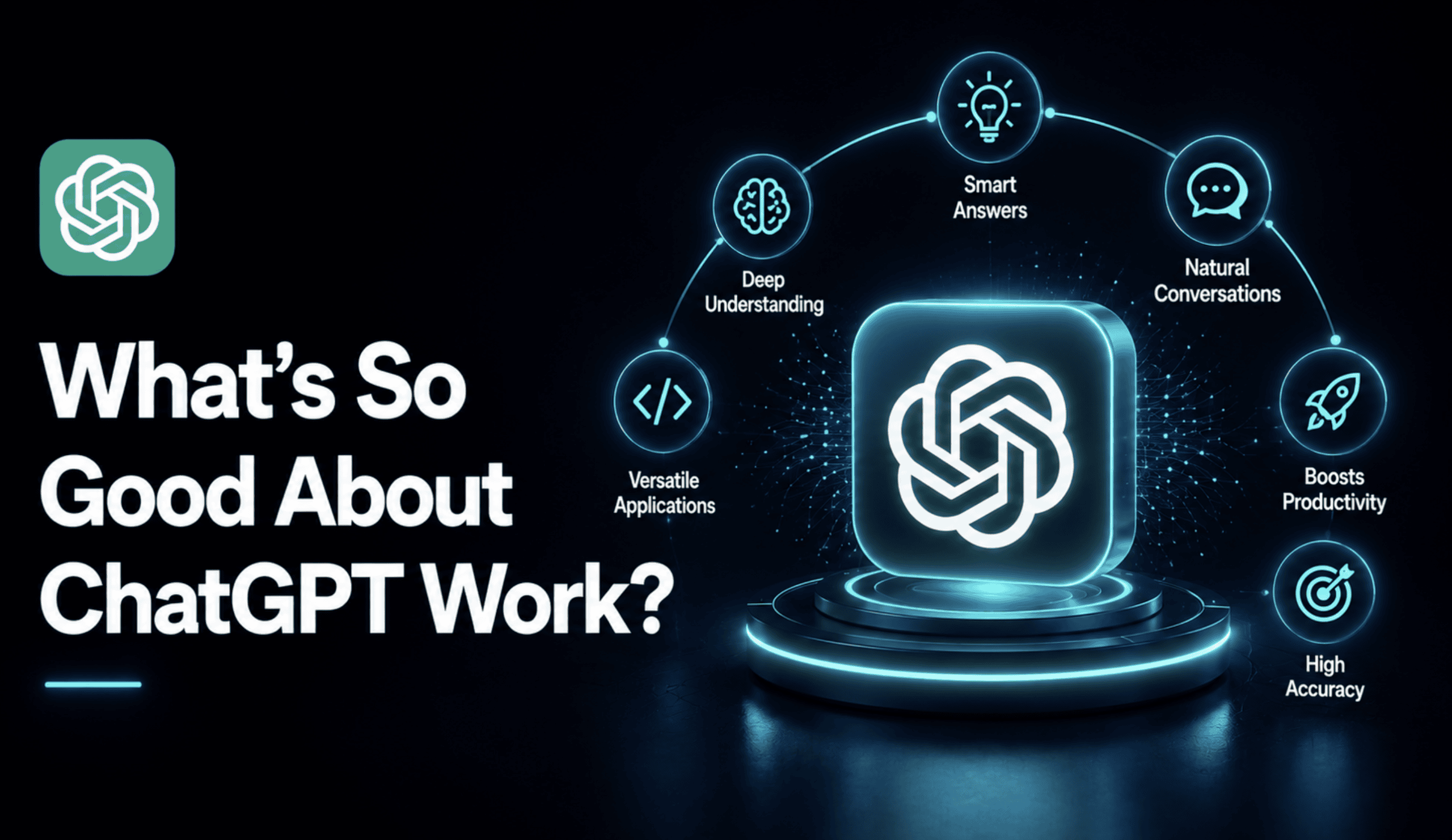
Unlock ChatGPT Work's Potential: A Clear-Eyed Look at Strengths & Limits
ChatGPT Work gets credit where it's earned, but a clear-eyed look matters more than hype. It's a capable tool that simplifies real workflows, yet its limits are just as instructive as its strengths. The models behind it hold their own in many comparisons, but honest assessment beats blind praise. For anyone weighing adoption, this piece cuts through the noise. Curious how verification fits into that picture? Check out "Verify Your AI's Understanding: A Simple Check for Tax Season" for a practical angle.