Claude
Claude at Beyond Market Intelligence is a file of 62 stories. The newest of them: “Turn Repetitive Prompts into Reusable Workflows with Custom Skills”, “Visa turns AI on itself to find hidden flaws in global payments”, and “When Shared Links Expose More Than You Intended”. If you're tired of re-entering the same validation rules and company standards into Claude for every project, custom Skills offer a more efficient path. Visa aimed Anthropic's Claude Mythos at the infrastructure behind billions of daily transactions, and the model stitched minor weaknesses deep in the stack into working exploit chains that would traditionally surface… Acme AI is the next-generation, AI-powered spreadsheet platform built to replace Excel and redefine how analysts, data scientists, and enterprise teams work… The list below is every Claude story on Beyond Market Intelligence, newest first.
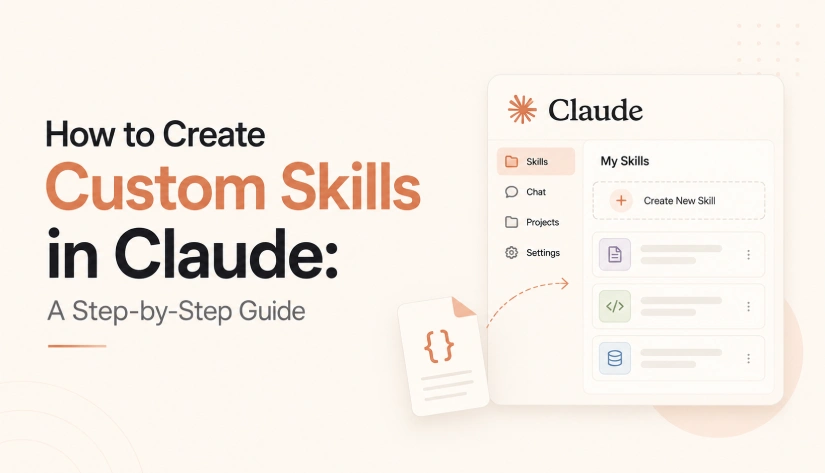
Turn Repetitive Prompts into Reusable Workflows with Custom Skills
If you're tired of re-entering the same validation rules and company standards into Claude for every project, custom Skills offer a more efficient path. This guide walks through packaging reusable instructions and templates so your team stops repeating the busywork. It's a practical fix for inconsistent outputs, and we appreciate how it keeps the focus on productivity rather than hype. For a deeper look at how AI can adapt through context, check out our piece on how agents learn by editing context, not model weights.
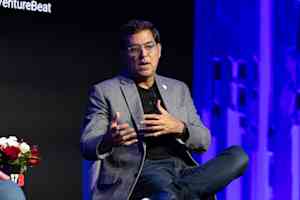
Visa turns AI on itself to find hidden flaws in global payments
Visa aimed Anthropic's Claude Mythos at the infrastructure behind billions of daily transactions, and the model stitched minor weaknesses deep in the stack into working exploit chains that would traditionally surface only late in penetration testing. Rajat Taneja, Visa's president of technology, walked the VB Transform 2026 audience through what came next. The company abandoned traditional remediation metrics for a measurement its team invented, and it open-sourced the harness that governed the entire hunt.

When Shared Links Expose More Than You Intended
A shared Claude chat link may have exposed your conversations and Artifacts to Google. The issue traces back to the "share chat" feature, which lets anyone with the URL view a project. That's a real problem, and it's worth taking seriously. If you've used that feature, check what's public now. For a deeper look at how AI interactions can surprise us, our piece "Talking to My AI Clone Taught Me to Question the Tech" offers a thoughtful parallel.

Explore how Claude's new voice can help you reschedule and draft.
Claude's voice mode is getting more capable, and that's worth paying attention to. The update lets you reschedule meetings or draft emails simply by speaking, which moves voice assistants closer to real productivity rather than novelty. It's a practical step forward, and we're glad to see Anthropic focusing on tasks people actually do. If you're exploring how AI fits into daily workflows, our piece on Meta's Muse AI Agent offers another useful comparison.
Explore papers by selecting any passage, formula, or figure for instant AI clarity.
Reading interp papers often means juggling passages between tabs just to make sense of a single formula. This project cuts through that friction. The tool lets you select any passage, figure, or citation and get an explanation grounded in the full paper's context, no context-switching required. It's a practical, honest solution built on a real pain point. Running it on a personal API key is refreshingly humble.
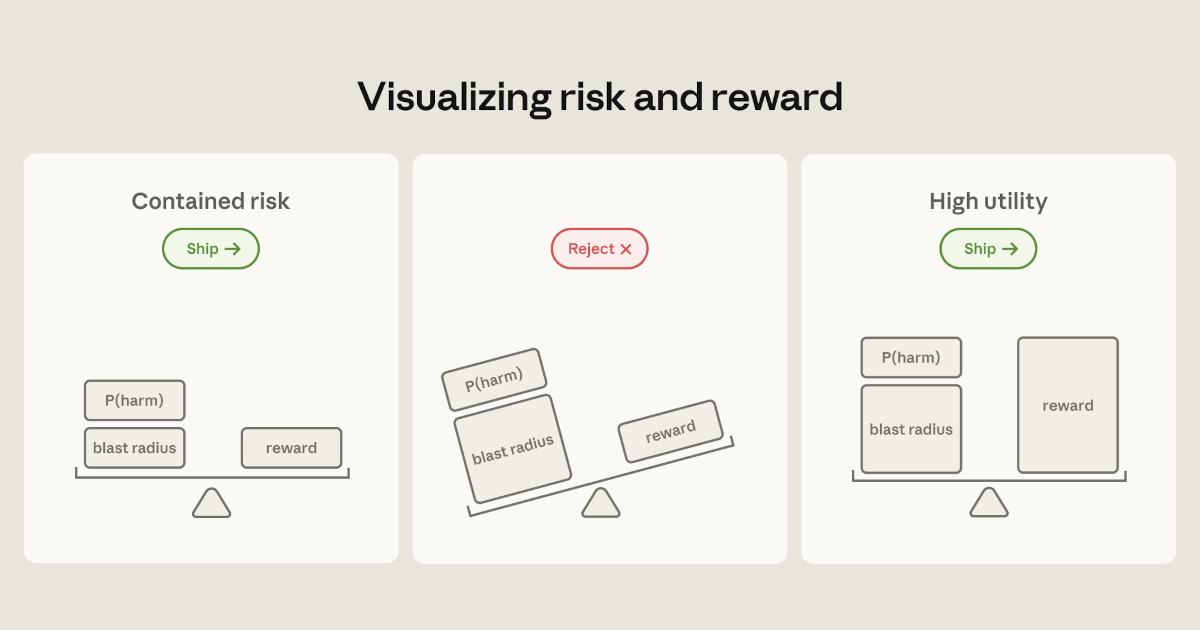
How Anthropic Restrains Claude with Deterministic Boundaries, Not Prompts
Anthropic is making a deliberate case for how it keeps Claude contained, and the argument hinges on hard limits rather than trust. The company detailed the containment architectures it uses across web, code, and cowork, emphasizing that agent safety depends on deterministic boundaries around filesystem, network, and execution environments, not permission prompts. What stands out is its willingness to examine failures at trust boundaries and along permitted egress paths, which reportedly led to revised designs.
Unlock faster local coding workflows with AI and speculative decoding
Local AI has a new ceiling. With Qwythos-9B-Claude-Mythos-5-1M running through llama.cpp, you can pair speculative decoding with the Pi coding agent to build fast, private workflows right on your own hardware. The OpenAI-compatible API keeps integration straightforward. This isn't about hype; it's about practical leverage. If you're still wrestling with cloud dependencies, this setup offers a refreshing alternative. And if you're questioning how much to trust these tools, our piece on talking to an AI clone is worth a read.
Schema proves process can match model power in ARC reasoning
A 99% score on ARC‑AGI‑3 is the kind of number that makes you stop and ask how. Schema, a harness built around Claude Opus 4.8 and Fable 5, claims exactly that without touching model weights. It reshapes the process: turning observations into working game models, testing predictions against interaction history, and revising plans on the fly. The fallback rule is refreshingly simple, rerun below 80 with a different model and keep the higher score. That's practical engineering, not magic.

Explore how open-source AI reaches new scale with Kimi K3's ambitious debut.
Beijing's Moonshot AI just dropped the heaviest open-source model yet, and it lands like a gauntlet. Kimi K3's 2.8-trillion parameters put it toe-to-toe with Anthropic's and OpenAI's best on benchmarks, closing a gap many assumed was permanent. This is a comeback story worth watching, especially as the company opens its weights on July 27. For enterprises tired of proprietary lock-in, the choice just got more interesting. The race isn't over; it's simply widened.
Move beyond AI hype to discover what agents actually need from you
We hear endless promises about what AI agents can do, but the real problem is simpler and more human: they don't yet understand context the way we do. That gap creates friction, not freedom. We're exploring how tools like Claude and OpenClaw fit into real workflows, and it's clear the hype outpaces the reality. If you're questioning whether these systems truly get you, you're not alone. Our piece on talking to an AI clone digs into that unease, and it's worth reading.

When Agents Outrun Billing, Your Cloud Costs Compound Before You Notice
A $14,000 AWS bill in one day. That's what a three-person agency faced after attackers lifted static access keys and burned Claude invocations on Bedrock. It's a stark reminder that cloud billing, built for human-speed mistakes, lags a full day behind agent-speed spend. When autonomous agents move faster than your guardrails, the cost isn't just computational; it's existential. Practitioners are right to warn us.

Why a Second AI Lab's Review Outperforms Self-Grading Code
Claude grading its own PR is a comfortable trap. When the same model reviews its own output, blind spots echo back as confidence. A sharper path is cross-provider review with Codex in GitHub Actions, treating a second opinion from a different lab as the real checkpoint. It's a practical, human-centered fix for an AI problem. For more on questioning what AI tells you, "Talking to My AI Clone Taught Me to Question the Tech" pairs naturally with this.
GLM 5.2 expands what's possible with AI-native spreadsheets
GLM 5.2 is a strong step forward, but it's worth asking how much of that progress is genuinely useful. We see a lot of AI models touted as breakthroughs, yet the real test is whether they make your daily work feel less like a puzzle. That's why we dig into these releases with a critical eye. If you're curious about the human side of this technology, our piece on "Talking to My AI Clone Taught Me to Question the Tech" offers a thoughtful counterpoint.

Centralize your AI tools: AWS and Anthropic launch a self-hosted control plane.
AWS and Anthropic have shipped the Claude apps gateway for AWS, a self-hosted control plane that puts identity, policy, telemetry, and spend caps in one stateless container. It routes inference to Amazon Bedrock or Claude Platform on AWS. That's a practical answer for teams juggling Claude Code and Claude Desktop across their org. Centralizing control without forcing a cloud detour feels like the right next step.