cloud computing
cloud computing at Beyond Market Intelligence is a file of 47 stories. The newest of them: “Explore how Aspire 13.5 refines your workflow with smarter tools and clarity.”, “Compute is AI's biggest cost. Finally, a way to price it.”, and “Groq secures $350M to accelerate its neocloud and data center expansion”. Last week's release of Aspire 13.5 feels less like a routine patch and more like a deliberate step toward a smoother developer experience. Hundreds of billions of dollars flow into data centers and GPUs each year, yet compute remains the industry's biggest cost without a clear pricing mechanism. Acme AI is the next-generation, AI-powered spreadsheet platform built to replace Excel and redefine how analysts, data scientists, and enterprise teams work… The list below is every cloud computing story on Beyond Market Intelligence, newest first.

Explore how Aspire 13.5 refines your workflow with smarter tools and clarity.
Last week's release of Aspire 13.5 feels less like a routine patch and more like a deliberate step toward a smoother developer experience. The refreshed dashboard and aspire.dev homepage are welcome, but the real value sits in the details: file imports and progress dialogs in the Interaction Service, interactive terminals for resources, and Kubernetes persistent volumes with cross-scope Azure references in deployment. These aren't flashy additions. They're practical, quality-of-life improvements that reduce friction.
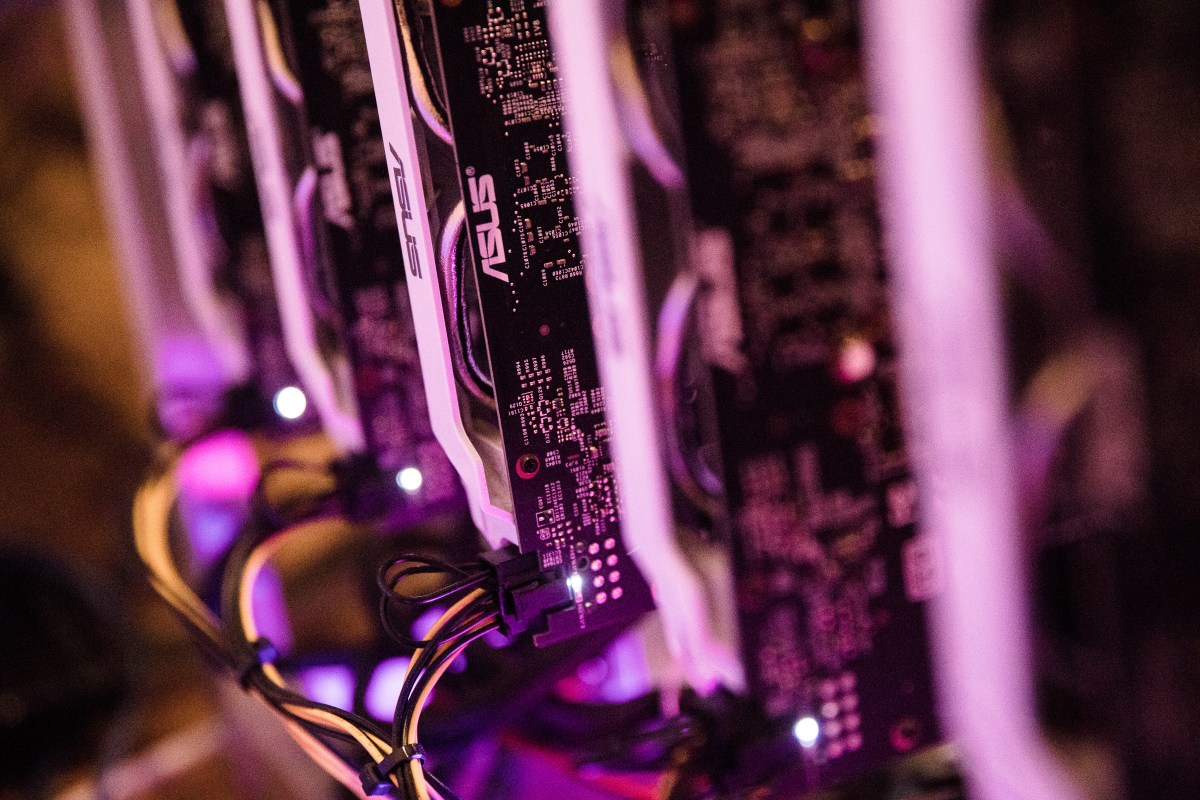
Compute is AI's biggest cost. Finally, a way to price it.
Hundreds of billions of dollars flow into data centers and GPUs each year, yet compute remains the industry's biggest cost without a clear pricing mechanism. Silicon Data is stepping in to fix that, giving Wall Street a way to value and hedge AI infrastructure. It's a necessary evolution for an industry spending at scale. For deeper context on how AI tools shape decision-making, our piece on verifying AI's understanding offers a timely parallel. The buildout is real; pricing it was long overdue.

Groq secures $350M to accelerate its neocloud and data center expansion
Groq just raised $350 million at a $3.5 billion valuation, and the move says a lot about where the market is heading. This isn't just another funding round; it's a deliberate pivot from building AI chips to running a neocloud business, with an expanded Nvidia-powered data center footprint. We find that shift telling. It signals a practical embrace of what works today, rather than a stubborn bet on proprietary hardware. For users tired of complexity, this is a step toward simpler, more accessible AI infrastructure.

Nvidia's investment secures its chips for a major OpenAI data center.
Nvidia's $1.5 billion bet on SoftBank's data center developer does more than move capital; it locks in a future where its chips anchor the infrastructure behind an OpenAI project. That's a decisive vote for AI's hardware backbone, and it signals confidence in demand that hasn't slowed. For anyone feeling buried by spreadsheet complexity, this kind of scale might feel distant. Yet it points to a simpler truth: the tools we use are evolving fast.

DynamoDB Unifies Data and Vector Search Without a Separate Database
DynamoDB now lets developers store embeddings right alongside their application data and run approximate nearest-neighbor queries without spinning up a separate vector database. That's a meaningful simplification for teams building semantic search features. Filtered similarity searches and configurable indexes make it practical, not just theoretical. It's the kind of move that reduces operational overhead while keeping workflows familiar. If you're exploring how far native database capabilities can stretch, this is worth a look.

AWS Opens Dogwood to Give Agents Smarter Permission Chains
AWS's open-source Dogwood takes a meaningful step beyond single-request policies. By extending Cedar with temporal conditions, it lets rules reason about an agent's prior tool calls, covering approvals, rate limits, and running totals. That's a practical answer to a real gap in AI governance. The Apache 2.0 release is solid, though the reference interpreter isn't production-ready yet.

How AI Transformed a Data Scientist's Daily Workflow
The morning no longer starts with a chaotic scramble through CSV files. By 2026, the data scientist's workflow has shifted from manual cleanup to strategic oversight, where AI handles the repetitive grind. It's a transformation that feels less like automation and more like partnership. We still ask the hard questions, but now we have a thinking partner that accelerates discovery.

Mirendil partners with Google Cloud to accelerate self-improving AI research
Mirendil just committed over $100 million to a Google Cloud partnership, and that's a serious signal. This isn't about incremental upgrades; it's about building the compute muscle needed for self-improving AI that targets scientific discovery. We see this as a bold bet on infrastructure that actually keeps pace with ambition. It also makes us think about how we interact with AI on a personal level, like in our piece on questioning an AI clone. This deal could change what those tools are capable of.

Anthropic invests $10 billion in Volta to reshape AI infrastructure
Anthropic is placing another massive bet on infrastructure, reportedly signing a $10 billion deal with AI cloud startup Volta. This move extends a partnership spree that signals something important: the company is serious about scaling its models without relying on a single provider. It's a pragmatic play, not a flashy one. For users, it means more resilience and capacity behind the tools they depend on.

June raises $20 million to make AI deployment simpler and more accessible
June emerged from stealth today with a $20 million pre-seed round, a clear signal that Marc Benioff-backed investors see real potential in simplifying AI adoption. The startup's premise is refreshingly direct: the hardest part of AI isn't building it, it's deploying it without drowning in complexity. That resonates. We've explored the human side of these tools before, like in our piece on questioning AI clones, and this feels like a natural next step.

Explore how free sandboxes remove friction from learning AWS
Setting up a sandbox for a workshop used to mean handing over your own AWS account and crossing your fingers. That friction is gone. The AWS Builder Center now provides free, time-limited environments, so developers can learn without watching their credit card or worrying about surprise charges. It is a practical fix for a long-standing community request, and it removes a real barrier to hands-on learning. For anyone exploring new AWS technologies, this makes building and experimenting feel far more accessible.

From Architectural Patterns to AI: Reclaiming Proven Engineering Wisdom
If you're tired of hearing that every tech trend is unprecedented, Holly Cummins offers a refreshing reality check. She argues that nothing is new under the sun, mapping historical architectural tradeoffs onto today's cloud, microservices, and AI hype. By connecting financial and technical debt to epistemic and sleep debt, she gives engineering leaders a practical framework for navigating shifting assumptions. It's a grounded, human-centered perspective that revives proven disciplines. For more on modern infrastructure challenges, explore our coverage of scaling sandboxes for concurrent AI workloads.

Nscale acquires Anyscale to expand its AI compute capabilities
Nscale's move to acquire Anyscale signals a clear intent to own more of the AI compute stack. This isn't just another acquisition; it's a deliberate step toward simplifying how companies scale their AI workloads across data centers and servers. We see a British neocloud making a confident play for deeper infrastructure control. For teams wrestling with complexity, this could mean more accessible paths forward. If you're questioning how AI reshapes your own workflows, our piece on talking to an AI clone offers a useful counterpoint.

Your AWS Lambda Code Storage Just Got a 300 GB Upgrade
AWS Lambda now lets you point deployment packages at your own S3 buckets, lifting the per-Region code storage quota from 75 GB to 300 GB by default. That's a practical unlock for teams juggling large or numerous functions. The catch: per-function package limits stay put, and you'll still call UpdateFunctionCode after swapping an object. It's a focused improvement, not a rewrite, and that's fine. For broader infrastructure thinking, our guide to distributed training algorithms pairs well with this shift.

Microsoft's three-layer architecture clarifies AI agent routing on AKS
Microsoft's new reference architecture for routing agent traffic on Azure Kubernetes Service tackles a practical headache: deciding which model answers a call, how that call is managed, and which GPU replica handles it. It's a clear-eyed breakdown of a messy problem. That kind of clarity matters, especially when AI feels like a black box.
Recursive Superintelligence invests $410 million in compute to automate product development
Recursive Superintelligence just committed $410 million to Amazon for compute, and that number says more about their strategy than any product roadmap could. By steering what would traditionally go toward headcount and operations straight into infrastructure, they're betting that self-improving AI can automate its own development. It's a bold wager on a future where the company scales with algorithms, not armies. For anyone wrestling with how far AI can genuinely take over complex work, this deal reframes the question.
Finding the Right Compute for Your AI Inference Workloads
Sourcing compute for inference workloads is a puzzle most teams know well, and this post gets straight to the point. The ask for real experiences with services like RunPod or Vast.ai is smart; those pain points are where practical answers live. It's a grounded way to cut through the noise. We appreciate the directness here, and the survey feels like a natural next step for anyone who's been there.
How Uber Separates Growth From Infrastructure Costs With Smarter AI
Uber's Zero Growth Stack takes a sharp turn on infrastructure logic: it separates capacity growth from business demand, so services scale without piling on hardware. Garbage collection sits at the core, quietly doing the heavy lifting. What stands out is the inclusion of generative AI in development, which lifts developer productivity, but Uber pairs that with deliberate cost controls. That balance, scaling while staying economically disciplined, is the real takeaway.

Build your own AI layer or risk losing control of your data future.
Satya Nadella's warning cuts to the heart of the AI rush: lean on a single model for everything, and you might not survive the decade. He's right to push for ownership, whether that means building your own models or layering in AI gateways to keep your prompts separate from the model itself. It's not about tech for tech's sake; it's about control and adaptability. If you're questioning how deep this dependency runs, our piece on talking to an AI clone offers a timely reality check.

OpenAI's infrastructure investment signals a new era for data intelligence.
OpenAI's planned $750 billion infrastructure spend through 2030 is a staggering number, one that equals Sweden's entire GDP. That scale isn't just ambitious; it's a clear signal that the company is betting its future on building the physical backbone for AI. We think that's a bold, necessary move, though it raises real questions about execution and return. For a deeper look at how these systems actually learn and why such heavy investment matters, our guide to distributed training algorithms is a practical next step.

When Your Cloud Bill Reads Like a Nation's GDP, Trust Breaks
A trillion-dollar estimate on an AWS bill is the kind of jolt no finance team needs, especially when the company's own alarms stayed silent. For over 24 hours, customers saw astronomical figures while internal alerts failed to halt generation or page engineers. It took customer escalations to get attention. That gap between detection and action is worth examining. For more on how observability should work, our piece on monitoring Cypress tests with Grafana offers a practical contrast.

Measure the carbon cost of your software delivery pipelines
Most software teams never see the environmental cost of hitting "deploy." GitLab is changing that by bringing carbon awareness directly into CI/CD pipelines. It's a practical step toward Green DevOps, giving engineering teams a clear measure of the emissions their delivery work generates. That visibility matters. You can't reduce what you don't track. For anyone exploring how AI and data tools shape modern workflows, our guide on monitoring Cypress tests with Grafana offers a similar hands-on approach to persistent observability.
Explore a direct link between VS Code and Google Cloud notebooks
The Google Cloud Workbench Notebooks extension does something quietly significant: it lets developers run managed Jupyter environments straight from VS Code, without uprooting their local workflow. That matters. It removes friction while keeping the power of Google Cloud's infrastructure. We like when tools meet developers where they already work, and this feels like a step toward more fluid, AI-assisted data work. If you're exploring how AI fits into your daily toolkit, our piece on bridging retrieval and action offers a useful parallel.