code optimization
9 stories filed under code optimization on Beyond Market Intelligence. The newest of them: “Optimize Python speed by widening your Numba code boundaries”, “AI Memory: Lessons Learned from a Large, Uneaten Pizza”, and “Seven Python habits that surface surprises before production does”. Widening your Numba code boundaries often matters more than tweaking the compiler itself. A large pizza ordered and left uneaten is more than a waste of good food. Acme AI is the next-generation, AI-powered spreadsheet platform built to replace Excel and redefine how analysts, data scientists, and enterprise teams work… The list below is every code optimization story on Beyond Market Intelligence, newest first.
Optimize Python speed by widening your Numba code boundaries
Widening your Numba code boundaries often matters more than tweaking the compiler itself. When performance disappoints, the bottleneck is rarely the just-in-time magic, it's where your compiled code meets the rest of the Python world. Crossing that boundary too frequently or too narrowly kills speed. Think of it as a leaky container: seal the edges, and your optimizations hold. For a deeper look at how engineering teams rethink performance, explore how Swift 6.4 simplifies subprocesses and accelerates Wasm performance.

AI Memory: Lessons Learned from a Large, Uneaten Pizza
A large pizza ordered and left uneaten is more than a waste of good food. It is a perfect metaphor for how machine learning models handle memory. The post, "The N Squared Pizza Problem," draws a sharp parallel between that oversized order and the inefficiencies lurking in AI memory management. We appreciate the clever framing because it makes a complex topic feel immediate and relatable.

Seven Python habits that surface surprises before production does
Watching senior developers work is less about speed and more about calm. The seven practices they follow are built to reduce surprise, catching issues before they ever reach production. It's a discipline that values foresight over cleverness. If you're ready to move beyond syntax and into mindset, these habits are worth your attention. For a deeper look at how advanced thinking reshapes code, our piece on unlocking Python's potential pairs well with this. The goal isn't to do more. It's to make the unexpected rare.

Explore Rustuna, a faster, memory-efficient Optuna built in Rust.
If you've ever felt the weight of Python dependencies or memory overhead in your optimization workflow, Rustuna is worth a close look. This new Rust-based implementation of Optuna keeps the familiar API you already know while stripping away the bloat. The team's focus on zero Python dependencies and a smaller memory footprint speaks directly to real pain points, especially around supply chain security. It's a thoughtful, practical step forward for teams who want speed without sacrificing reliability.
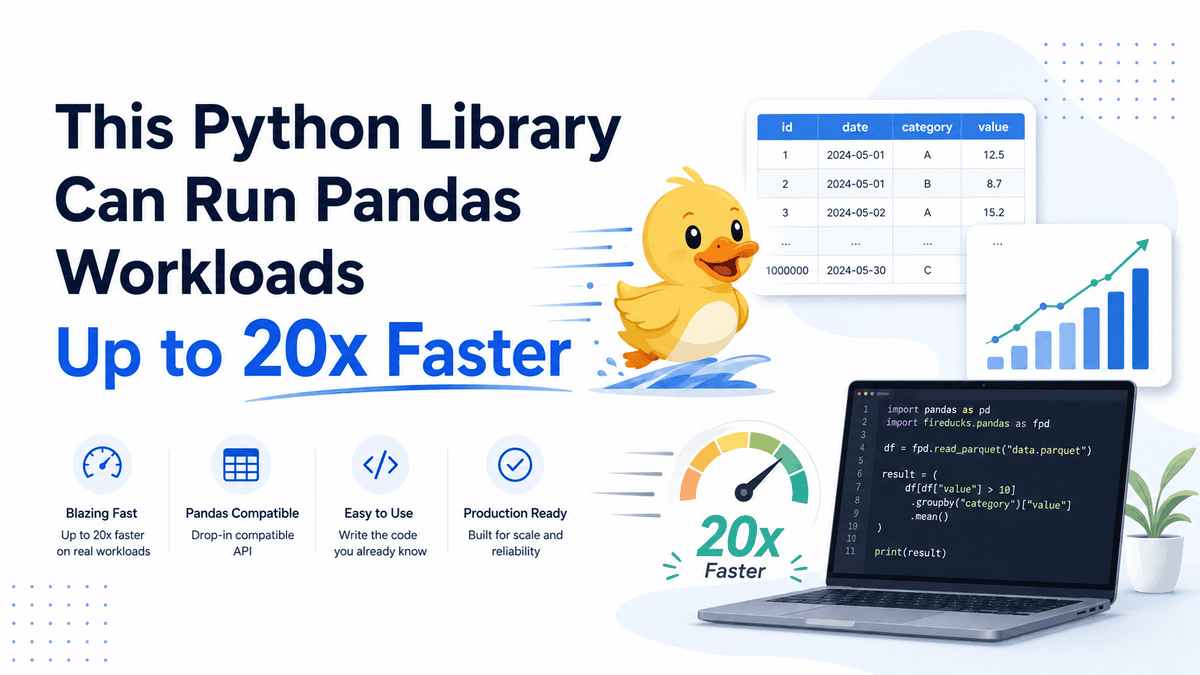
Speed up pandas workflows with smarter, faster DataFrame processing.
If you've ever watched a pandas script crawl through a DataFrame, you know the frustration. FireDucks takes that same workload and runs it up to 20 times faster. It achieves this through lazy execution, compiler optimization, and multithreaded processing, turning what feels like waiting into near-instant results. We find that shift genuinely exciting. For those ready to push their Python skills further, our guide on advanced coding techniques pairs perfectly with what FireDucks makes possible. Explore the benchmark and see the difference for yourself.

Choosing the Right Python Tool for Your Data Workflow
Not all Python data libraries are created equal, and the choice between Polars and Pandas often comes down to what you're actually building. For AI developers, the question isn't just about speed; it's about matching the tool to the task. Pandas offers familiarity and a mature ecosystem, while Polars brings performance gains that can matter at scale. We think the answer isn't a simple switch, but a careful evaluation of your workflow.

Three Lessons from 400,000 Sessions on What Actually Works
For years, we treated Claude Code workflows as personal preference. Pick your mode, set your memory, move on. That thinking was comfortable, but it was also wrong. Anthropic analyzed roughly 400,000 sessions from over 235,000 users, scoring them against hard evidence of success: passing tests, landed commits, and confirmed user satisfaction. The result? Best practices are not a matter of taste. They are measurable, and they can be learned. This is what the data actually shows, and it is worth your attention.

Rspack 2.0 delivers faster builds with a leaner, modern ESM core.
Rspack 2.0 strips away the weight of legacy dependencies to focus on what modern JavaScript needs: a pure ESM core. ByteDance's team delivered measurable build-time gains, with npm downloads now clearing 5 million weekly, a sign developers feel the difference. The improved static analysis and RSC support point to a tool built for today's workflows, not yesterday's assumptions. For a deeper look at how performance-focused tooling evolves, our piece on compiling TypeScript to native code offers a useful contrast.

Evolutionary Code Optimization Arrives as a Secure, Measurable Service
Google's AlphaEvolve has hit general availability on the Gemini Enterprise Agent Platform, and the practical payoff is already clear: Klarna doubled its ML training throughput. What stands out is the privacy-first design, with evaluators running client-side so code never leaves your infrastructure. That's a meaningful step for teams cautious about exposing proprietary work. It's worth noting, though, that AlphaEvolve shines only where a measurable evaluation function exists, so it's not a universal fix.