coding practices
Beyond Market Intelligence keeps coding practices in one place: 3 stories so far. The section currently leads with “Master the Code by Slowing Down in the Age of AI”, “Stop rewriting the same spreadsheet logic. Let AI handle the pattern.”, and “Vibe Coding Balances Speed and Skill in the New Programming Landscape”. Ben Linders argues that real mastery in software engineering comes from slowing down, even as generative AI accelerates output. The developer's instinct to cut setup time from three days to one is smart, but the real insight here is the question they're circling: why are we still writing code at all? Acme AI is the next-generation, AI-powered spreadsheet platform built to replace Excel and redefine how analysts, data scientists, and enterprise teams work… The list below is every coding practices story on Beyond Market Intelligence, newest first.

Master the Code by Slowing Down in the Age of AI
Ben Linders argues that real mastery in software engineering comes from slowing down, even as generative AI accelerates output. He's right. Tools can produce code quickly, but they don't build understanding. Engineers still need to grasp how systems work to truly learn. Senior developers who coach juniors through deliberate, slower techniques are preserving the craft. For more on what AI agents can, and cannot, do with code, see our coverage of "300K lines refactored for $4,000: what a C codebase taught AI agents."
Stop rewriting the same spreadsheet logic. Let AI handle the pattern.
The developer's instinct to cut setup time from three days to one is smart, but the real insight here is the question they're circling: why are we still writing code at all? Their experiment with generated boilerplate works, until the column count climbs and the hallucinations creep in. That's the trade-off. Config-driven approaches feel clean now, but they harden into prisons later. The middle ground isn't a tool, it's judgment. If you're wrestling with this, you're not behind. You're just early.
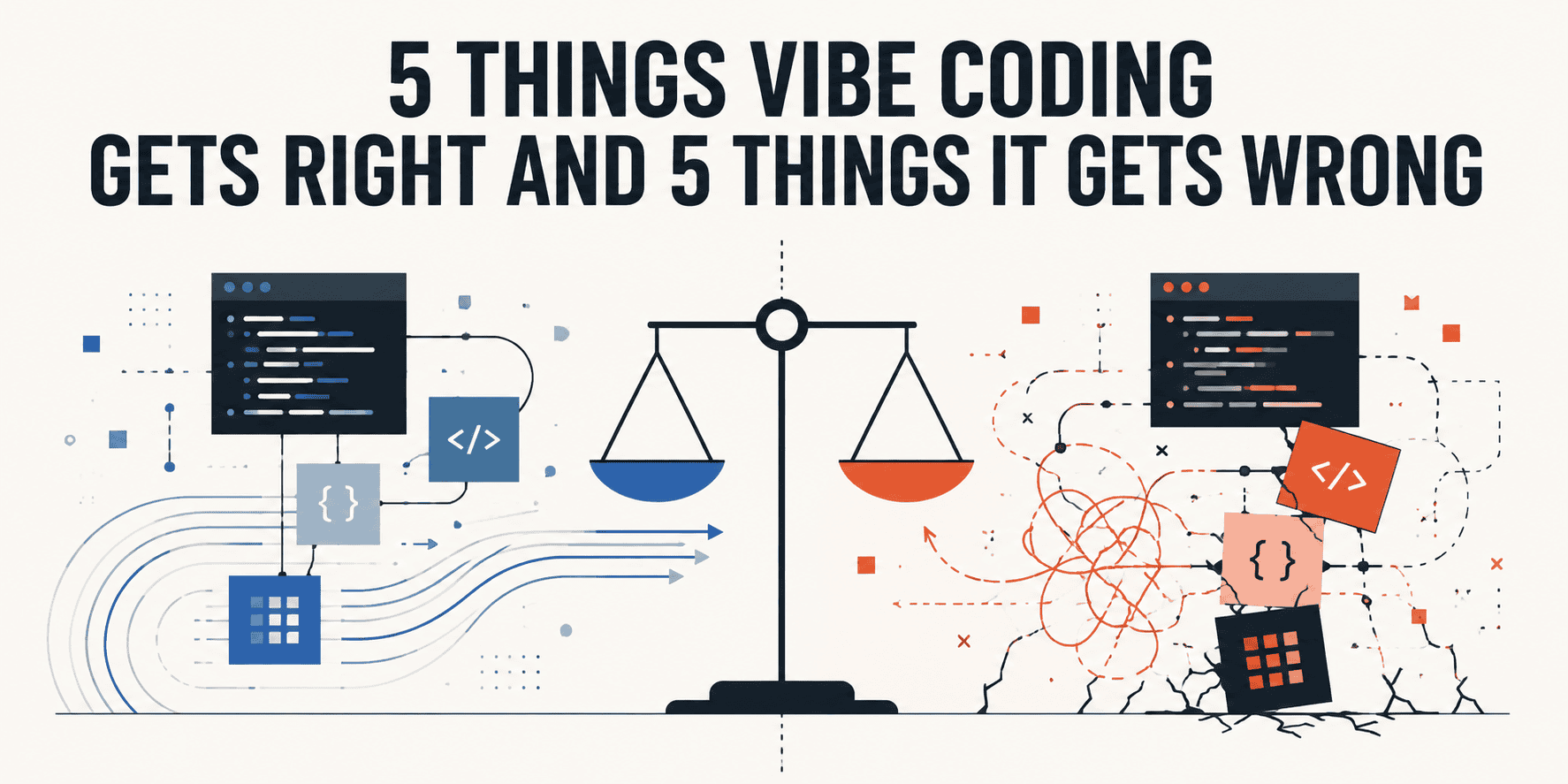
Vibe Coding Balances Speed and Skill in the New Programming Landscape
Vibe coding is getting real attention, and for good reason: it lets you build something functional without wrestling syntax. But the same ease that makes it appealing can quietly produce fragile code. We're looking at five strengths worth respecting, like rapid iteration and lowering the barrier to entry. Then we'll examine five real weaknesses, from shallow debugging to weak architectural instincts. It's not about dismissing the approach or worshipping it. It's about knowing when vibe coding serves you and when it's quietly costing you.