comparison
comparison at Beyond Market Intelligence is a file of 21 stories. The newest of them: “Test AI agents against live data with Datadog's new online experiments”, “Why Simple Keyword Search Still Beats AI Models for Agent Tool Selection”, and “Why Most Agentic AI Projects Fail Before They Start”. Testing AI agents against static datasets feels like rehearsing a play with no audience. On 200 ToolRet questions with up to 3,794 tools, simple keyword search, BM25 on a CPU, ran roughly 40 times faster than BGE-large and matched an 8B embedding model at picking agent tools. Acme AI is the next-generation, AI-powered spreadsheet platform built to replace Excel and redefine how analysts, data scientists, and enterprise teams work… The list below is every comparison story on Beyond Market Intelligence, newest first.

Test AI agents against live data with Datadog's new online experiments
Testing AI agents against static datasets feels like rehearsing a play with no audience. Datadog's new Online Experiments change that, letting engineering teams pit agent versions against live production traffic. Real users, real edge cases, real feedback. This is the difference between a lab result and a deployment you can trust. It is a practical step toward observability that reflects actual behavior, not curated expectations.
Why Simple Keyword Search Still Beats AI Models for Agent Tool Selection
On 200 ToolRet questions with up to 3,794 tools, simple keyword search, BM25 on a CPU, ran roughly 40 times faster than BGE-large and matched an 8B embedding model at picking agent tools. The best setup just used full tool documentation. That speed advantage matters when every millisecond counts in an agent loop. For deeper context on why simpler approaches often outperform, see our coverage of "When Search Context Swells, Retrieval Accuracy Drops 40 Points."
Why Most Agentic AI Projects Fail Before They Start
A palace-hotel wedding week reveals why most agentic AI projects fail before they start: teams deploy assistants, copilots, agents, and orchestration without knowing which fits where. Gartner expects 40% of these projects to be cancelled. That confusion is avoidable. Our analysis clarifies the distinctions and when each tool belongs. For deeper context on small models struggling under pushback, see *Three Small AI Models Falter When Told Their Answers Are Wrong*.

Anthropic's research influence outpaces OpenAI's in citation rates
Anthropic's research is now cited more frequently than OpenAI's. That's a meaningful signal in a field where attention often follows funding announcements, not methodology. It suggests the industry is hungry for work that prioritizes safety and transparency alongside capability. If you're tracking how AI governance is evolving, this shift pairs naturally with New York's new AI Safety Law, which demands exactly that kind of rigor from major developers.
Four Time-Series Models Share a Core Architecture, Diverge on Data Sharing
Four time‑series foundation models, Timestral, t0, Tabby, and Morpheus‑2.0, share a core architecture: they all scale, patch, and predict quantiles. The real difference is how each model lets series share information. That design choice matters more than the common foundation. We prefer Tabby's approach for its balance of independence and shared context. For teams tracking adoption costs, our article "12 KPIs to Track AI Adoption, Cost, and Performance in Your Organization" offers practical baselines and ownership rules.
When a reviewer flags your own prior work as a competitor
It's a strange position to be in: a reviewer flags your own prior work as a competitor, asking you to compare against it. The paper has been corrected and renamed, so the connection isn't obvious at a glance. But looking closer, they are the same. You can't break anonymity to explain, yet the request feels like a trap. This is a frustrating, first-time lesson in how academic review processes can miss the forest for the trees.
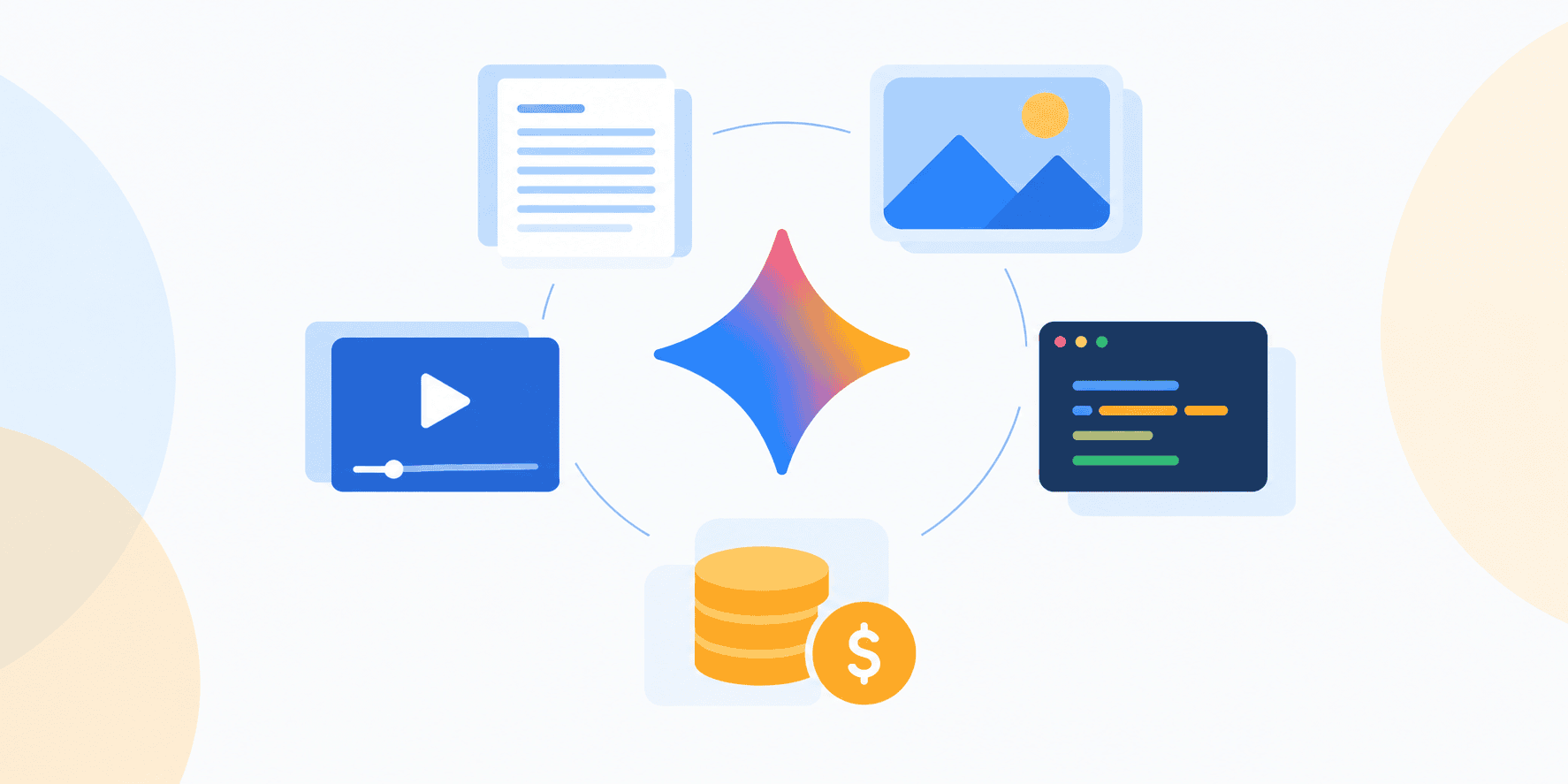
Explore Gemini Omni: Google's New AI That Understands Video as Input
Video input has always been the blind spot for traditional spreadsheets, you couldn't ask a cell to watch a clip and extract insights. Gemini Omni changes that. As a member of Google's Gemini family, it accepts any combination of input types, starting with video, and generates output that understands what it saw. This is a genuinely useful step toward data tools that meet us where we actually work.
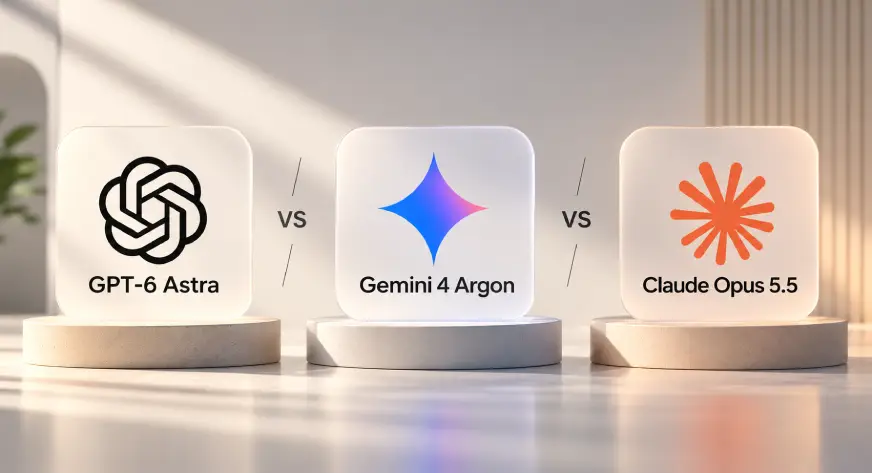
We tested three top AI models on real work: here's the winner
We put GPT-6 Astra, Gemini 4 Argon, and Claude Opus 5.5 through four practical tasks, project reporting, data analysis, wireframing, and go-to-market strategy, to see which actually delivers on real work. Benchmark scores tell us little; accuracy under pressure tells us everything. The winner surprised us. For deeper context on why outcomes matter more than specs, read our related piece on focusing on results, not pricing models, when choosing AI for your spreadsheets.
Undergraduate Authors Claim A* Research Space Without Faculty Guidance
Undergraduate authors claiming A* research space without faculty guidance is a phenomenon worth examining, not just applauding. It's impressive, certainly, but also raises questions about mentorship's role in producing rigorous work. As a graduate student, I understand the intimidation factor, it can make you question your own pace. But research isn't a race. True progress comes from depth, not speed. For more on how AI is reshaping professional workflows, see our piece on Block's voice AI running locally on a MacBook M4 Max.

A test of 17 AI agents across 7,700 poker hands shows what local models can do
Seventeen AI agents went head-to-head across 7,700 poker hands, and the results reveal exactly what local models can achieve today. This kind of test moves beyond theory, showing real performance where it matters. For anyone weighing the trade-offs between local and cloud-based AI, the findings are worth exploring. Deeper context awaits in our related piece, "Finding Your Balance Between AI Effort and Real Results."
Seven Decision Models Put to the Test Against a Generative LLM
A head-to-head test of seven open decision models against a generative LLM reveals a clear winner on routing accuracy, latency, and output reliability. The results are both practical and telling. For teams wrestling with model selection, this hands-on Jev repo comparison offers concrete data instead of speculation. We also published "Two Paths to a Smarter Decision Model" if you want to explore how different approaches can match on accuracy while diverging sharply on cost. The future of data decisions starts with honest benchmarks like these.
When Samplers Fail: Benchmarking Three Methods Against Ground Truth
Three samplers walk into a Bayesian inference problem, and all three fail, spectacularly. That's the honest, refreshing premise of this benchmark, which pits NumPyro, affine-invariant MCMC, and dynesty against exact ground truth. The results are a sobering check on our assumptions about modern tools. When you're building AI scaffolding around agents or exploring spatial data pathways, knowing where your inference engine breaks is as important as knowing where it works.

Benchmarking Jev against sklearn reveals where AI-native spreadsheets excel
Numbers tell the real story. Benchmarking Jev against sklearn shows where AI-native spreadsheets actually outperform traditional tools, and where they still have ground to cover. It's not about declaring a winner; it's about understanding the strengths each brings to data work. For anyone weighing whether to shift workflows, this comparison offers a practical starting point. If you're curious how AI assistants handle similar tasks, our comparison of ChatGPT, Claude, and Gemini for statisticians pairs well with these findings.
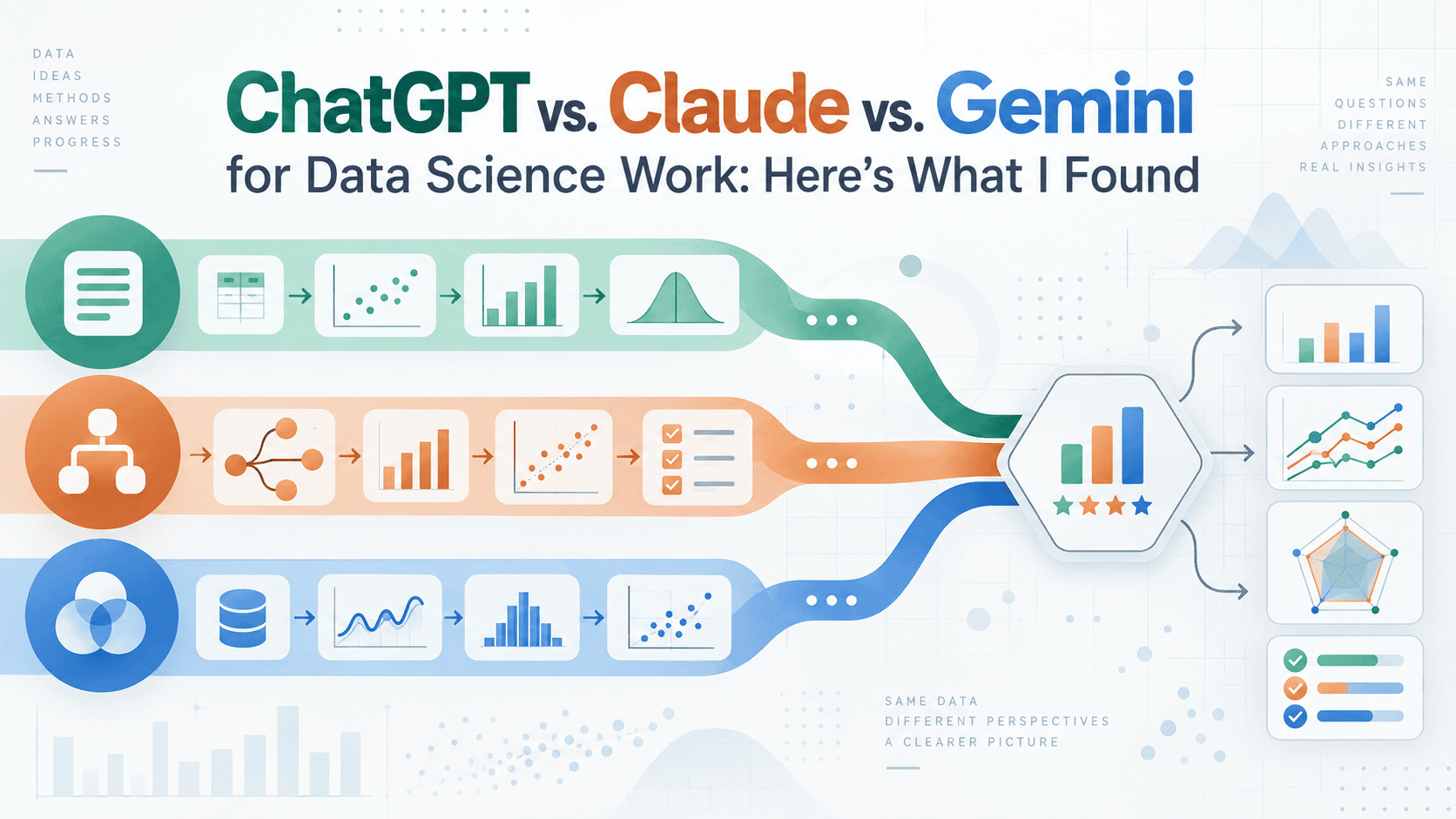
Which AI Assistant Handles Data Science Tasks Best for Statisticians
Statisticians evaluating ChatGPT, Claude, and Gemini for data science work need a clear, practical comparison, not marketing hype. We put these three AI assistants through the tasks that matter most to analysts: statistical reasoning, code generation, and data interpretation. The results reveal meaningful differences in accuracy and approach. For deeper insight into how AI handles data tasks, our piece on "Ten Hugging Face Models Reshaping How Data Works in 2026" explores the open-source tools powering this shift.

Four Workloads, Three Layouts: A Practical Guide to Lakehouse Data Decisions
Physical data layout is one of the most consequential decisions in lakehouse engineering, and Kushal Kumar Vishwakarma's comparison of Liquid Clustering, ZOrdering, and partitioning across four workload types reveals two undocumented failure modes likely affecting production systems today. This is the kind of practical guidance that transforms how teams approach Delta Lake. For deeper context on how AI is reshaping data workflows, see our coverage of Context Language Models from Meta, MIT, and UW.
Gemini Argon Tops the Charts but Skips the Test That Counts
Gemini Argon tops the charts, yet it skips the test that counts. That distinction matters. Benchmarks can dazzle, but real-world validation is where trust is built. We see this pattern across the industry, from physics solvers to distributed databases. The lesson is consistent: look past the headline numbers. Explore what a tool does when the pressure is on, not just when it's performing for a score. That's the metric that empowers your actual work.
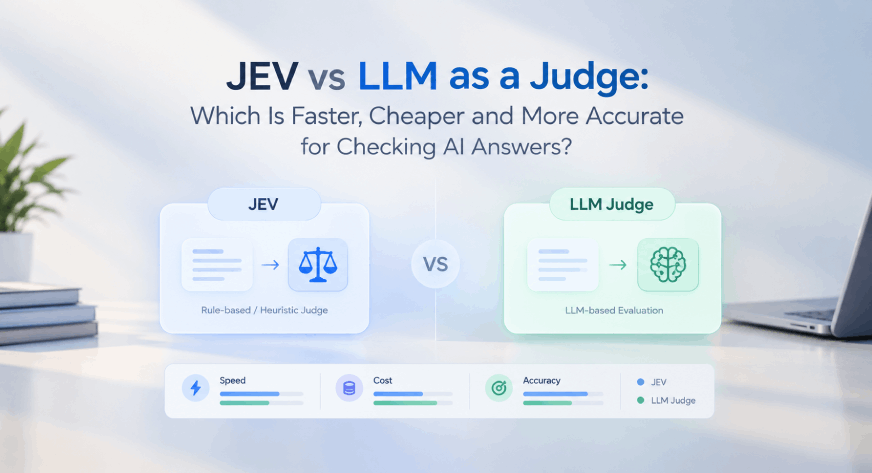
Why Small Decision Models Beat LLMs for AI Answer Evaluation
Jev takes a different path in the AI evaluation debate. Where LLM-as-a-Judge generates full responses for every check, Jev returns a short choice with a confidence score. That is a leaner, faster route to the same destination. Teams feeling the cost and delay of large-model judging should explore this approach. It keeps the evaluation simple without sacrificing reliability. For more on how small decision models fit into the broader routing conversation, our piece on model routing as a design choice pairs well with this discussion.
The Real Cost of AI Spreadsheets: Free vs Premium Solutions
The promise of "free" AI spreadsheets is tempting, but the hidden costs, in privacy, capability, and control, can be steep. Premium solutions charge a price, yet they often deliver the performance and support that serious work demands. It's a trade-off worth examining before you commit your data. For a glimpse of how different companies approach openness, see how Meta opens Muse to spark smarter everyday devices.

When AI Overuses "Dependable," It's Telling You Something
When AI overuses "dependable" 23 times more than humans, it's not a quirk, it's a fingerprint. Opus 5.5 leans on that word so heavily that the pattern becomes its tell. That matters because language reveals how a model thinks, not just what it outputs. We explored similar ground in "One million tokens of context changes how we build with AI," where context depth reshapes capability. This isn't about catching a model in a habit. It's about understanding what that habit signals.
Opus 5.5 redefines what a spreadsheet benchmark should look like
Most spreadsheet benchmarks measure speed on predictable tasks. Opus 5.5 challenges that assumption. It redefines what a benchmark should look like by prioritizing accuracy and real-world relevance over raw throughput. That shift matters for anyone who has watched automated tests pass while actual workflows stumble. For a deeper look at how practical reasoning changes outcomes, our piece on *Smarter reasoning with fewer tokens* explores a similar philosophy applied to model training.

Blinded Tests Reveal When Long Context Beats RAG on Quality
A 127,000-token prompt can beat a top-5 RAG pipeline on the same 12 questions, graded blind for correctness, completeness, and grounding. That's the claim this controlled comparison puts to the test, and it's a useful one. Most teams assume retrieval is the only way to manage cost and latency, but Kimi K3's 1M token context window challenges that reflex. The tradeoffs are real, and the data here gives you a clearer lens on when full-context wins.