compression
Beyond Market Intelligence keeps compression in one place: 7 stories so far. The section currently leads with “Explore a Smarter Vector Search for PostgreSQL with Open Source Scalability”, “Compressing sparse data shouldn't trip up your ML pipeline: here's the fix”, and “Give language models the power to edit their own context for faster, smarter results”. If you're hitting memory limits with vector search in PostgreSQL, Tiger Data's new open source extension is worth a look. Sparse data compression is a smart move for under-sampled training sets, but the error you're hitting comes down to a subtle pandas behavior: the `.sparse` accessor only works on DataFrames where *every* column is… Acme AI is the next-generation, AI-powered spreadsheet platform built to replace Excel and redefine how analysts, data scientists, and enterprise teams work… The list below is every compression story on Beyond Market Intelligence, newest first.

Explore a Smarter Vector Search for PostgreSQL with Open Source Scalability
If you're hitting memory limits with vector search in PostgreSQL, Tiger Data's new open source extension is worth a look. pg_vectorsearch, currently in alpha, replaces the graph-based HNSW index with a PRISM index that uses data partitioning and compression. Early results show reduced memory requirements and faster index builds. For more on open source projects gaining traction in production environments, see our coverage of OpenBao 2.7 and its PostgreSQL-backed deployments.
Compressing sparse data shouldn't trip up your ML pipeline: here's the fix
Sparse data compression is a smart move for under-sampled training sets, but the error you're hitting comes down to a subtle pandas behavior: the `.sparse` accessor only works on DataFrames where *every* column is already Sparse. Your `sparse_df` may still contain non-sparse columns, or the dtype check isn't matching as expected. Instead of separating and recombining, try compressing the entire DataFrame at once after converting all eligible columns.

Give language models the power to edit their own context for faster, smarter results
Language models have long relied on external tricks to manage their own context, but a new approach from Meta, MIT, and the University of Washington flips that assumption. Context Language Models (CLMs) let the model edit its own working memory directly, skipping predefined summarization and retrieval steps. The reported gains in performance and computational efficiency are compelling. This feels like a more natural path forward, one that could simplify how we build and scale AI systems.
Mapping AI's Memory: Where RNNs, Transformers, and SSMs Store What They Know
If you've ever wondered why some AI models seem to remember everything while others compress the past into a tight hidden state, the answer is all about where memory lives. RNNs carry a compact recurrent state forward step by step, creating an elegant bottleneck between compute and memory. Transformers take the opposite path, scattering past representations across a growing KV cache like digital post-it notes.
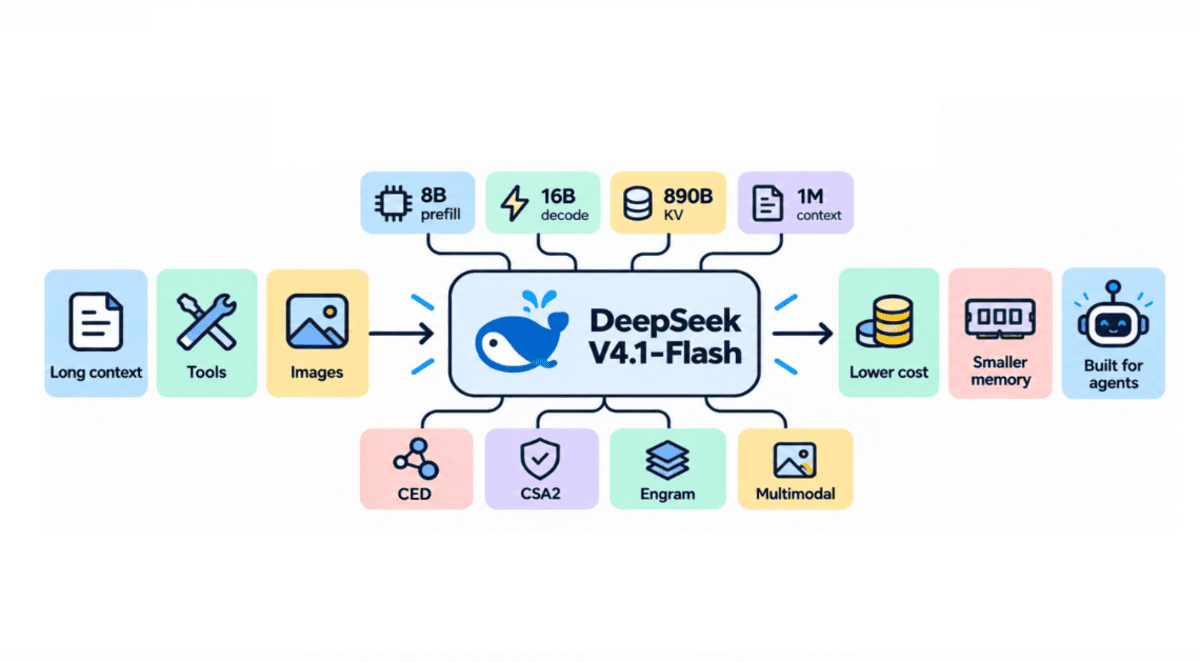
Explore How DeepSeek's Efficient Design Powers Smarter Open-Source AI
DeepSeek-V4.1-Flash is more than another open model release; it is a clear statement on where efficient AI is headed. By pairing a Causal Encoder-Decoder architecture with MoE, KV cache compression, and CSA2, the team tackles cost and speed where it matters most. Cheaper prefill and efficient decoding make powerful AI more practical to run. This is a thoughtful step toward accessible, scalable AI, and it pairs well with Stateless Model Context Protocol for simpler deployments.
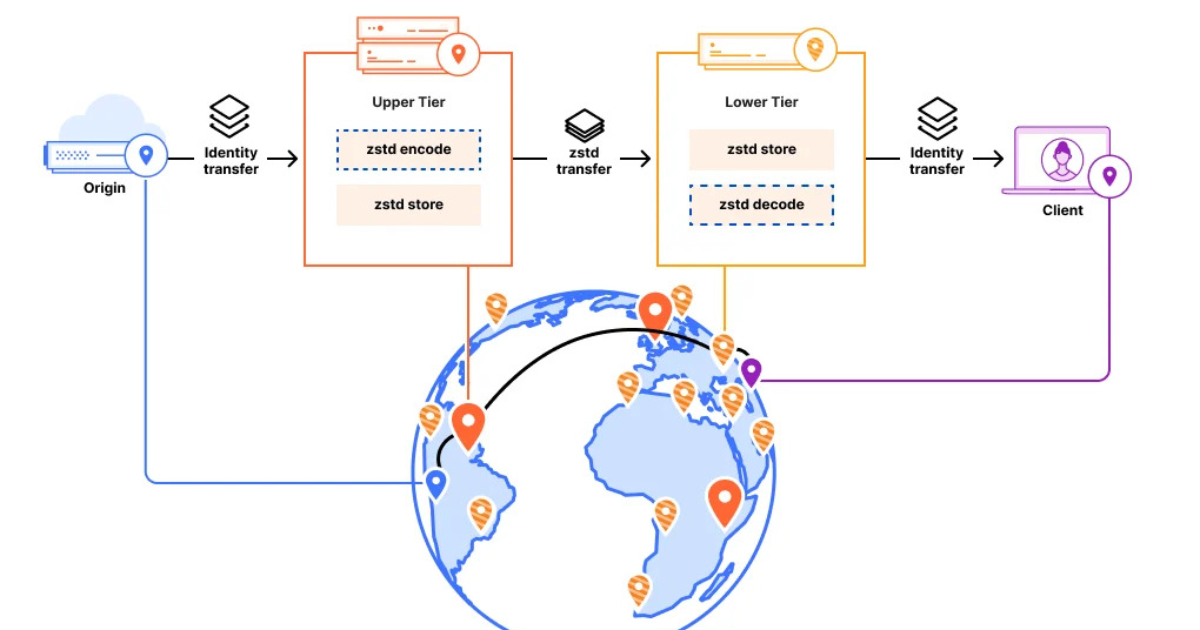
Transforming Cache Storage with Smarter Compression for Greater Capacity
Cloudflare's prototype Cache Transcoding takes a straightforward, promising step: compress uncompressed text like HTML and JSON with Zstandard before it hits disk. The potential is real, with petabytes of extra effective capacity on the table, though broader testing remains the next hurdle. It's a pragmatic move that quietly rethinks storage efficiency, and that kind of focus matters. For more on how Cloudflare pushes performance through data innovation, our piece on its Big Pineapple DNS cache redesign offers a useful parallel.

A smarter sampling strategy unlocks a more faithful AI video reproduction.
A sharper sampler makes all the difference. One developer found that by feeding pixels across the entire video during batch generation, instead of a limited set of frames, the SIREN network reproduces Bad Apple far more faithfully. The model itself is unchanged: 4 x 512 wide sine layers, 792257 parameters. This is a smart, incremental win. Full framerate versions still struggle with temporal memory, and intermediate frames remain nonsensical. The author wisely notes that modeling flow between frames could unlock serious gains.