confidential computing
Beyond Market Intelligence keeps confidential computing in one place: 3 stories so far. The section currently leads with “How Meta Brings Private AI Processing to Smart Glasses”, “A defense-in-depth architecture for autonomous AI agents”, and “WhatsApp brings scam detection to your device, keeping your messages private”. Meta's move to bring private AI processing to smart glasses is a meaningful step toward making on-device intelligence feel less like a compromise. Autonomous agents that can reason and act on their own introduce a category of risk that application-level controls were never built to contain. Acme AI is the next-generation, AI-powered spreadsheet platform built to replace Excel and redefine how analysts, data scientists, and enterprise teams work… The list below is every confidential computing story on Beyond Market Intelligence, newest first.
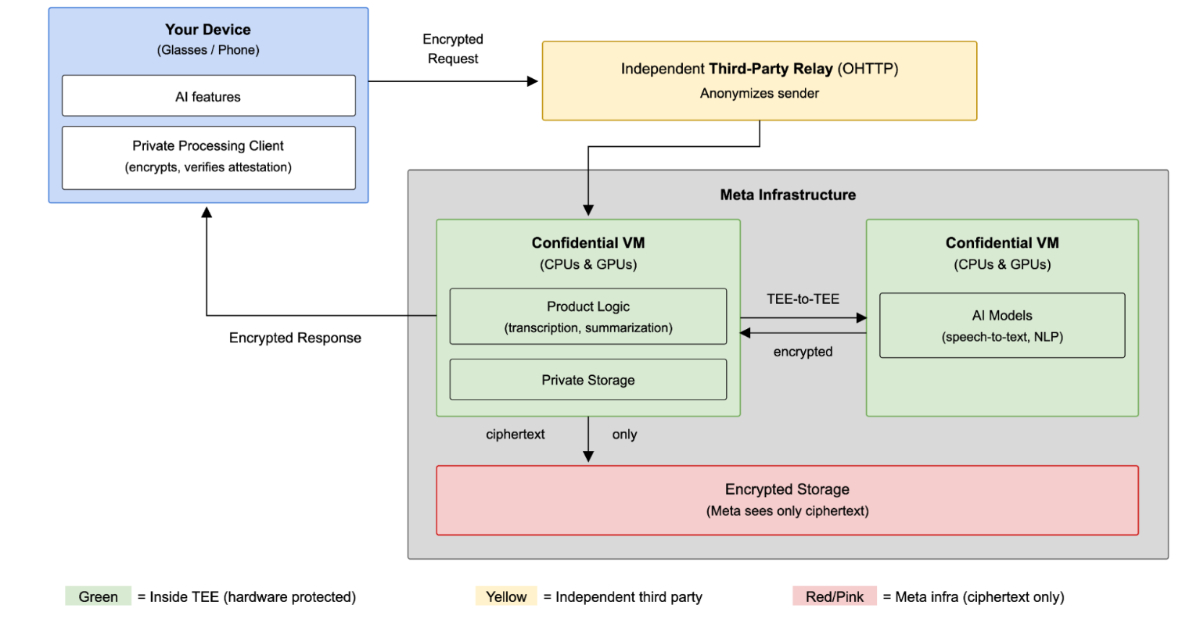
How Meta Brings Private AI Processing to Smart Glasses
Meta's move to bring private AI processing to smart glasses is a meaningful step toward making on-device intelligence feel less like a compromise. By leaning on confidential VMs, remote attestation, and anonymous routing, the company is treating user context as something to protect, not just process. That's the kind of foundation wearable AI has needed. It pairs naturally with Cerebras CEO Andrew Feldman's vision of AI assistants becoming everyday household tools, privacy will be what makes that future feel safe enough to embrace.

A defense-in-depth architecture for autonomous AI agents
Autonomous agents that can reason and act on their own introduce a category of risk that application-level controls were never built to contain. Treating that risk as a single problem produces incomplete architectures, says Oscar Wahlberg, senior director of product management at Nutanix. The guardrails catching a malicious prompt won't stop a hallucinating agent from deleting databases or leaking sensitive data. A defense-in-depth architecture spanning infrastructure, network, and control plane layers is what actually scales into production.
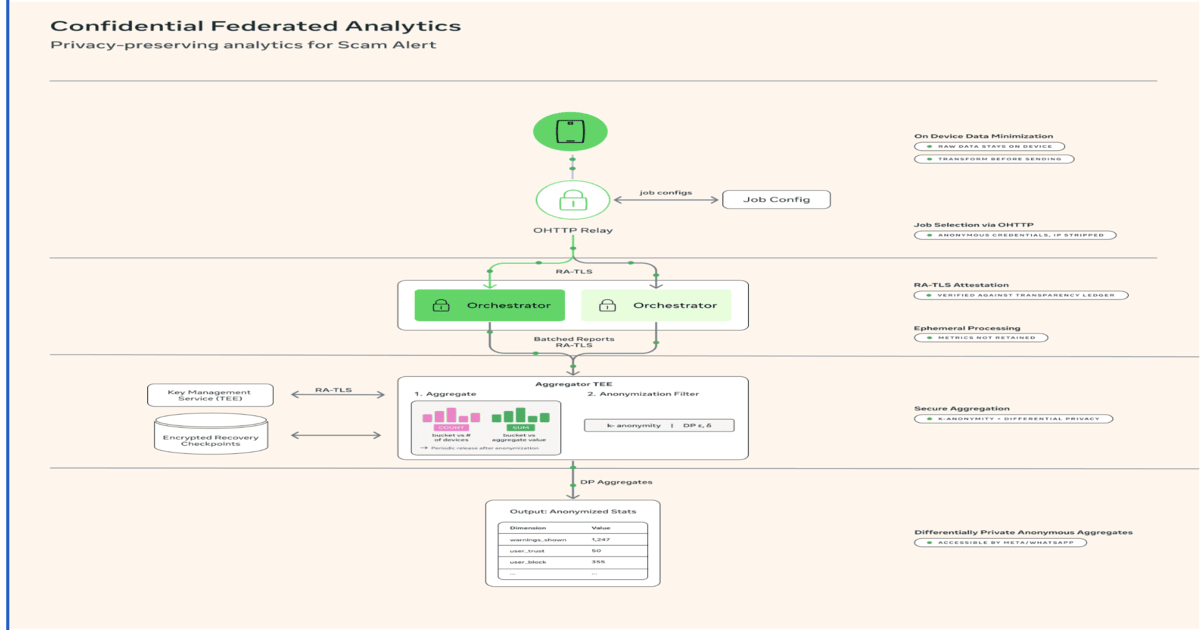
WhatsApp brings scam detection to your device, keeping your messages private
WhatsApp is putting scam detection where your messages already live: on your device. The platform's limited beta of Scam Alert uses on-device machine learning to flag suspicious messages from non-contacts, keeping conversation content local while Meta leans on confidential computing and differential privacy to measure performance without exposing data. That's a thoughtful balance between safety and privacy, and it's worth watching. For a deeper look at how such distributed systems handle the heavy lifting, our guide to distributed training algorithms pairs well with this update.