content
23 stories filed under content on Beyond Market Intelligence. The newest of them: “JustWatch Moves From Search Guide to Its Own Streaming Service”, “Podcasters keep 90% revenue as Spotify adds exclusive member perks”, and “New App Store Rules Target Tools That Disguise Harmful AI Content”. JustWatch, the search guide used by 50 million people, is no longer just a map, it's becoming a destination. Spotify's new membership model lets podcasters keep 90% of revenue while offering fans ad-free listening, early access, and bonus content. Acme AI is the next-generation, AI-powered spreadsheet platform built to replace Excel and redefine how analysts, data scientists, and enterprise teams work… The list below is every content story on Beyond Market Intelligence, newest first.

JustWatch Moves From Search Guide to Its Own Streaming Service
JustWatch, the search guide used by 50 million people, is no longer just a map, it's becoming a destination. The company is launching its own ad-supported streaming service, alongside a $3.99 ad-free tier and movie rentals. It is a smart, confident pivot from navigator to player. For deeper coverage on how platforms are rethinking their revenue models, check out our piece on Spotify's new exclusive podcast perks.

Podcasters keep 90% revenue as Spotify adds exclusive member perks
Spotify's new membership model lets podcasters keep 90% of revenue while offering fans ad-free listening, early access, and bonus content. That's a meaningful shift toward creator empowerment, cutting out the middleman without cutting into earnings. For podcasters feeling squeezed by platform economics, this is worth exploring. If you're curious how AI tools are reshaping creator workflows, our piece on Nvidia opening its models for enterprise AI agents offers a complementary look at the broader landscape.

New App Store Rules Target Tools That Disguise Harmful AI Content
App stores are finally drawing a clear line: tools that disguise harmful AI content as innocent user-generated material won't be tolerated. New guidelines demand developers build in real preventative measures, not just afterthought filters. It's a welcome shift toward accountability. This move echoes a broader tension we're seeing across the industry, AI accelerates research ideas, as our piece on that very bottleneck explores, but our ability to test and moderate what it produces often can't keep pace.

Facebook Puts Algorithm Control Directly in Your Hands
Facebook is putting algorithm control directly in your hands with its new AI-powered "Your Algorithm" feature. That's good. For too long, users have been passive passengers in their own feeds, hoping the platform guessed right. This tool gives you the ability to influence what appears, a shift toward transparency that feels overdue. For more on how AI is reshaping professional tools, see our coverage of how AI coding rounds are rewriting the rules of the data science interview.

Empower Your YouTube Experience: AI-Driven Custom Feeds Emerge
Describing a feed by typing what you want to see is a small ask with a big payoff. YouTube's new custom feeds let you use plain language, powered by Gemini, to shape a personalized stream around your exact interests. It is a practical step toward making the platform feel less overwhelming and more intentional. We appreciate tools that put the user in control, and this one invites exploration without demanding technical know-how.

Meta's Muse AI Assistant Draws Inspiration from OpenClaw
Meta says Muse was built from scratch, yet the AI assistant carries OpenClaw's fingerprints, right down to workspace filenames and content. That honesty is refreshing. It suggests inspiration isn't a weakness; it's a starting point for something more accessible. We're watching how this unfolds, especially for users tired of rigid tools. If you're exploring how AI reshapes practical workflows, our piece on real-world computer vision deployments offers a grounded look at what's actually working.
Your ambitions don't need a massive token budget to succeed
Ambition shouldn't come with a brutal price tag, especially when you're pushing the limits of what data can do. The real challenge isn't big ideas, it's keeping the token bill from crushing them. That's where smart, accessible tools step in, letting you stretch further without the overhead. For a deeper look at how evaluation standards are shifting, our piece on NeurIPS paper results shows the same principle: progress doesn't require excess.

Prime Video brings short local news clips to on-demand streaming.
Prime Video is stepping into the short-form arena, adding on-demand local and national news clips to its lineup. It's a smart move, acknowledging that younger viewers are increasingly drawn to quick, digestible content, even for news. This isn't about replacing deep reporting; it's about meeting audiences where they are. We see this as a natural evolution of streaming, and it's encouraging to watch platforms experiment. For more on how platforms are reshaping media consumption, explore our piece on YouTube's new AI-driven custom feeds.

From screen to cart: explore products from your favorite shows directly
Prime Video is quietly turning viewing into shopping. Amazon now lets you discover products tied to thousands of shows, movies, and live sports through X-Ray, its shopping app, and the new Lens-powered "Shop the Scene" feature. It's a practical step toward making discovery effortless, not a gimmick. For those tracking how AI reshapes everyday tasks, this feels like a natural extension of connecting retrieval to action, much like our piece on bridging AI tasks. Explore it, but keep your wallet close.
Your Questions, Our Community: A Smarter Way to Explore Spreadsheets
Asking a question shouldn't feel like a hurdle. If you've got a spreadsheet puzzle, a formula snag, or a workflow snag, this thread is your space to ask freely, no new posts needed. We'll keep it open until the next one, so your query is always welcome, even after the date in the title. A quick thanks to everyone who pitched in last time; your answers make this community stronger.

Discover how AI transforms video search across massive datasets.
Clipto just crossed $250 million in valuation, and it's easy to see why. The three-year-old startup hit $15 million in annual recurring revenue and turned profitable before raising another $15 million. That's a discipline most founders skip. It proves you can build sustainable AI tools without burning through capital first. If you're curious how such systems handle massive video data, our piece on real-world computer vision deployments pairs well with this story.

Former Instagram builders raise $21M for friend-focused photo sharing
Retro, a photo-sharing app built by former Instagram employees, just closed over $21 million in Series A funding. That vote of confidence signals real momentum for a platform doubling down on close friends rather than broad broadcasting. We like that focus; it meets a genuine need for intimacy online. If you are curious how other tech players are refining their own tools, Cloudflare's Blog Finds Performance Gains with EmDash, Its New CMS offers a neat parallel. For now, Retro's growth is worth watching.

Explore a faster, more intuitive home for data science readers and writers
We rebuilt the TDS website and contributor portal from the ground up, and we're eager for you to see what that means for your daily reading and writing rhythm. Speed improves, navigation clears, and the publishing process feels less like a hurdle. This is about removing friction so your ideas carry the day. For more on how we think about performance and structure, our coverage of Cloudflare's EmDash migration offers a useful parallel. Explore the new space, and let us know what you discover.

Rethinking Enterprise RAG: Ten Overlooked Positions That Demand Your Attention
Most tutorials treat enterprise RAG as a simple plug-and-play. This series argues for ten positions that challenge that assumption, starting with the idea that retrieval isn't just a search problem, it's a structural one. Each article maps a specific argument, building a coherent framework rather than a collection of tips. If you're tired of surface-level advice, start with "Exploring Paragraph Structure: How LLMs Navigate Token Space" to see why token coordinates need better metrics. This is the map. The rest is exploration.

Understand Claude's Watermarks to Better Manage Your AI Output
Claude's watermarks are not one-size-fits-all. Text carries embedded markers, while supported files rely on signed C2PA metadata. Code, however, sits in a curious middle ground; its structure gives the watermark fewer places to hide. That nuance matters if you are trying to strip these traces cleanly. I appreciate that this guide digs into the practical differences rather than treating AI content as a monolith. For more on how AI systems shape what we see, our piece on agents learning by editing context pairs well here.

Reddit tests audio and video to transform how you explore stories
Reddit is starting to test audio and video versions of popular posts, letting users watch or listen to stories instead of just reading them. It's a straightforward move toward meeting people where they already spend time, and it makes sense for a platform built on conversation. The shift feels natural, not forced. If you're curious about how other platforms are adjusting their content strategies, our piece on Meta reversing course on ads for the Musk documentary offers a useful contrast.
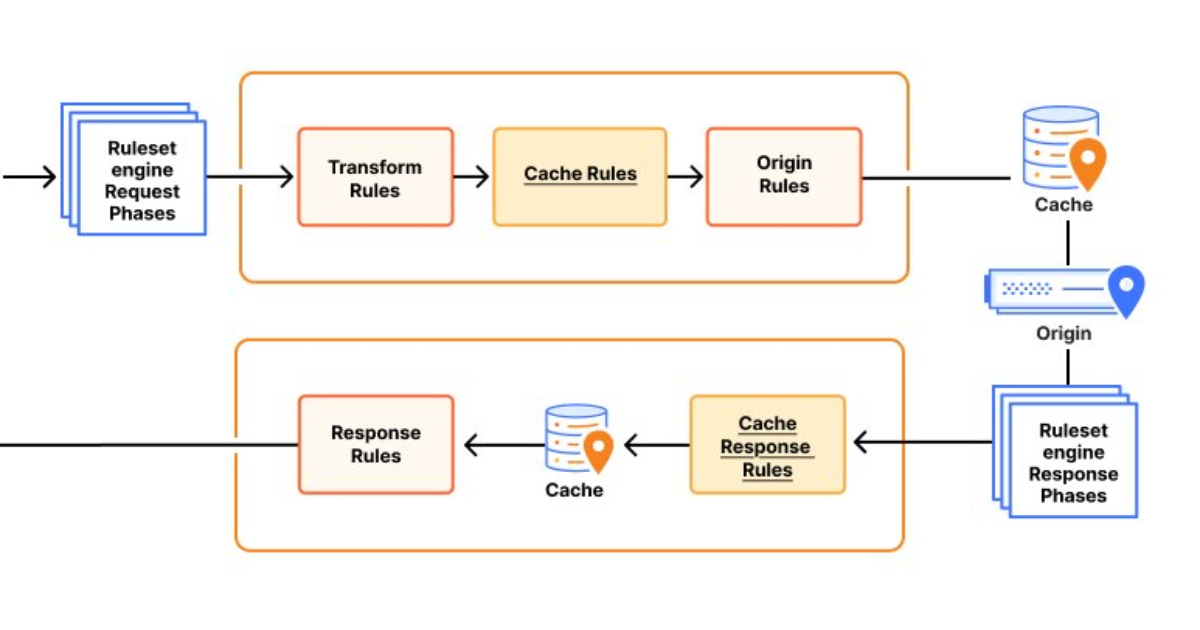
Cloudflare adds response-phase rules for smarter cache control
Cloudflare's new Cache Response Rules add a crucial second phase to its rules engine, evaluating origin responses before they're cached. Previously, Cache Rules only looked at request attributes, leaving response-level control out of reach. This update matters because it gives developers more precise, flexible cache management where it counts. It's a practical step forward, not a flashy overhaul. For deeper performance insights, Cloudflare's own work with EmDash shows the company isn't shy about applying its own innovations to real-world problems.

Twitch defaults to training AI on streamers without asking permission first.
Twitch's new default is a blunt admission: training on streamers' content unless they opt out is the only way to get meaningful adoption. As CPO Mike Minton put it, an opt-in model would leave the system empty, and he's not wrong. It's a pragmatic, if uncomfortable, choice that prioritizes progress over preference. For anyone wrestling with similar ethical gray areas in AI, our piece on talking to an AI clone offers a firsthand look at the unease these tools can stir.

Explore how AI personalizes your creative workflow in the new Creator Studio app.
Facebook's standalone Creator Studio app is here, and it brings an AI assistant straight into the creative workflow. The tool studies your content style, performance, and audience engagement to offer personalized recommendations that actually match your goals. That's a practical step toward reducing guesswork, not a flashy gimmick. For creators juggling multiple formats, this feels like a thoughtful upgrade.
Discover how AI transforms spreadsheets into intuitive productivity partners
When a Reddit post about AI-driven spreadsheets surfaces, it's worth pausing to see how far the tech has come. The conversation around automating data tasks is no longer theoretical; it's practical, and that's what makes it compelling. We're not here to sell you on hype, just to point out that the tools you already know are evolving in ways that genuinely simplify your workflow. If you're curious about the mechanics behind such progress, our piece on distributed algorithms offers a solid next step.

Snapchat refocuses Spotlight on human-made content, not AI-generated video
Snapchat is drawing a line in the sand: only videos made by real people will get Spotlight recommendations. It's a direct move against the flood of fully AI-generated content, and frankly, it's the right call for keeping the platform human. We're all for AI that assists, but when it replaces the creator entirely, the authenticity fades. This stance echoes our own exploration of AI's limits, like in "Talking to My AI Clone Taught Me to Question the Tech," where the human element still matters most.

Give your old posts a new soundtrack without losing their momentum.
Instagram just made old posts easier to refresh. The new "Replace Audio" tool lets you swap out the music on any post whenever you like, while keeping the likes, comments, shares, and reach you've already earned. That's a smart move for anyone who wants to keep content current without losing momentum. It's a simple update, but one that puts more control back in your hands. For more on how Meta is refining its platforms, check out our piece on Meta's Smart Glasses.

Paramount-Warner merger paused amid concerns over theater and audience impact
A federal judge has paused the proposed $110B Paramount-Warner Bros merger, responding to state lawsuits that argue the deal would squeeze movie theaters, basic cable distributors, and everyday audiences. That's a meaningful check on consolidation before it reshapes how stories reach people. The pause isn't just legal maneuvering; it's a signal that market power deserves scrutiny. For context on how data and platform decisions ripple across industries, our piece on AI in fintech and healthcare offers a useful parallel.