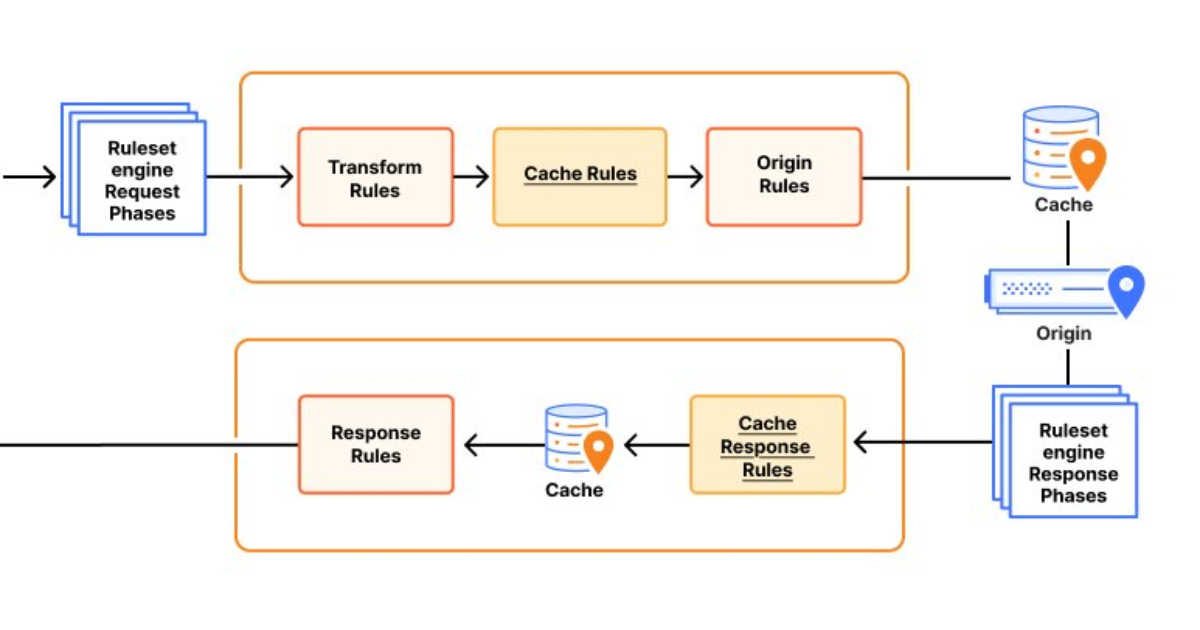
Cloudflare's announcement of Cache Response Rules is the kind of quiet but meaningful step that separates infrastructure progress from mere feature churn. For years, Cache Rules gave developers precise control over what got cached based on request attributes, but the response side remained something of a black box. Now, with a rules engine that evaluates origin responses before they are written to Cloudflare's cache, the company is closing a real gap. This is not about flashy speed claims; it is about giving teams the ability to make smarter, more granular decisions about content freshness, invalidation, and edge behavior. If you have ever wrestled with stale assets or struggled to enforce cache policies that vary by response header, this phase-based approach feels like the missing half of a familiar puzzle.
What makes this notable is how it fits into a broader pattern of edge platforms maturing beyond request routing. Cloudflare has been busy on multiple fronts, from rethinking its own blog’s content management performance with EmDash to redesigning DNS cache memory to free up substantial capacity. Those efforts share a common thread: treating the edge as a place where internal decisions, not just network hops, can be optimized. Cache Response Rules extend that philosophy to the most visible layer for many developers. Instead of forcing every caching nuance into request-time logic, you now have a response-time hook that can react to status codes, headers, or even the payload itself. That is a meaningful shift for teams running dynamic sites or APIs where the origin's answer dictates what the cache should do next.
Our take is straightforward: this is a feature that rewards experimentation, and it should change how you think about cache configuration. If you are already using Cache Rules, the addition of a response phase means you can now handle edge cases that previously required workarounds, like custom origin headers that should trigger different TTLs or bypass rules for specific error responses. For teams that have been hesitant to rely on edge caching because of unpredictable origin behavior, this lowers the barrier to entry. It also complements the modular approach seen in scaling SaaS at the edge with Cloudflare Workers, where isolation and granular control are paramount. The ability to inspect and act on origin responses before they hit the cache gives you another lever, one that feels natural for multi-tenant systems where a single misconfigured cache rule could affect many customers.
The open question we would press Cloudflare on is observability. With more decision points comes more complexity, and teams will need clear visibility into which rules fired and why. We would want to see logging and debugging tooling that matches the sophistication of the rules engine itself. That is the detail to watch. For now, the practical takeaway is simple: Cache Response Rules are not a revolution, but they are a refinement that makes edge caching more predictable. If you have been holding off on fine-tuning cache behavior because the request side felt too limiting, this is your cue to explore what response-time control can do. Start with one origin path, test how your headers behave, and see if the cache finally starts working the way you always assumed it could.