context windows
context windows at Beyond Market Intelligence is a file of 6 stories. The newest of them: “Explore Open-Source Tools That Give AI Agents Lasting Memory”, “Balancing precision and cost to feed AI agents the right data”, and “Unlocking LLM Performance Through Smarter Memory Management”. AI agents handle enormous context windows, yet they still forget everything once a session ends. Feeding enterprise data to token-hungry AI agents isn't just about scale; it's about precision. Acme AI is the next-generation, AI-powered spreadsheet platform built to replace Excel and redefine how analysts, data scientists, and enterprise teams work… The list below is every context windows story on Beyond Market Intelligence, newest first.

Explore Open-Source Tools That Give AI Agents Lasting Memory
AI agents handle enormous context windows, yet they still forget everything once a session ends. That gap is where memory systems step in, preserving facts, preferences, and task state so agents carry continuity across interactions. Open-source projects now tackle this through APIs, graphs, and portable state. We explore seven GitHub repositories that give AI lasting memory. For deeper context on how agents are evolving, our coverage of *Claude Sonnet 5.5* examines faster coding and smarter workflows.

Balancing precision and cost to feed AI agents the right data
Feeding enterprise data to token-hungry AI agents isn't just about scale; it's about precision. At TOTVS, Fabiane Nardon tackles this head-on by balancing deterministic logic with the non-deterministic nature of LLMs. Her approach is refreshingly practical: using data mesh principles, low-latency databases, and semantic ontologies to keep context windows lean and costs controlled. Dynamic MCP tool selection becomes the key to trimming token overhead. It's a smart, human-centered strategy for making AI genuinely useful in transactional systems.
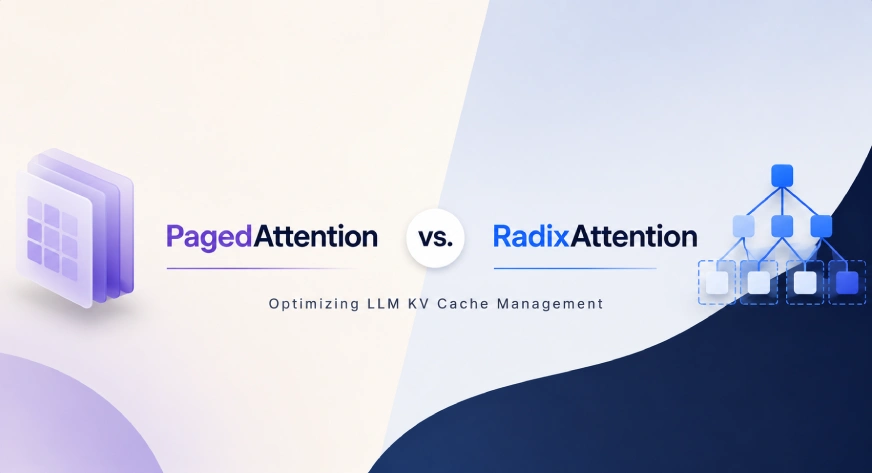
Unlocking LLM Performance Through Smarter Memory Management
KV cache memory can quietly decide whether an LLM deployment thrives or stalls. PagedAttention tackles fragmentation with smarter allocation, while RadixAttention targets prefix reuse. Both cut the GPU strain that limits concurrency and throughput. What stands out is how practical these optimizations feel. Production latency improves without demanding new hardware. For readers exploring how context shapes model behavior, our piece on agentic context learning pairs well with this discussion. It is a useful next step for understanding what makes modern LLMs efficient beyond raw architecture.
Smarter Prompts, Not Bigger Ones: Engineering Context That Works
Big context windows feel like the easy answer, but Baruch Sadogursky and Patrick Debois argue otherwise in their session, "The Right 300 Tokens Beat 100k Noisy Ones." They show why stuffed prompts drag coding agents down, then offer practical fixes like lazy-loaded skills and externalized memory banks. It is a grounded, useful take for engineering leaders wrestling with agentic workflows.

Smarter Context, Not More Context, Unlocks Smarter Coding Agents
Most coding agents drown in the very context meant to help them. They gather more files, add more data, and hope the model sorts it out. It doesn't work. Irrelevant code competes for attention, and when the window fills, agents compress their own memory mid-task. That's not forgetting; that's degraded context. Treat prompt construction like a compiler, deciding what to keep, reduce, or discard. It's a practical, human-centered fix.

How AI Memory Can Learn What Truly Matters to You
Most AI memory systems assume recency equals relevance. That assumption fails when what matters most is what you actually use. A usage-reinforced decay engine built on the Ebbinghaus forgetting curve walks through a smarter approach. It's a practical rethinking of how LLMs should prioritize memory, one that prioritizes salience over novelty. For those already exploring how AI structures knowledge, it pairs naturally with our guide on distributed training. This is a thoughtful, human-centered fix for a real limitation.