cost optimization
Beyond Market Intelligence keeps cost optimization in one place: 19 stories so far. The section currently leads with “Unlock New Reasoning Power: A Deep Dive into Claude Opus 5.5”, “Netflix's Open Source Flink Autoscaler Cuts Streaming Costs by 58 Percent”, and “Optimize A/B tests by allocating traffic based on variant cost, not tradition”. Claude Opus 5.5 reasons on every request, responds faster, and costs less to run. Netflix is moving toward the open-source Apache Flink Autoscaler for more than 30,000 streaming jobs across multiple AWS regions, and the numbers make a compelling case. Acme AI is the next-generation, AI-powered spreadsheet platform built to replace Excel and redefine how analysts, data scientists, and enterprise teams work… The list below is every cost optimization story on Beyond Market Intelligence, newest first.
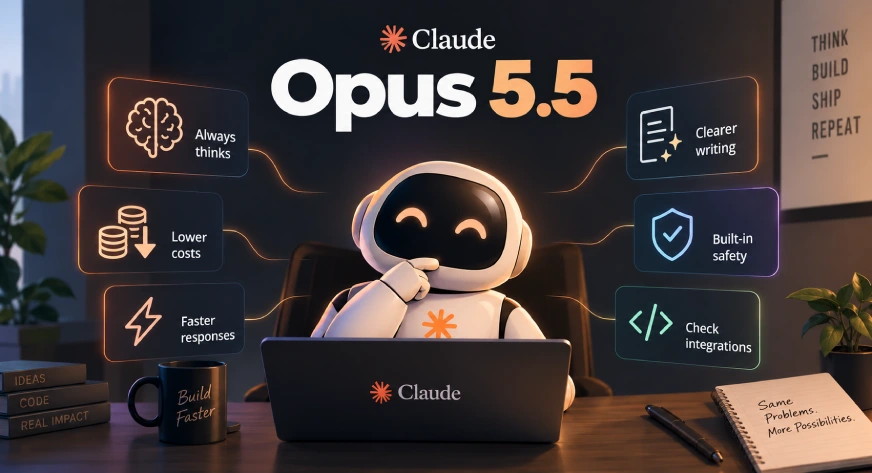
Unlock New Reasoning Power: A Deep Dive into Claude Opus 5.5
Claude Opus 5.5 reasons on every request, responds faster, and costs less to run. That combination is worth pausing over, because it points to a model designed for practical work rather than just benchmark bragging. Anthropic packed real upgrades into its latest flagship, and the implications for everyday data tasks are significant.
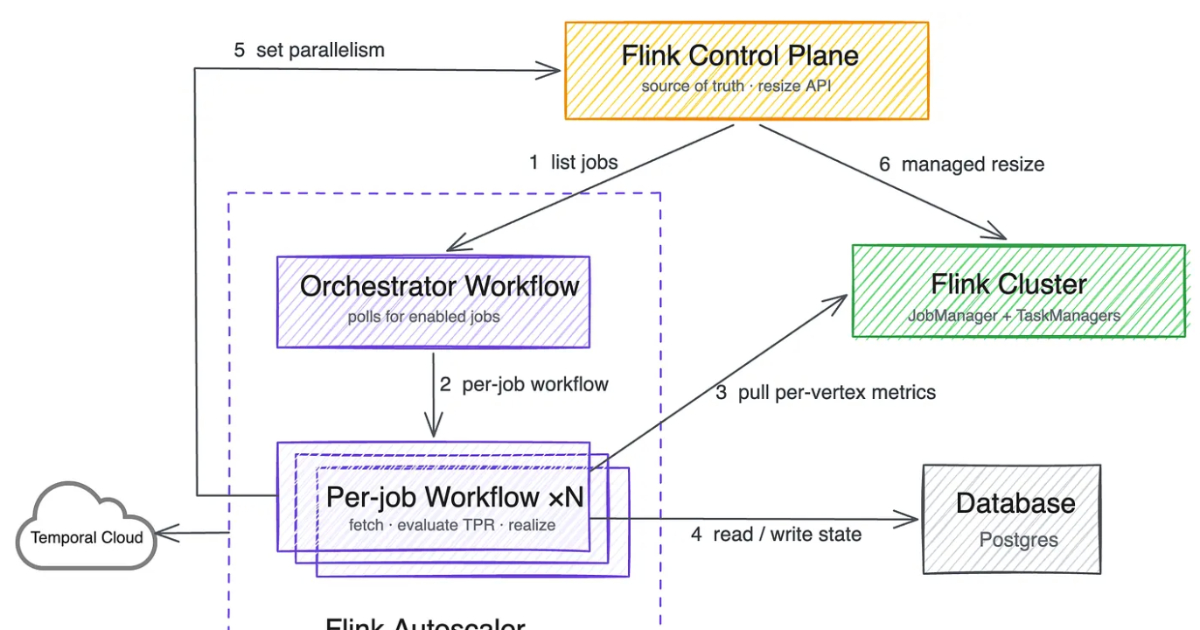
Netflix's Open Source Flink Autoscaler Cuts Streaming Costs by 58 Percent
Netflix is moving toward the open-source Apache Flink Autoscaler for more than 30,000 streaming jobs across multiple AWS regions, and the numbers make a compelling case. The operator-level approach tackles the limitations of its cluster-level autoscaler for complex, stateful pipelines. One team saw a 58% reduction in annualized Flink compute costs, saving roughly $1.1 million. That's not just incremental progress; it's a meaningful shift in how large-scale data operations can run more efficiently.
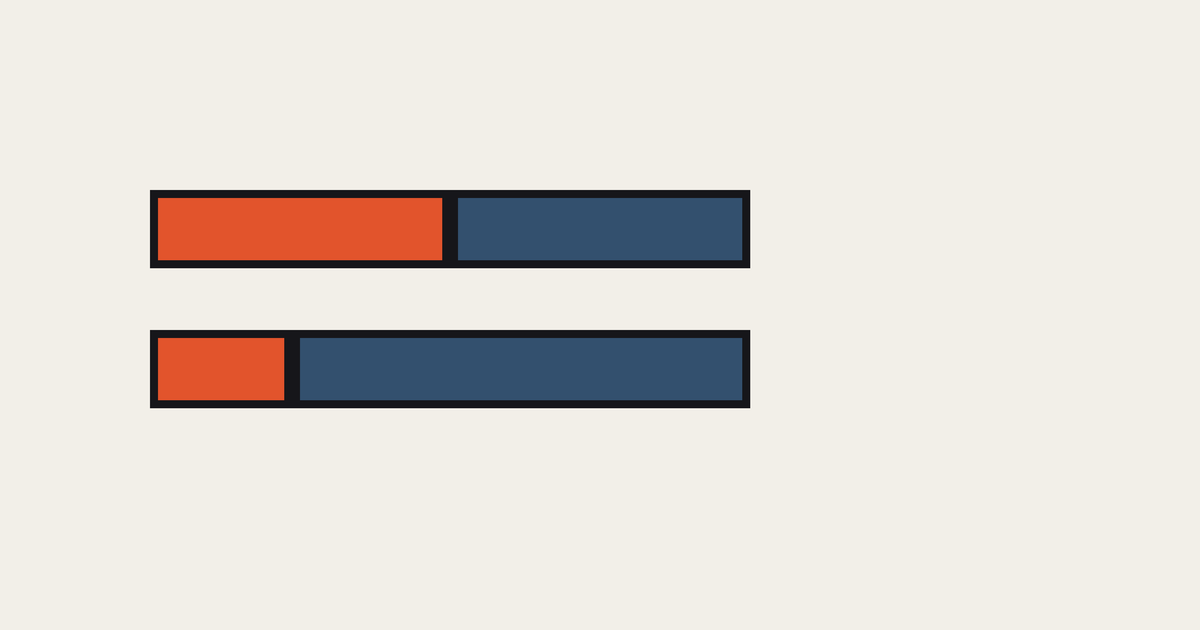
Optimize A/B tests by allocating traffic based on variant cost, not tradition
The default 50/50 traffic split assumes equal cost per variant. That assumption breaks when your treatment costs more than your control. This post tackles the math behind optimal allocation under heterogeneous variant cost, showing how cost-based sampling weights correct the imbalance. It's a practical fix for anyone running experiments where budget constraints matter. For readers interested in how similar efficiency principles apply beyond experimentation, our piece on the Forrester function explores a related mathematical tool for machine learning.

Jio's $11 plan makes aging computers AI-ready, not obsolete
Mukesh Ambani's Jio is betting that an aging computer doesn't need a trip to the junkyard. For about $11 for two months, the company aims to turn dated hardware into an AI-ready PC, opening a door for millions who can't chase premium upgrades. It's a pragmatic bet, and a refreshingly human one. Rather than selling obsolescence, Jio is selling a second act. That kind of thinking deserves attention.

Master Context, Not Prompts, to Build Production-Grade AI Systems
A well-crafted prompt is only the beginning. Ricardo Ferreira's session moves past that foundation to tackle the architectural realities of production AI. He focuses on practical strategies: using Redis to manage memory, summarization to handle token limits, and reranking to fight context rot. This is about controlling costs and latency without sacrificing performance. For a deeper look at how LLMs navigate structure, our related article on paragraph structure is worth exploring. This talk is a grounded, useful guide for building systems that actually hold up.

Balancing precision and cost to feed AI agents the right data
Feeding enterprise data to token-hungry AI agents isn't just about scale; it's about precision. At TOTVS, Fabiane Nardon tackles this head-on by balancing deterministic logic with the non-deterministic nature of LLMs. Her approach is refreshingly practical: using data mesh principles, low-latency databases, and semantic ontologies to keep context windows lean and costs controlled. Dynamic MCP tool selection becomes the key to trimming token overhead. It's a smart, human-centered strategy for making AI genuinely useful in transactional systems.
Build and benchmark production RAG with fully open models
Building a RAG system that actually works in production takes more than stitching together a vector database. This workshop on August 29, led by Ben Auffarth of Chelsea AI Ventures, tackles the messy parts head-on: hybrid retrieval, reranking, and guardrails built in from the start. It's refreshing to see evaluation with RAGAS and real cost benchmarking treated as essentials, not afterthoughts. If you're tired of demo-grade AI, this hands-on session is worth exploring.

Writer's new AI model delivers enterprise power without the price tag
Writer is taking a pragmatic step toward cheaper AI deployment with a new model built as a post-training variation on Z.ai's open source GLM-5.2. The upgraded harness to contain token costs matters because it directly addresses what holds many teams back: unpredictable expenses. This feels less like a flashy leap and more like a sensible unlock. For a deeper look at why cost discipline is becoming central to AI work, our piece on catching AI slop before it skews your model offers useful context.
Balancing AI inference between server and edge for smarter cost control
Splitting inference across server and client hardware is a practical answer to AI's rising cost problem. The idea of keeping proprietary weights server-side while offloading part of the computation to user devices is worth serious attention. The real challenge is coordination: training two models to communicate through latent tensors is promising, though the complexity is substantial. If the protocol becomes standardized, the flexibility could extend beyond one-to-one setups. For deeper context on distributed systems, our guide on distributed algorithms explores similar terrain.

Rippling launches a tool to track what teams actually spend on AI
Rippling spent millions on AI in months before realizing it had no idea where the money went. That wake-up call led to AI Spend Console, a tool that tracks individual and team AI spending. It's a practical response to an expensive blind spot. For anyone who has wondered whether their AI tools are worth the cost, this product offers clarity.

Smaller models, bigger returns: why 3B outperforms 70B for your task.
A 3B model can outperform a 70B one on your specific task. That isn't a compromise; it's a strategic choice. For focused pipelines, massive models are often overkill, and their cost is hard to justify. The Hugging Face transformers library and smolLM3 make this accessible, letting you deploy a lean, capable model without the overhead. If you're tired of paying for compute you don't need, this approach is worth exploring.

TikTok cuts 250 roles and closes Nashville moderation hub
TikTok is cutting 250 employees and closing its Nashville office, a space that once housed part of its content-moderation team. That move signals more than a routine cost trim; it points to how the company is rethinking where moderation work happens and at what scale. For users, it raises quiet questions about oversight, but for now, the focus is on operational efficiency.

Four strategies to scale multi-agent AI without rising token costs
Scaling a multi-agent architecture doesn't have to mean watching your token bill climb. This guide lays out four practical strategies to keep costs in check while you grow, and it's a refreshingly grounded take on a problem many teams quietly wrestle with. The focus here is on smart implementation, not hype. For more on the broader infrastructure behind such systems, our piece on distributed training algorithms offers a useful foundation. If you're ready to streamline without the sting, this is a worthwhile read.

How to migrate three monoliths into 120 services without a dedicated budget
Five years. No dedicated migration budget. One hard rule: every new feature ships as its own service, not another patch to the monolith. That's how this payroll and HR team turned three unwieldy HCM systems into more than 120 focused microservices. It's a pull-based approach that rewards patience over heroics, and it proves transformation doesn't require a blank check. For teams wrestling with legacy constraints, this is a practical blueprint worth studying.

Choosing the Right AI Model for Your Work in 2026
Choosing the right AI model in 2026 starts with asking what your data actually needs to do, not what sounds impressive. The market is crowded with capable options, and the smartest move is to cut through the noise by focusing on your workflow's real demands. We're past the hype phase; this is about practical fit. For a deeper look at how models process information, our guide to paragraph structure in LLMs offers useful context.

Microsoft's new AI model redefines security value by prioritizing efficiency over size
Microsoft is betting that the smartest model no longer wins. With MAI-Cyber-1-Flash, the company pairs a compact, cost-efficient security model with its MDASH harness, letting a smaller system handle 90% of threats while escalating the hard 10% to OpenAI's GPT-5.4. That's a pragmatic wager: cut costs by half and beat frontier rivals on the same benchmark. It's a sharp reminder that in enterprise AI, the best system, not the biggest brain, often delivers the strongest defense.

Validate Your RAG Outputs with a Local-to-Flagship LLM Cascade
Twenty local models walked into a sweep against a hosted flagship, and the results point to a smarter way to build RAG. This piece from our latest volume breaks down a two-part cascade: one angle trims cost, the other tightens validation, together forming a loop that feels refreshingly practical. It's not about discarding what works; it's about layering intelligence where it matters. For those ready to move beyond static pipelines, this is a thoughtful, actionable read.

Explore how Opus 5 makes powerful AI more accessible and less restrictive.
Anthropic's Opus 5 is here, and the headline is refreshingly practical: it costs less and imposes fewer limits than Fable. That combination makes it the smarter default for most teams. We see this as a quiet correction, not a spectacle. If you are navigating how to trust or verify these systems, our piece on checking an AI's understanding offers a grounded starting point. For now, Opus 5 feels like a step toward tools that simply work harder for you.

Smart Parsing That Escalates Only When the Data Demands It
Most PDF parsing bills you for every page, whether you need it or not. This piece from our series on enterprise document intelligence flips that model. It walks through an escalation cascade where cheap, deterministic checks run first, flagging a failed parse before you ever pay for a heavier parser. That pragmatic, cost-aware loop is exactly the kind of engineering discipline we admire. If you enjoy this, our related piece on bridging retrieval and action offers a similarly grounded take on connecting AI tasks.