data analysis
Beyond Market Intelligence keeps data analysis in one place: 83 stories so far. The section currently leads with “Choosing the Right Python Tool for Your Data Workflow”, “Your data pipeline isn't complete until analysis is effortless.”, and “Empower AI Agents: Building Trustworthy Data Foundations with Snowflake.”. Not all Python data libraries are created equal, and the choice between Polars and Pandas often comes down to what you're actually building. Loading data feels like crossing the finish line. Acme AI is the next-generation, AI-powered spreadsheet platform built to replace Excel and redefine how analysts, data scientists, and enterprise teams work… The list below is every data analysis story on Beyond Market Intelligence, newest first.

Choosing the Right Python Tool for Your Data Workflow
Not all Python data libraries are created equal, and the choice between Polars and Pandas often comes down to what you're actually building. For AI developers, the question isn't just about speed; it's about matching the tool to the task. Pandas offers familiarity and a mature ecosystem, while Polars brings performance gains that can matter at scale. We think the answer isn't a simple switch, but a careful evaluation of your workflow.

Your data pipeline isn't complete until analysis is effortless.
Loading data feels like crossing the finish line. You've built the pipeline, the tables are populated, and the job is done. Then you start building your first dbt models and realize the real work begins. Making data genuinely analysis-ready is where the journey starts. It's an honest look at moving from delivery to discovery, and it pairs well with our piece on catching AI slop before it skews your model.
Empower AI Agents: Building Trustworthy Data Foundations with Snowflake.
Many data teams added AI agents to their roadmaps this year, and the appeal is clear: an agent that compresses a two-day analysis into a two-minute conversation can genuinely reshape how analysts and business teams collaborate. But that promise hinges on trust. Point an agent at raw tables or stale data, and you get fast answers, not reliable ones. This piece explores how Snowflake's semantic governance builds the trustworthy foundation agents need.

From Static Charts to Interactive Discovery with AI-Driven Tools
Choosing between Matplotlib and Plotly often comes down to a single question: do you need a static image or a living document? This guide walks that decision without overselling either tool, which is refreshing. It respects that your choice depends on the task at hand, not hype. If you are curious about how structured thinking applies to other technical domains, our piece on paragraph structure and token space offers a thoughtful parallel worth exploring. For now, this guide gives you a clear, practical path forward.

Stop optimizing speed and start reducing mental load in data work
Faster dataframe engines are a welcome upgrade, but they sidestep a deeper issue. The real bottleneck isn't speed; it's the sheer volume of syntax an analyst must hold in their head. pandas demands constant mental juggling, and no performance boost lightens that load. We should be designing tools that reduce cognitive friction, not just processing time. For a broader look at how we think about technical trade-offs, our piece on the Forrester function offers a useful parallel.
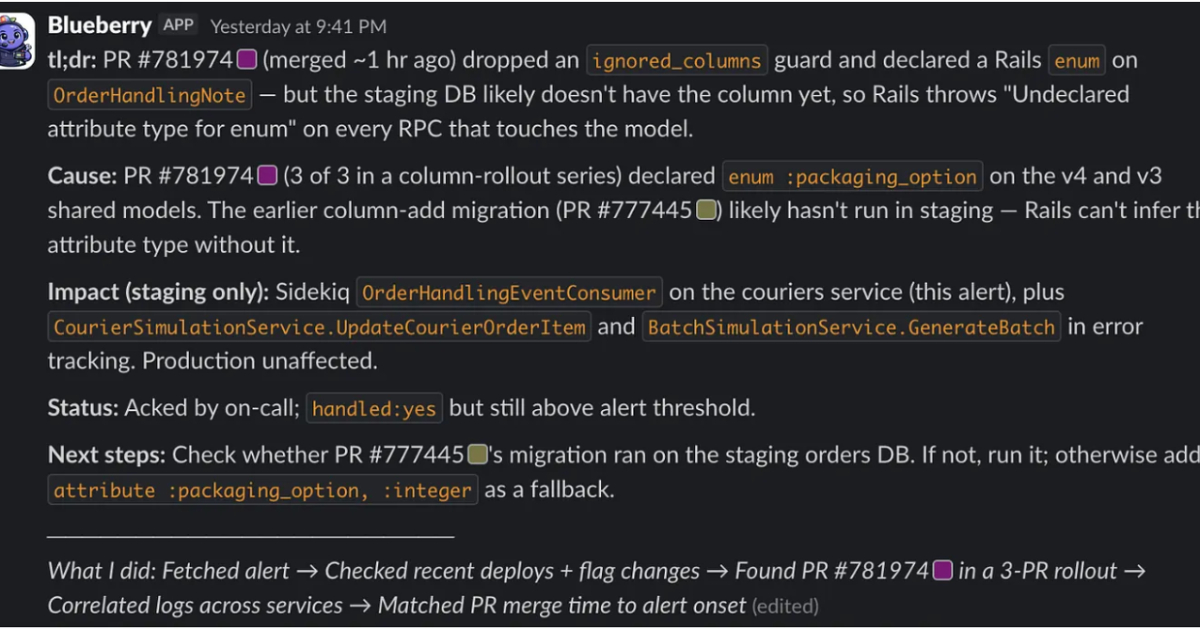
How AI Helps Instacart Engineers Resolve Incidents Faster in Slack
When a production incident lands in Slack, every minute of investigation matters. Instacart's Blueberry, an AI-powered assistant, steps in to help on-call engineers act faster. It pulls together AI agents, operational data, and past incident knowledge to suggest grounded root cause hypotheses directly in the conversation. Parallel subagents and MCP integrations do the heavy lifting, but engineers stay in control. That's a practical approach to reducing toil.

Empower Business Users to Explore Data Without Writing SQL
Most business questions don't need a SQL query, they need a direct answer. This step-by-step guide shows how to build an AI data agent that lets users explore data conversationally, skipping the syntax entirely. It's a practical, human-centered approach to analytics that puts the focus on insight, not commands. If you're curious about the broader implications of talking to AI, "Talking to My AI Clone Taught Me to Question the Tech" offers a thoughtful counterpoint.

Three Lessons from 400,000 Sessions on What Actually Works
For years, we treated Claude Code workflows as personal preference. Pick your mode, set your memory, move on. That thinking was comfortable, but it was also wrong. Anthropic analyzed roughly 400,000 sessions from over 235,000 users, scoring them against hard evidence of success: passing tests, landed commits, and confirmed user satisfaction. The result? Best practices are not a matter of taste. They are measurable, and they can be learned. This is what the data actually shows, and it is worth your attention.
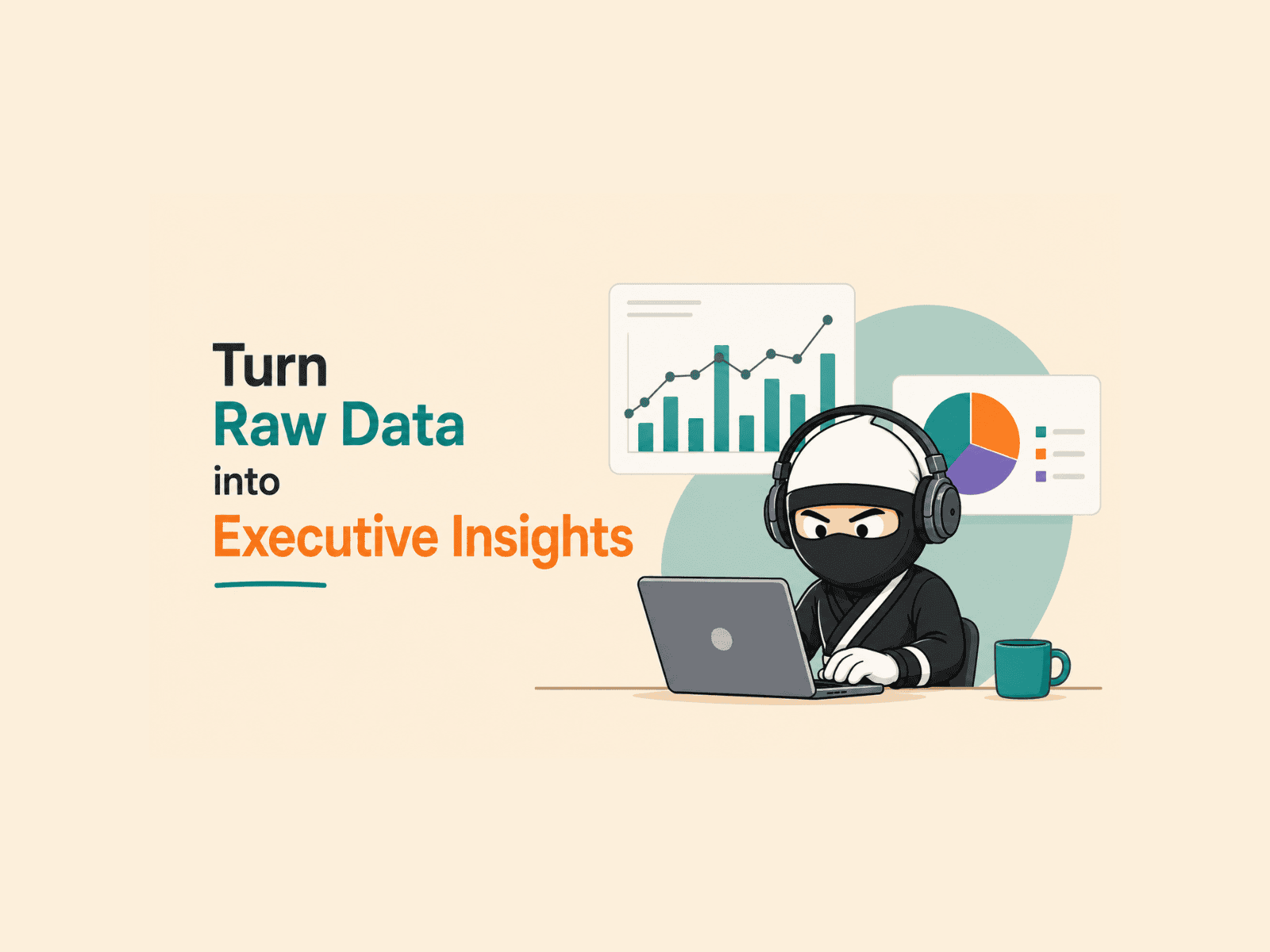
Transform raw CSV data into clear executive summaries with AI.
A messy CSV rarely tells a clear story on its own. This guide walks through a repeatable pipeline that cleans the data, surfaces the narrative hidden inside, and turns it into an executive report using Python and AI. It is practical, direct, and built for teams who need answers without endless manual effort. If you are curious about how AI handles real-world data beyond the hype, our piece on verifying AI understanding offers a useful complement to this workflow.

When a benchmark misleads, transparency earns trust
Ponytail Agent Skill didn't just promise less code; it proved it, then corrected itself when the proof didn't hold up. After a contributor flagged the original 80-94% claim as a flawed baseline, the maintainer didn't argue. They rebuilt the benchmark as a true agentic run and published the honest number: 54%. That kind of accountability is rare, and it's why the project's momentum feels earned, not hyped.

Palantir's billion-dollar quarter challenges AI's trust deficit
Palantir just posted $1 billion in profit, and Alex Karp responded by calling the AI industry "Marxist." That's a bold word from a CEO whose own success depends on the same frontier labs he's warning enterprises about. His point deserves attention: if these tools can't be trusted, why rush them into critical workflows? We're not here to defend big tech's habits, but we'd rather see scrutiny than blind adoption.

Explore how AI simplifies waterfall charts for clearer data storytelling
A waterfall chart only earns its keep when it tells a clear story about how values move. The key is sequencing: each bar must connect logically to the next, showing additions and subtractions without clutter. Start with a solid baseline and label every step, because ambiguity defeats the purpose. Red and green should mean something consistent, not just decorate the axis. If you want to sharpen your visual instincts further, our piece on TanStack Charts offers a fresh take on grammar-of-graphics thinking.
Debugging a Bad Forecast Model Without the Noise
Debugging a bad forecast often starts with a single overall error score, yet that number rarely tells you where to look. Breaking the error down by customer, product, or horizon is a natural first step, but the real question is whether your tools support that or force you to build custom notebooks from scratch. That gap matters. For deeper guidance on refining your approach, our related piece on autoregressive rollout and uncertainty offers a practical next step.
From Academia to Impact: Translating Public Health Expertise into Industry
Four years in academia, with publications in JAMA Open and experience in doubly robust methods, gives you a real analytical foundation. That is not the problem. The gap is likely in how you are framing your transition. You are studying SQL and probability, which is good, but you need to show how your causal inference work solves business problems. Frame your research as applied decision-making. Also, revisit that tech internship network; it is your strongest asset.
Navigate uncertain markets with data clarity, not anxiety.
When the layoff chatter around you turns into a chorus, it's natural to wonder if the economy has quietly collapsed. One Reddit user is watching their own company shed roles while hearing the same from every client they work with. That anecdotal spiral is real, but it's not data. Before you panic, step back. If you're feeling unmoored by uncertainty, it's worth exploring practical ways to steady your next move. Opportunities still exist for those ready to adapt.
When to choose simple analysis over machine learning
Not every data question deserves a model, and that is the right instinct to start with. In our experience, the decision to reach for machine learning hinges on whether the problem truly needs pattern recognition at scale or if a transparent analytical approach solves it faster. We often ask: can a simple formula explain this clearly to a stakeholder? If yes, skip the complexity.

Rediscover the joy of data science with a simple radio project
If you've ever flicked through the dial and wondered if the ads are actually following you, this project proves they are, just not in the way you'd think. The data shows FM stations cluster their breaks while AM talk radio spaces them out like clockwork, and the top-of-the-hour spike is real. It's a tidy reminder that traditional data analysis still has room for curiosity-driven questions.
Explore how deeper math in operations research can reshape your data career
You're weighing a real fork in the road: stay deep in data science or branch into operations research. That's not just a title decision; it's about how you want to solve problems. OR is math-heavy, but not beyond what you've already got. Calcs 1-3, linear algebra, and stats are the foundation. You'll add optimization and probability, which are more applied than theoretical. Earning potential is comparable, so let the work itself guide you.
Explore practical AI tools that simplify data analysis and model understanding
This week's roundup starts with a practical truth: building and deploying your first autonomous agent is no longer a distant ambition. We also break down the machine learning algorithms that still earn their keep, offer a beginner's path to working with Claude, and highlight the best AI tools for data analysis in 2026. For those ready to go deeper, our guide to distributed algorithms pairs well with these beginner fundamentals.

Legacy automakers shift focus as EV mentions drop to pre-pandemic levels
GM and Ford are mentioning EVs on investor calls at pre-pandemic rates, a clear signal that the electric vehicle hype cycle is cooling. The data from TechCrunch and Hudson Labs shows these automakers are pulling back from the aggressive EV narrative, but that is not a retreat from reality. It is a recalibration. For users exploring the future of data-driven decisions, this is a moment to watch.

Ellis AI emerges from stealth with $10M for private credit intelligence
Ryan Williams knows private credit managers don't need another dashboard; they need a workflow that keeps up with their decisions. That's why Ellis AI's $10 million seed round matters. It's a focused bet on using AI to handle the heavy lifting, letting managers spend more energy on strategy and less on manual data wrangling. We've been thinking about how AI changes professional trust, and this feels like a practical step forward.
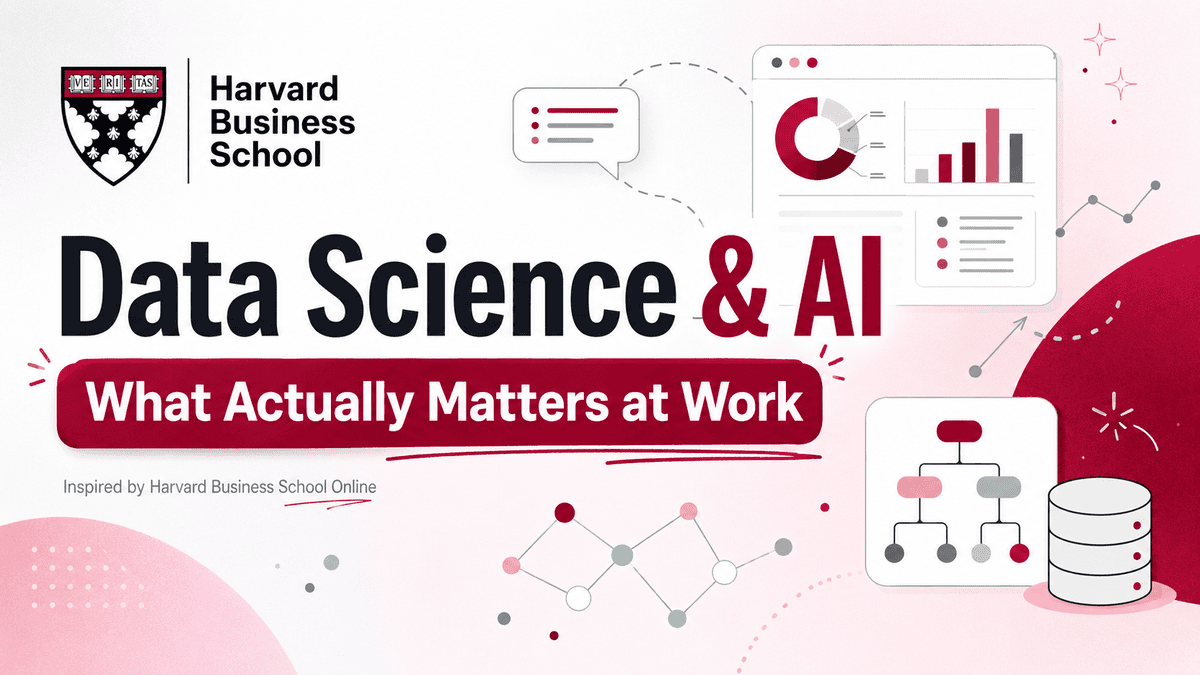
Six Principles for Smarter Data Science Beyond the Hype
Harvard Business School Online cuts through the noise with a grounded take on data science and AI. The real insight? It's not about the flashiest algorithm. Clear business goals, trustworthy data, and simple models still carry the day. Careful validation and honest cost assessments keep projects realistic, while human judgment remains the anchor. We appreciate that focus on fundamentals over hype. It is a refreshing, practical counterweight to the constant chase for novelty.

AI agents learn from real calls to transform sales playbooks
Encore AI just raised $30M to turn customer calls into training ground for AI agents. The startup mines calls, messages, and CRM data to spot what sales tactics actually work, then codifies those into playbooks agents can follow. That's a smart shift from generic automation to learning that compounds. It's not about replacing reps; it's about capturing their hard-won instincts. For anyone curious how such systems handle nuance, our piece on talking to an AI clone offers a grounded counterpoint.

GM uses AI agents to free engineers from 85% of non-coding work
General Motors' autonomous driving division didn't just hand engineers a better coding tool. It redesigned entire workflows around AI agents, and the payoff is hard to argue with: three times as many merged pull requests, faster releases, and fewer defects slipping downstream. Rashed Haq's point is worth sitting with. Most engineering time was never spent writing code anyway. Automating the other 85 percent, the analysis, triage, and testing, is where the real transformation lives. That is a smarter way to think about AI's role.