dimensionality reduction
dimensionality reduction at Beyond Market Intelligence is a file of 10 stories. The newest of them: “Finding the Right Balance in EEG Data Without Overcomplicating It”, “Explore How Word Embeddings Map Meaning Into Vector Space”, and “Uncovering Hidden Structure: How Font Embeddings Bloom Into Visual Patterns”. Finding the right number of EEG channels isn't about chasing hardware specs, it's about preserving signal quality without drowning in complexity. Words don't just sit in a dictionary; they live in a space where meaning is measured by distance. Acme AI is the next-generation, AI-powered spreadsheet platform built to replace Excel and redefine how analysts, data scientists, and enterprise teams work… The list below is every dimensionality reduction story on Beyond Market Intelligence, newest first.
Finding the Right Balance in EEG Data Without Overcomplicating It
Finding the right number of EEG channels isn't about chasing hardware specs, it's about preserving signal quality without drowning in complexity. A new investigation into sensor reduction, feature ranking, and generalization across unseen participants offers a grounded, practical answer. The work suggests you can often drop channels without losing critical insight. For those exploring how AI reshapes technical workflows, our piece on *Claude Haiku 5.5* shows a parallel drive toward efficiency without compromise.
Explore How Word Embeddings Map Meaning Into Vector Space
Words don't just sit in a dictionary; they live in a space where meaning is measured by distance. That's the idea behind word embeddings, and it's a powerful one. By mapping words into a learned vector space, we can see how "king" relates to "queen" the same way "man" relates to "woman." It's elegant, intuitive, and deeply practical. For a deeper look at how text can transform your data work, check out our guide on strengthening churn and CLV models with NLP.

Uncovering Hidden Structure: How Font Embeddings Bloom Into Visual Patterns
When Dylan Berndt fed thousands of Google Fonts through a custom neural network and compressed the resulting embeddings into color and position, something unexpected bloomed: a flower. The structure emerged organically, with cursive fonts clustering in the stamen. It's a striking reminder that pre-trained models can reveal visual relationships we didn't design them to find. For more on how data can uncover hidden patterns, explore how language models learn to copy context with hash tables.
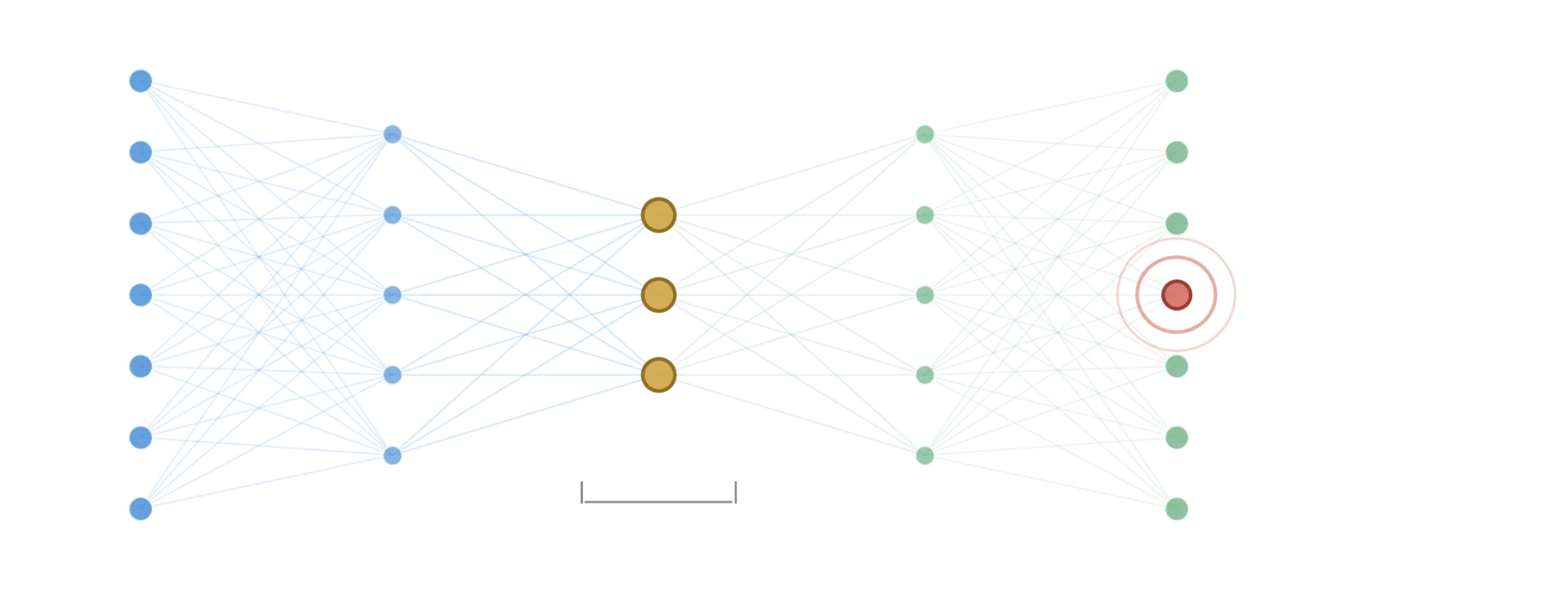
When a benchmark was stacked against PCA, the classic technique still outperformed
It's refreshing to see a benchmark humble the hype. When a test pit autoencoders against PCA, the classic technique won, not on theory, but on real-world performance. That's a result worth pausing over. The author rigged the test to favor the newer approach, and PCA still held its ground. Sometimes the simplest tool is the right one. If you're rethinking your data workflow, our piece on "File Compaction's Real Impact on Query Speed" explores another quiet efficiency worth your attention.

Unlocking Text's Potential: Exploring Vector Spaces and Classification
Text classification only works when words become numbers. That transition, from raw text into vector space, is where the real thinking happens. TF-IDF and the mechanics of turning language into something a model can actually use are walked through. It's a clear, grounded explanation of a step most people skip. If you're ready to move past the basics, this is a solid next stop. And for a different angle on machine learning, check out "Exploring Real-World Computer Vision" for more hands-on lessons.
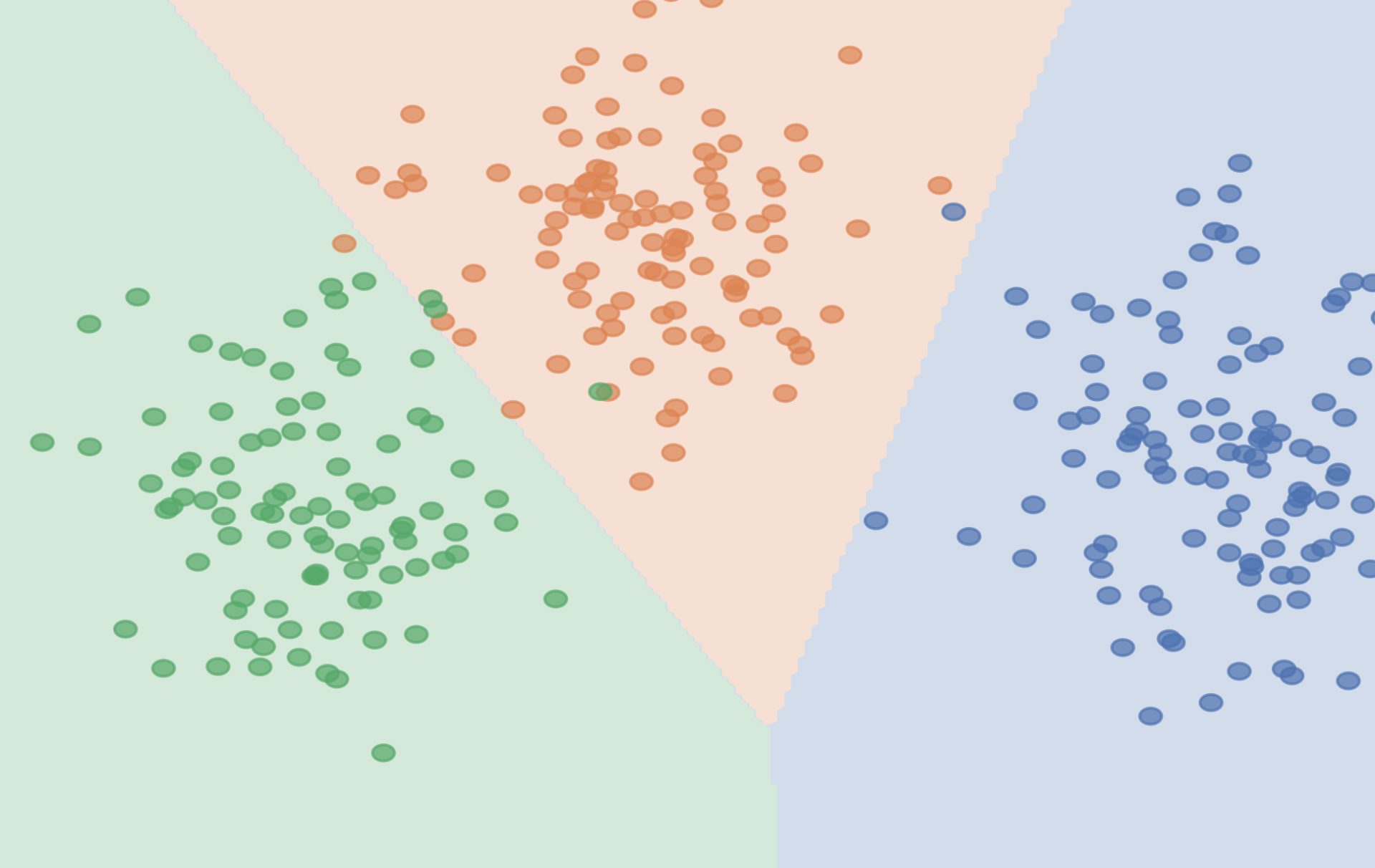
Simplify Complex Real Estate Data with Linear Discriminant Analysis
A real-estate dataset rarely gives you the luxury of clean, low-dimensional features. When classification tasks start drowning in noise, Linear Discriminant Analysis steps in to cut through the clutter. Applying LDA for dimensionality reduction sharpens class separation rather than just shrinking data. It's a practical reminder that reducing dimensions is about preserving what matters most for prediction. For those ready to push further into advanced modeling, our guide on distributed training offers a natural next step.
Automated feature engineering evolves with genetic algorithms and open-source simplicity.
Feature engineering remains the quiet battleground where tabular ML models are won or lost. py-evoFE (v0.3.0) takes a different path: genetic algorithms that evolve compact, high-impact feature recipes instead of brute-forcing thousands of noisy combinations. Its hierarchical chaining, Polars-powered vectorization, and multi-fidelity screening are thoughtful engineering. For anyone tired of manual transformations or explosive feature spaces, this library invites exploration. It is practical, open-source, and built for the workflows teams actually use. That is worth a closer look.
Exploring attention design: why simpler cross-channel methods outperform SE
The Efficient Channel Attention paper made a compelling case that cross-channel interaction drives attention gains, but the evidence tells a more complicated story. ECA skips SE's dimensionality reduction and applies a 1D convolution directly to channel means. It works, clearly beating SE on chess tablebases. The catch: a kernel size of one, which removes any cross-channel interaction, performs just as well. That undermines the paper's central claim. The authors tuned k exhaustively yet never tested the degenerate case that would have challenged their hypothesis.

Explore GPT-2's vocabulary through a flyable hyperbolic tree of 32,070 tokens
Somewhere in the internet's endless sprawl, a reddit user got tired of flat maps. So they built a better one. This isn't another 2D projection of GPT-2's vocabulary. It's a hyperbolic tree, housing all 32,070 tokens inside a Poincaré ball you can actually fly through. The layout is constructed exactly, with no optimisation or training involved. Trees don't fit well in flat space, but they embed naturally here. Drag, pinch, and tap to explore.

Unlocking Efficiency by Compressing Data Into Lower Dimensions
Compressing heavy, unstructured data is one of the biggest hurdles in modern machine learning, and autoencoders offer a surprisingly elegant way forward. By learning to squeeze inputs into a lower-dimensional latent space, they preserve the core context while slashing computational load. It's a practical, accessible approach that turns a complex problem into a manageable workflow. For readers ready to see how this fits into the broader AI toolkit, our guide on distributed algorithms for LLM training pairs naturally with this foundational idea.