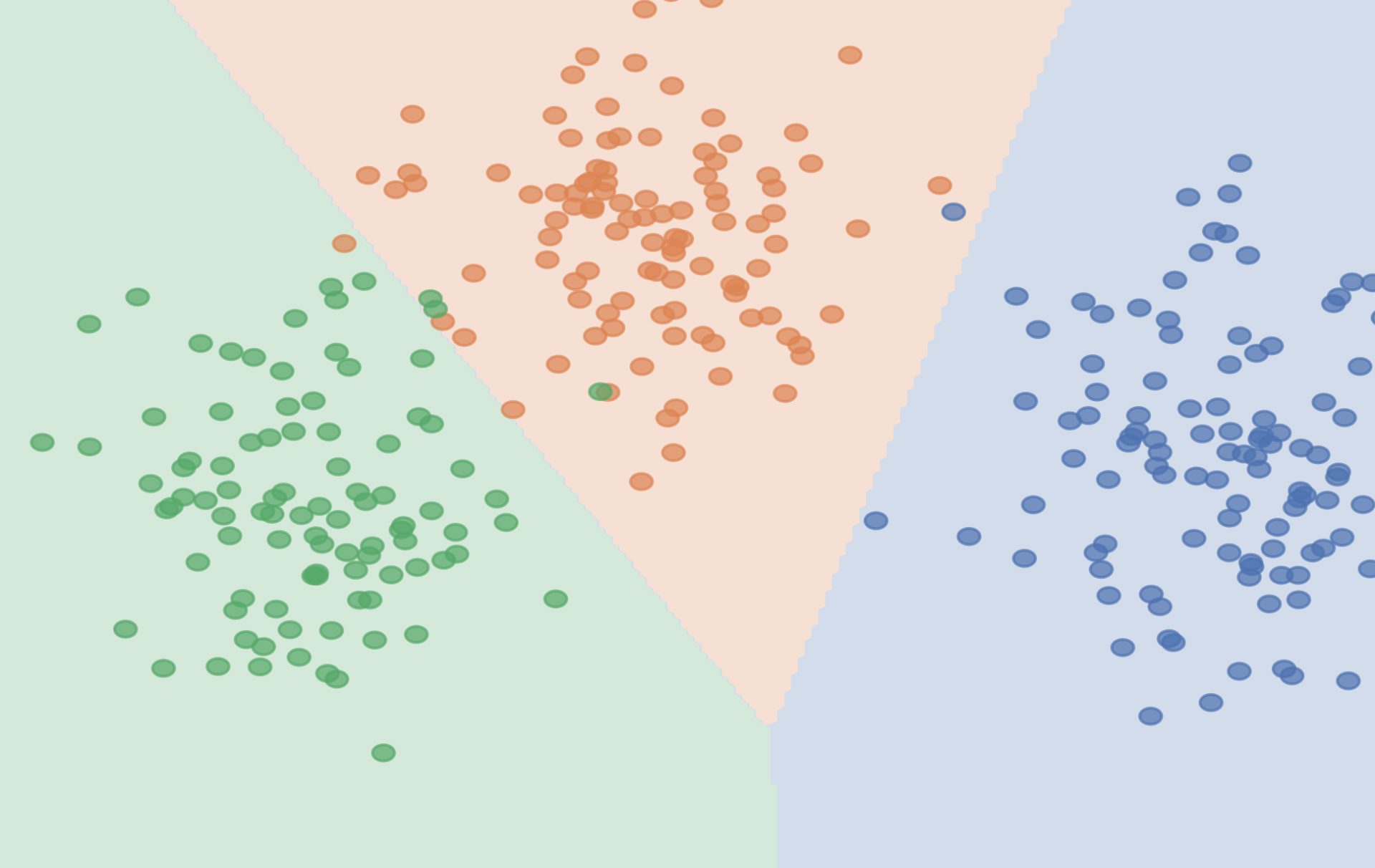
Most data professionals know the feeling: your dataset has too many columns, the noise is starting to drown out the signal, and the model you trained last week is suddenly struggling to generalize. Linear Discriminant Analysis in a real-estate context walks through exactly this scenario, showing how LDA can shrink a messy feature space into something manageable while preserving the class separation that actually matters. It is a practical reminder that dimensionality reduction is not just about speed or storage, it is about clarity. And clarity is something every spreadsheet jockey and dashboard builder craves, even if they have never touched a line of Python.
What we appreciate is how this method grounds a statistical technique in a familiar domain. Real estate is not a flashy subject, but it is relatable. It does not ask you to wade through abstract math; it shows you how LDA helps classify property outcomes by focusing on the dimensions that separate categories most effectively. That is the same instinct that drives someone to build a clean pivot table or a well-structured lookup. You are not just reducing noise, you are making the underlying story visible. If you are coming from a more technical angle, the piece pairs nicely with Unlock LLM Training: A Practical Guide to Distributed Algorithms, because both are ultimately about managing complexity, whether that is in model parameters or property features. The difference is that LDA asks you to compress what you already have, while distributed training asks you to coordinate what you are about to build.
Our honest take is that LDA often gets overlooked in favor of its more famous cousin, PCA. And that is a shame. PCA is great for variance, but it ignores the labels sitting right there in your data. LDA uses those labels, which means it is optimizing for the thing you actually care about in a classification problem: separation. In a real-estate dataset, that could mean the difference between a model that correctly identifies high-value neighborhoods and one that just clusters square footage into a blob. This distinction is made clear without turning it into a turf war, which we respect. It is not about which algorithm is superior; it is about knowing when to use the right tool.
If a reader asked us whether this is worth their time, we would say yes, but with a caveat. It is a solid introduction, not a deep dive. You will walk away with a working mental model of how LDA works and when to apply it, but you will not become a dimensionality reduction expert overnight. That is fine. The real value is in the framing: next time you are staring at a spreadsheet with too many columns, you might remember that your target variable can guide your feature selection. That is a quote worth keeping: your target variable can guide your feature selection. The open question we are left with is how far you can push this approach when your data gets messier, say, with missing values or categorical chaos. For now, the practical takeaway is simple: before you throw another model at a wide dataset, ask whether LDA can cut through the noise for you. It might just save you the headache.