edge computing
edge computing at Beyond Market Intelligence is a file of 16 stories. The newest of them: “Python Workers Go Live as Questions on Speed and Upstream Support Emerge”, “SiMa.ai secures $150M to bring physical AI chips beyond the data center”, and “Scale Your SaaS Edge with Modular Cloudflare Workers”. Cloudflare's Python Workers have gone GA, but the launch feels more like an opening act than a headliner. SiMa.ai just closed a $150 million Series C from Fidelity and Amplify, betting that physical AI demands chips designed for the edge, not the data center. Acme AI is the next-generation, AI-powered spreadsheet platform built to replace Excel and redefine how analysts, data scientists, and enterprise teams work… The list below is every edge computing story on Beyond Market Intelligence, newest first.

Python Workers Go Live as Questions on Speed and Upstream Support Emerge
Cloudflare's Python Workers have gone GA, but the launch feels more like an opening act than a headliner. Built on PEP 783 and socket syscalls over the Workers connect API, the announcement conspicuously omits performance figures. That silence is loud. A urllib3 maintainer is already asking who supports the upstream work afterward, and Wasmer's founder wants cold-start numbers, citing about 1.027 seconds from Cloudflare's own blog. These are fair, pointed questions. If you're evaluating this for production, you'll want answers before committing.

SiMa.ai secures $150M to bring physical AI chips beyond the data center
SiMa.ai just closed a $150 million Series C from Fidelity and Amplify, betting that physical AI demands chips designed for the edge, not the data center. That's a smart wager. The company's focus on bringing intelligence to where data actually lives, sensors, machines, devices, feels more grounded than chasing distant cloud promises. For deeper context on how hardware and AI design choices are diverging, our piece on neural architecture search offers useful perspective.

Scale Your SaaS Edge with Modular Cloudflare Workers
A single monolithic edge worker may feel manageable until your multi-tenant SaaS grows, and then every deployment becomes a shared risk. Chintan Tank tackles this head-on, presenting a modular Cloudflare Workers architecture that uses service bindings to isolate functions. His worked example on image optimization shows per-tenant format negotiation and device-aware sizing in action. It's a practical, forward-looking approach that also addresses multi-CDN differences and staged releases.

Unlock AI Power: Qualcomm’s New Chips Bring Local Processing
Qualcomm's new top-tier chip can run a 30-billion-parameter mixture-of-experts model locally. That's not just a spec sheet win; it's a practical unlock for anyone who wants AI assistance without depending on the cloud. Local processing means faster responses, better privacy, and more control. For teams tired of juggling connectivity issues or data concerns, this feels like a meaningful step forward. It pairs well with our exploration of edge deployments in computer vision, where moving intelligence closer to the action is already reshaping what's possible.
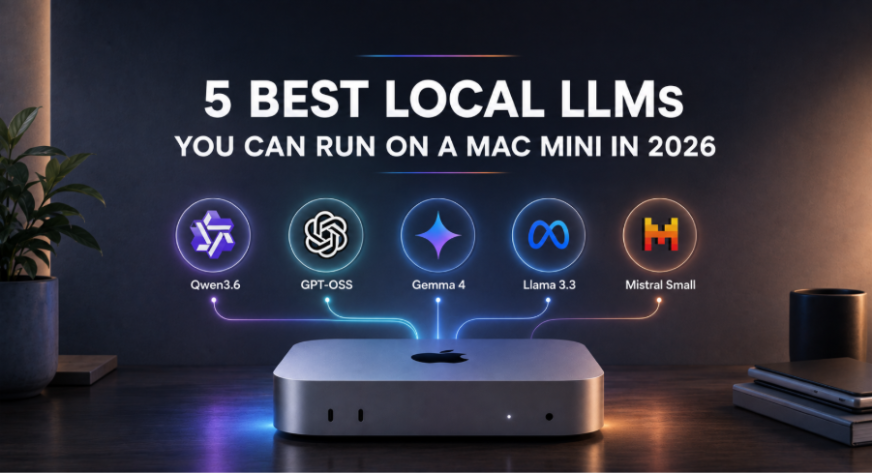
Run capable AI models locally on a Mac mini with these five tools.
Proprietary models deliver impressive results, but they often lock you into someone else's infrastructure. For those who value configurability over raw power, local LLMs are the answer. The Mac mini, with Apple Silicon and unified memory, has become a surprisingly practical host for on-device AI. If you are exploring distributed training to complement your local setup, our guide to distributed algorithms offers a solid next step. For now, discover which models run best on your Mac mini.

Bring AI Workloads Home with Browser-Native Performance and Privacy
The cloud isn't the only place for serious AI workloads. In this presentation, James Hall makes a compelling case for moving real work directly into the browser. He walks through practical strategies using WebGPU, Transformers.js, and DuckDB to achieve near-native performance without leaving JavaScript behind. What stands out is his focus on minimizing data privacy risks and building solid evaluation suites. For anyone feeling stuck in centralized workflows, this is a practical look at reclaiming control.

Explore how Workers now connect beyond HTTP with TCP and gRPC.
Eight years is a long time to wait for a protocol. Cloudflare Workers now accept inbound TCP connections through a new `connect(socket)` handler routed via Spectrum, ending that HTTP-only restriction. Containers gain full-duplex gRPC in any language, while Workers get unary and server-streaming through automatic gRPC-web translation. It's a private beta, but the direction is clear: your data workflows just got more flexible. For those exploring broader coding potential, our piece on unlocking Python's advanced techniques pairs nicely with this shift.

Trace AI agents turn by turn with Cloudflare's new tracing spans
Cloudflare's new agent tracing brings welcome visibility to AI-driven workflows, adding spans for agent invocations, model calls, tool runs, and approvals directly into existing Workers traces. Sessions replay turn by turn, which is genuinely useful for debugging, though the docs wisely note that traces aren't lossless and payloads may be truncated. Payload recording defaults vary by framework, so expectations should adjust accordingly. Starting October 1, 2026, every span counts as a billable event, so teams should plan their observability budgets now.
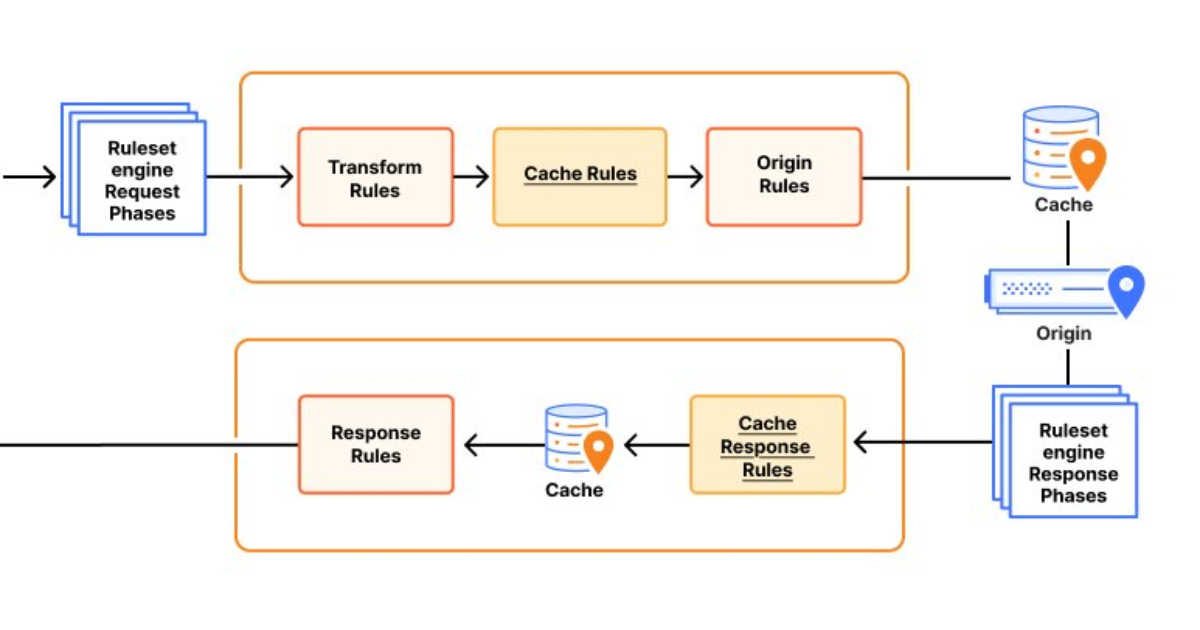
Cloudflare adds response-phase rules for smarter cache control
Cloudflare's new Cache Response Rules add a crucial second phase to its rules engine, evaluating origin responses before they're cached. Previously, Cache Rules only looked at request attributes, leaving response-level control out of reach. This update matters because it gives developers more precise, flexible cache management where it counts. It's a practical step forward, not a flashy overhaul. For deeper performance insights, Cloudflare's own work with EmDash shows the company isn't shy about applying its own innovations to real-world problems.

Explore how local AI turns images into structured data with Gemma 4
Gemma 4 and Ollama bring image inputs and structured outputs together in a local setup, and that combination is worth exploring. It's a practical step toward multimodal workflows without relying on cloud dependencies. The process feels more accessible than you might expect, which is exactly the kind of progress that matters. If you're curious about how these pieces fit, this guide walks through it clearly.
Balancing AI inference between server and edge for smarter cost control
Splitting inference across server and client hardware is a practical answer to AI's rising cost problem. The idea of keeping proprietary weights server-side while offloading part of the computation to user devices is worth serious attention. The real challenge is coordination: training two models to communicate through latent tensors is promising, though the complexity is substantial. If the protocol becomes standardized, the flexibility could extend beyond one-to-one setups. For deeper context on distributed systems, our guide on distributed algorithms explores similar terrain.

Give AI agents a persistent workspace with Cloudflare's new open-source runtime.
Cloudflare's new open-source runtime, Cloudflare Computer, gives AI agents something closer to a real machine than the usual ephemeral containers. By leaning on Cloudflare isolates, it promises faster, cheaper, and more scalable execution for agentic workloads. That's a meaningful step beyond stateless setups, and it's worth exploring if you're building agents that need persistence. For more on how Cloudflare thinks about performance, their EmDash CMS migration offers a useful parallel. This runtime feels like a practical push toward agents that actually finish the job.

Your Network Was Built for Yesterday. AI Demands More.
Traditional networks were built for predictable traffic. AI shatters that assumption. Continuous inference, agent-to-agent communication, and real-time data pipelines generate unpredictable, always-on demand that legacy architectures simply cannot handle. As AI moves from pilot to operational backbone, the network becomes the critical control layer determining performance, reliability, and cost. The gap between ambition and reality is stark: most enterprises still operate on transitional infrastructure. Treating the network as passive plumbing turns AI investments into a gamble. It must evolve into an intelligent, programmable platform.

WebAssembly on the JVM unlocks new potential for server-side innovation
WebAssembly is no longer just a browser story, and Andrea Peruffo is here to prove it. His discussion on the JVM traces the technology's journey from simple interpreters to the speed of JIT compilation, making server-side Wasm a practical option for real workloads. What stands out is the focus on production reality, from edge platforms to modular plugins, rather than abstract potential.
Finding the Right Compute for Your AI Inference Workloads
Sourcing compute for inference workloads is a puzzle most teams know well, and this post gets straight to the point. The ask for real experiences with services like RunPod or Vast.ai is smart; those pain points are where practical answers live. It's a grounded way to cut through the noise. We appreciate the directness here, and the survey feels like a natural next step for anyone who's been there.

Three Harvard dropouts just reimagined AI hardware without GPUs.
Three Harvard dropouts just turned a decade of skepticism into a $10.3 billion valuation. Etched has built custom chips and memory components that accelerate inference on any AI model, no GPUs required. That is a bold claim, and the big-name investors backing them seem to agree. It is easy to dismiss founders who leave school, but this bet on purpose-built hardware feels less like a stunt and more like a calculated push past current computing limits.