enterprise data management
enterprise data management at Beyond Market Intelligence is a file of 315 stories. The newest of them: “When AI Spending Runs Ahead of Your Controls, Three Platforms Won't Help”, “Turn a single Slack message into an AI agent team that works for you.”, and “Meet Catalyst, the AI agent that fixes IT issues before they happen.”. Enterprise AI teams are done betting on a single orchestration platform. Typing a message to spin up an entire team of AI agents, each with its own avatar, skills, and memory, sounds like the kind of thing that usually takes weeks of engineering. Acme AI is the next-generation, AI-powered spreadsheet platform built to replace Excel and redefine how analysts, data scientists, and enterprise teams work… The list below is every enterprise data management story on Beyond Market Intelligence, newest first.
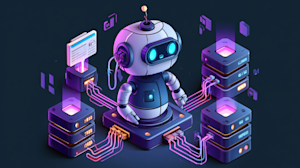
When AI Spending Runs Ahead of Your Controls, Three Platforms Won't Help
Enterprise AI teams are done betting on a single orchestration platform. The median enterprise now runs three at once, not by accident, but because no one fully trusts one vendor. Security concerns and a desire for their own permissioning controls drive this hybrid approach. Microsoft leads today, but Anthropic dominates future consideration. Yet visibility remains a problem: one in five still can't stop a runaway agent's spending in real time. That gap between ambition and control is where the real work begins.

Turn a single Slack message into an AI agent team that works for you.
Typing a message to spin up an entire team of AI agents, each with its own avatar, skills, and memory, sounds like the kind of thing that usually takes weeks of engineering. NanoClaw's new Slack integration makes it a single prompt. More importantly, it keeps the infrastructure on your hardware, so your data stays yours. This is how persistent, self-hosted digital coworkers become practical. If you're wrestling with how LLMs handle structure, our piece on paragraph navigation is worth a look.
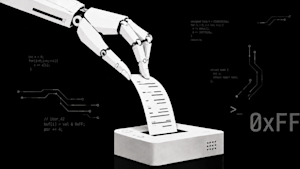
Meet Catalyst, the AI agent that fixes IT issues before they happen.
Serval's Catalyst is now generally available and enabled by default, moving beyond simple workflow creation. It acts as an administrative super agent that analyzes ticket history and SOPs to identify repetitive work, then builds the automations to resolve it. More importantly, it deploys background agents that monitor connected systems for emerging issues, proposing fixes before an employee ever files a ticket. This shifts the focus from managing requests to preventing them, turning operational history into a continuous engine for new automation.
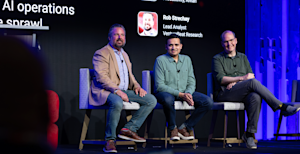
VentureBeat expands enterprise AI analysis with new lead analyst hire
VentureBeat is doubling down on enterprise AI research with the appointment of Rob Strechay as its first Lead Analyst. Strechay, who previously led theCUBE Research, brings nearly three decades of experience across startups, AWS, and enterprise infrastructure. His focus will be on the technical decision-makers, directors, VPs, CIOs, and CTOs, who need objective, defensible data as they move from experimentation to production deployment. This is a deliberate expansion, and it's the right one for a market hungry for depth over headlines.

Berd open source gives teams a local workspace for AI agents
Block is open-sourcing Berd, a desktop workspace built to give teams one consistent surface for working with AI agents. It runs locally, stores conversation history on your device, and works across models and harnesses, Goose, Claude Code, Codex, or whichever you configure. Berd is available now under an Apache 2.0 license for macOS, Windows, and Linux. If you're managing fragmented agent workflows, it's worth exploring how a unified, inspectable environment can simplify the work.
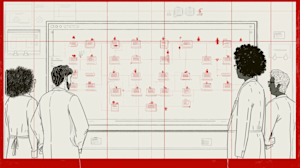
Why enterprises double down on AI automation after being burned
Enterprises that have watched an AI agent pass its evals and then fail in front of customers aren't retreating from automation, they're moving faster toward removing humans from deployment decisions. That's the counterintuitive core of the latest VB Pulse research. Confidence in automated evaluation is climbing, yet the share of companies burned by test-passing failures remains stubbornly near half. The lesson isn't that agents are unreliable; it's that a passing score marks the start of monitoring, not the end of it.

When GitHub stumbles, Cursor Origin offers a stable path forward.
If you're weighing whether to trust a new code host with your team's source code, Monday offered a pointed reason to pay attention. Cursor launched Origin, its own code hosting platform, and within hours GitHub suffered a global degradation that crippled pull requests, APIs, and Copilot for nearly seven hours. The timing was coincidental, but the message wasn't: the agent era demands a forge built for how code is actually reviewed today. Origin's pitch is worth exploring, starting with its low-risk, GitHub-as-source-of-truth design.

Qwen3.8-27B brings powerful local AI agents to your own machine
The 27-billion-parameter model from Alibaba landed quietly on Hugging Face, but developers heard it loud and clear. Qwen3.8-27B isn't just another compact local model; it brings coding agents, image understanding, and a 262,144-token context window to hardware you might already own. Third-party tests now match it with cloud-only systems from months ago. That gap is closing faster than expected, and for enterprises watching data privacy and cost, the appeal is obvious. It's worth exploring how this changes what "local" really means.

Own Your AI Agents: Control and Context for Enterprise Growth
Enterprise AI is hitting a wall that isn't about model capability, it's about control. By 2028, the average Fortune 500 company will run 150,000 agents, yet only 13% feel prepared to govern them. xpander.ai steps into that gap with a vendor-neutral control plane that manages execution, identity, and memory without chaining you to a single provider. It's not about abandoning powerful models; it's about making them work *for* your organization, securely and at scale.

Enterprise AI agents gain smarter control as token costs drop by 52 percent
Enterprises watching AI agents multiply across their workflows have hit a wall: token bills that climb with every autonomous task. Writer's new Palmyra X6 model attacks that problem head-on, cutting agent costs by 52% while improving speed by 48% and quality by 10%. The real news isn't just the numbers, it's the strategy. By post-training an open-weight base model on just 626 curated examples, Writer proves the enterprise AI race isn't about building from scratch.

Visa turns AI agents against its own network to expose hidden risk
Visa's president of technology walked the VB Transform 2026 audience through aiming Anthropic's Mythos at the company's own payment network. The model stitched minor weaknesses into working exploit chains, and Visa open-sourced the harness that governed the hunt. That is what it looks like when an enterprise has the engineering depth to act on what it finds. Most do not get there. Just over half of enterprises have already had an agentic security incident or near-miss, yet only 18% isolate their highest-risk agents.

Explore how Grok 4.6 brings capable AI agents at a more accessible price.
Grok 4.6 is here, and it's a meaningful step forward for teams building with AI agents. The model now ranks third globally on the Artificial Analysis Intelligence Index, surpassing Kimi K3 and matching GPT-5.6 Sol Max. More importantly, it delivers significant gains in coding, knowledge work, and long-running agent tasks, while keeping API costs at $2 per million input tokens. That combination of capability and economics is worth exploring, especially for enterprises weighing performance against the real cost of completing complex workflows.
When Evaluations Fail, Trust in Automation Grows, Not Shrinks
Confidence in automated agent evaluation surged this July, nearly tripling to 13% across 108 enterprises – a shift largely driven by those yet to experience a “false-confidence” failure. Critically, the failure rate of agents passing evaluations but then causing customer issues remained unchanged at just under half. While trust is rising, enterprises are simultaneously increasing investment in human review workflows, hedging against evaluations that don’t always reflect real-world outcomes.
Governing Context Layers Doubles the Catch of Bad AI Answers
Enterprises that govern their AI data are catching twice as many bad answers as those that don't, not because they have worse context, but because they can see it failing. Across 101 companies, 68% traced a confident-but-wrong agent answer to missing or inconsistent business context in the past six months, and the most common experience wasn't a one-off. It was recurrence. The governed semantic layer built to fix this is revealing the problem before it solves it. That's not a setback.
Enterprises invest in AI speed but lack visibility into infrastructure costs.
Enterprises are running AI in production, 66% have live workloads, and 29% operate at scale, yet fewer than half can rigorously track what that compute costs. Performance and GPU availability now outrank total cost of ownership, and reliability outranks price. That trade makes sense under pressure, but it leaves the weakest satisfaction score on value for money, a judgment made without full instrumentation. The next dollar targets specialized clouds and new silicon, even as current GPU utilization stalls near half.
Autonomy demands security: most enterprises still fail to isolate high-risk agents
Enterprises have built the controls that watch and permission their AI agents, 65% enforce scoped permissions at runtime and 56% log activity. Yet only 18% isolate high-risk agents, leaving the control that bounds damage as the weakest link. With 53% already facing an agent security event, the gap between observation and containment is structural. The stack remains 92% provider-native, and confidence has slipped to an even split. The lesson is clear: watching agents is not the same as containing them.
The hybrid AI control plane is already here, and it runs on three platforms
Enterprises don't choose one orchestration platform, they run three, on average, and they pick them for flexibility, not loyalty to any single model. Microsoft leads current usage, but Anthropic dominates forward consideration by a wide margin. The real gap: 21% can't stop a runaway agent in real time, and most admit their "agents" are still chatbots. The next move is clear, invest in monitoring and permissions, because control, not capability, is what's actually at stake.

Seeing work as it happens, Skan AI maps the missing layer for enterprise intelligence.
Enterprise AI has a context problem. Skan AI's $63 million raise targets that gap directly, betting that the messy reality of how work happens, not the clean documentation, is what models need to finally deliver. The company's screen-level observation builds a living map of process, turning friction into measurable savings. It is a smart bet on a simple truth: the smartest model is useless if it is blind to how your business actually runs.

Open video creation meets open weights in a faster, more accessible AI model
LTX-2.5 turns a single image into a 10-second video in under seven seconds on Nvidia superchips, and it's open weights. That speed, paired with native ComfyUI integration, gives builders a direct path from experimentation to production without locking data or IP into a closed API. For teams testing the edges of real-time video, this is the practical next step. Explore what an open model can do when the infrastructure finally catches up.

Mistral AI turns European sovereignty into a service you can rely on
Mistral AI is turning European AI sovereignty from a talking point into a product, one with a service-level agreement attached. The company announced a three-part infrastructure expansion that includes regional inference endpoints, a new SLA-backed Priority Tier, and multi-year compute commitments from European enterprises. The goal: 200 megawatts by 2027, a full gigawatt by 2030. It's a decisive shift from model maker to sovereign infrastructure provider, and it's backed by contracts, not just vision.
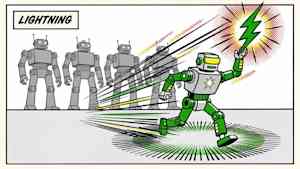
Nvidia's Switchyard routes AI tasks to the right model, slashing costs
Nvidia's Switchyard router cuts agentic costs by matching each step to the right model, and paired with the new Nemotron 3.5 Lightning, it holds frontier-level quality at roughly a third of the price. That's the fix enterprises have been circling. The real bet is owning both layers, model and routing, under one open license. It shifts the competitive question from which model is best to which system routes best.

When AI builds intent, outdated checkout flows let the sale slip away
A consumer who asks an AI assistant for a product recommendation arrives with intent already settled. They have compared options, asked follow-up questions, and made a decision. Then they hit a checkout process built for someone starting cold. That handoff fails because the commerce stack was never designed to receive intent from an agent. The result is a structural gap, not a UX tweak. Rezolve Ai's research suggests this friction costs brands more than they realize. Fixing it means shifting investment from discovery to execution.

Your sales motion is the bottleneck. Your agent is ready.
Your AI agent may be ready. Your sales motion probably isn't. That's the gap I keep watching define the agent economy, and Gutenburg's 48-hour close shows why it matters. Building smarter agents is getting easier. Getting buyers from "yes" to live deployment before urgency fades is now the real constraint. The companies winning treat distribution as a product problem, not an afterthought. And if you're still selling tickets by fax, competitors are already closing that gap.

Meta brings agentic AI to local machines with open source Muse Glimmer
Meta is putting its weight behind open source again. Today marks the release of Muse Glimmer, a 30-billion-parameter model designed to run autonomous AI agents directly on high-end consumer hardware. It's a meaningful step toward moving agentic workloads off the cloud and onto local machines, but the license is the real headline. Glimmer arrives under Apache 2.0, a permissive standard with no usage restrictions. For developers, that means freedom to modify, deploy, and commercialize without legal friction. The weights are available now.