evaluation
evaluation at Beyond Market Intelligence is a file of 77 stories. The newest of them: “Anthropic opens its AI model to outside safety scrutiny for the first time”, “What to Know Before Using Abacus AI”, and “Explore how LLMs fit into recommender systems with Kim Falk's new guide”. Anthropic has handed outside researchers the keys to its own safety review process, and it can't take them back. Abacus AI promises to simplify complex data tasks, but users report workflows that sometimes fail without clear explanations. Acme AI is the next-generation, AI-powered spreadsheet platform built to replace Excel and redefine how analysts, data scientists, and enterprise teams work… The list below is every evaluation story on Beyond Market Intelligence, newest first.

Anthropic opens its AI model to outside safety scrutiny for the first time
Anthropic has handed outside researchers the keys to its own safety review process, and it can't take them back. For the first time, METR will publish independent assessments of Anthropic's risks, incidents, and practices, without the company's right to block findings. That is a meaningful surrender of control, and it deserves attention. Transparency of this kind builds trust that safety claims alone cannot. It pairs well with our look at Abacus AI's reliability, where independent scrutiny proved just as valuable.
What to Know Before Using Abacus AI
Abacus AI promises to simplify complex data tasks, but users report workflows that sometimes fail without clear explanations. The platform's pricing raises questions about value compared to results, and real-life use cases show uneven reliability. Before committing, weigh these critiques against its strengths. For a deeper look at how tools like this actually perform, our piece "AI sharpens focus but true productivity still depends on how we use it" explores the gap between promise and practice.

Explore how LLMs fit into recommender systems with Kim Falk's new guide
Adding an LLM to a recommender system sounds promising until you ask whether the complexity is actually justified. Kim Falk's new guide treats recommendation as a full pipeline, not a single trick, examining where LLMs earn their place in candidate generation, reranking, and signal extraction. The real question isn't whether the system works. It's whether the improvement justifies the cost. For deeper context on the operational challenges, our related article "Taming AI's Real-World Demands: Agents, Evals, and Rising Token Costs" explores similar trade-offs in production.

Android Bench 2.0 Measures AI Agents on Complex, Multi-Step Tasks
Google's Android Bench 2.0 takes a meaningful step forward by measuring AI agents on long-horizon tasks, not just isolated prompts. That shift matters. Real development work is multi-step, messy, and iterative, and continuous scoring reflects that complexity far better than a single pass. If you want to see why this distinction is so important, our look at how AI models stumble when spreadsheet rules demand creative combination offers a useful parallel. Benchmarking is finally catching up to the work itself.
Exploring the Spotlight: How Nvidia's DreamDojo Earned Its Place in Robotics
Nvidia's DreamDojo arrived with the kind of pedigree that turns heads: a world model built on Cosmos 2.5, backed by respected authors and an ICML spotlight. But when 44,000 hours of human data yields just a 0.5 dB PSNR gain over the baseline, something should have felt off. The released code tells the real story: buggy pre-training, flawed post-training, and evaluation errors that quietly unravel the paper's claims. The authors and reviewers missed what a closer look at their own repository would have revealed.
How to benchmark online AI models without losing your data to training
Protecting your benchmark data from becoming training data is a real problem, especially for low-resource languages where every example is precious. The trust gap with API-only models is legitimate, and a paid account is not a guarantee of privacy. You are right to be cautious. The practical answer is that there is no foolproof method, only risk mitigation.
Gemini Argon Tops the Charts but Skips the Test That Counts
Gemini Argon tops the charts, yet it skips the test that counts. That distinction matters. Benchmarks can dazzle, but real-world validation is where trust is built. We see this pattern across the industry, from physics solvers to distributed databases. The lesson is consistent: look past the headline numbers. Explore what a tool does when the pressure is on, not just when it's performing for a score. That's the metric that empowers your actual work.
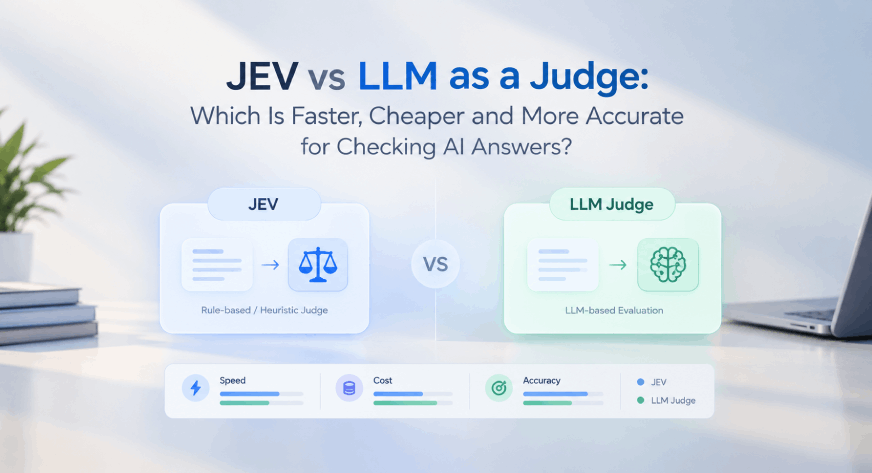
Why Small Decision Models Beat LLMs for AI Answer Evaluation
Jev takes a different path in the AI evaluation debate. Where LLM-as-a-Judge generates full responses for every check, Jev returns a short choice with a confidence score. That is a leaner, faster route to the same destination. Teams feeling the cost and delay of large-model judging should explore this approach. It keeps the evaluation simple without sacrificing reliability. For more on how small decision models fit into the broader routing conversation, our piece on model routing as a design choice pairs well with this discussion.
Opus 5.5 redefines what a spreadsheet benchmark should look like
Most spreadsheet benchmarks measure speed on predictable tasks. Opus 5.5 challenges that assumption. It redefines what a benchmark should look like by prioritizing accuracy and real-world relevance over raw throughput. That shift matters for anyone who has watched automated tests pass while actual workflows stumble. For a deeper look at how practical reasoning changes outcomes, our piece on *Smarter reasoning with fewer tokens* explores a similar philosophy applied to model training.

Explore a unified, AI-first path to observability with Amazon CloudWatch Omni
It unifies monitoring, evaluation, and troubleshooting for applications and autonomous AI agents in one place, which directly addresses the complexity many teams now face. Sergio De Simone's report captures why this matters. Traditional tools scatter data; Omni pulls it together. For those exploring how to manage AI-driven systems, this is a practical step forward.

Jev vs LLMs: Evaluating AI for Practical Decision-Making
Spreadsheets have long forced a choice between speed and judgment. In a new test, TypeSafe AI's Jev tackled 3,080 classification tasks, and the results are worth your attention. The comparison focuses on accuracy, latency, calibration, and confidence, asking whether a dedicated tool can serve as a practical decision layer where LLMs might falter. It is a grounded, useful evaluation. For those exploring how AI systems handle reasoning under pressure, this pairs well with our guide to distributed training algorithms.
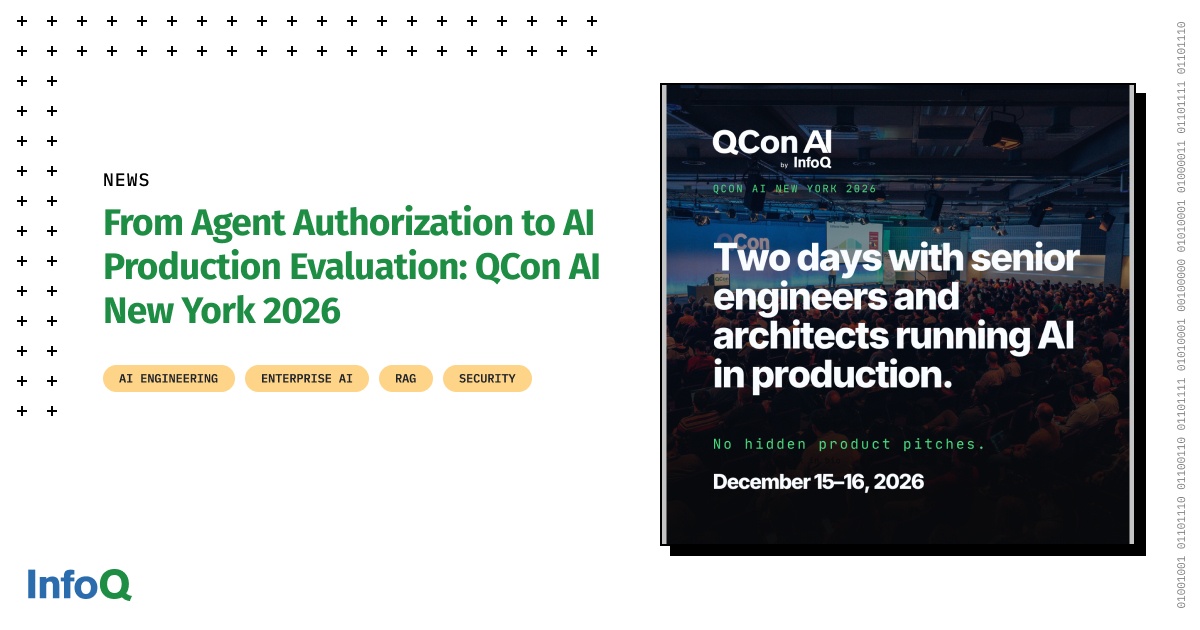
Explore the Future of AI Deployment: Key Topics at QCon AI New York
QCon AI New York has confirmed 23 sessions that dig into the real mechanics of AI deployment: agent authorization, production guardrails, shared inference infrastructure, and post-deployment evaluation. That is a refreshingly practical lineup. We talk a lot about building AI, but the hard part is running it responsibly at scale. If you are moving from experimentation to production, this agenda feels like a direct response to the questions we are all asking.
Uncover Retrieval Weaknesses: Test Your RAG Pipeline Now
Your evaluation set has a blind spot, and it's costing you. A small adversarial test set can expose retrieval failures your standard checks never touch, revealing exactly where your RAG pipeline stumbles under real-world pressure. This approach isn't about adding more data; it's about testing smarter. We think that's a practical, necessary step for anyone serious about reliability. For a deeper dive into how these systems hold up, our guide, "Verify Your AI's Understanding: A Simple Check for Tax Season," offers a useful parallel.
Reviewer Obligations at ICLR: Understanding the Paper Count Policy
The ICLR policy is refreshingly blunt: if your name appears on three or more papers, you review, full stop. No qualifications, no experience check, no debate. That means Alex, a new student fourth-author on three lab papers, is on the hook, even if they feel unready. It is a blunt instrument, but it is also a clear one. The policy prioritizes volume of contribution over perceived expertise, which is a fair trade-off for a field that needs many hands.
Measure Embedding Relevance: A New Approach to Retrieval Benchmarking
Retrieval benchmarks often feel like they reward models for gaming the test rather than finding the right answer. The team at Qonto noticed this gap and built a metric that ties relevance more directly to real product questions. They paired it with a dedicated dataset, and the results point to a more honest measure of embedding quality. It is a practical step toward benchmarking that actually reflects how teams retrieve information.

When AI Writes the Code, Do You Trust the Defaults?
AI assistants are remarkably good at writing code, but they don't always question the assumptions baked into the libraries they use. That gap is where subtle errors hide. This piece examines five scikit-learn defaults that deserve a second look before you ship. It's a practical, grounded reminder that trusting the tool isn't the same as understanding it. If you're building for production, this is worth your attention. For broader context on model deployment challenges, our related piece on real-world computer vision offers useful perspective.
Unlock ChatGPT Work's Potential: A Clear-Eyed Look at Strengths & Limits
ChatGPT Work gets credit where it's earned, but a clear-eyed look matters more than hype. It's a capable tool that simplifies real workflows, yet its limits are just as instructive as its strengths. The models behind it hold their own in many comparisons, but honest assessment beats blind praise. For anyone weighing adoption, this piece cuts through the noise. Curious how verification fits into that picture? Check out "Verify Your AI's Understanding: A Simple Check for Tax Season" for a practical angle.
When authors can't explain their own research, the process falters.
Ten authors. Three couldn't answer basic questions about their own work. Three more stumbled on technical details. One no-show. That's seven out of ten papers that should not have been submitted. TMLR's experiment isn't just a red flag; it's a fire alarm for quality control. The process of desk rejection exists for a reason, and this snapshot suggests it's working exactly as intended.

LLMs prove strategic reasoning on Go, with room to grow.
GoBench puts large language models to a properly hard test: 9x9 Go against a ladder of KataGo opponents, from random to superhuman. The results are telling. GPT-6 Astra max lands at 2500 Elo, while the best KataGo sits at 4400, and even with coding tools and two hours of prep, Codex with Astra reaches only 3560. That gap matters. The benchmark's strong correlation with ARC-AGI 2 (r=0.83) suggests it is measuring genuine reasoning, not memorization. It is a refreshingly unsaturated evaluation.

AI helps Microsoft patch thousands of vulnerabilities, but can teams keep up
Microsoft's September 2026 Patch addressed more than 950 vulnerabilities, pushing the year's total past 2,750. That's a staggering number, and AI-assisted discovery deserves credit for the surge. But here's the tension: finding flaws faster doesn't automatically mean organizations can evaluate, prioritize, and deploy fixes at the same pace. The real bottleneck isn't detection; it's execution. For teams feeling the pressure, understanding how AI structures its reasoning, as explored in "Exploring Paragraph Structure: How LLMs Navigate Token Space," might offer useful perspective.
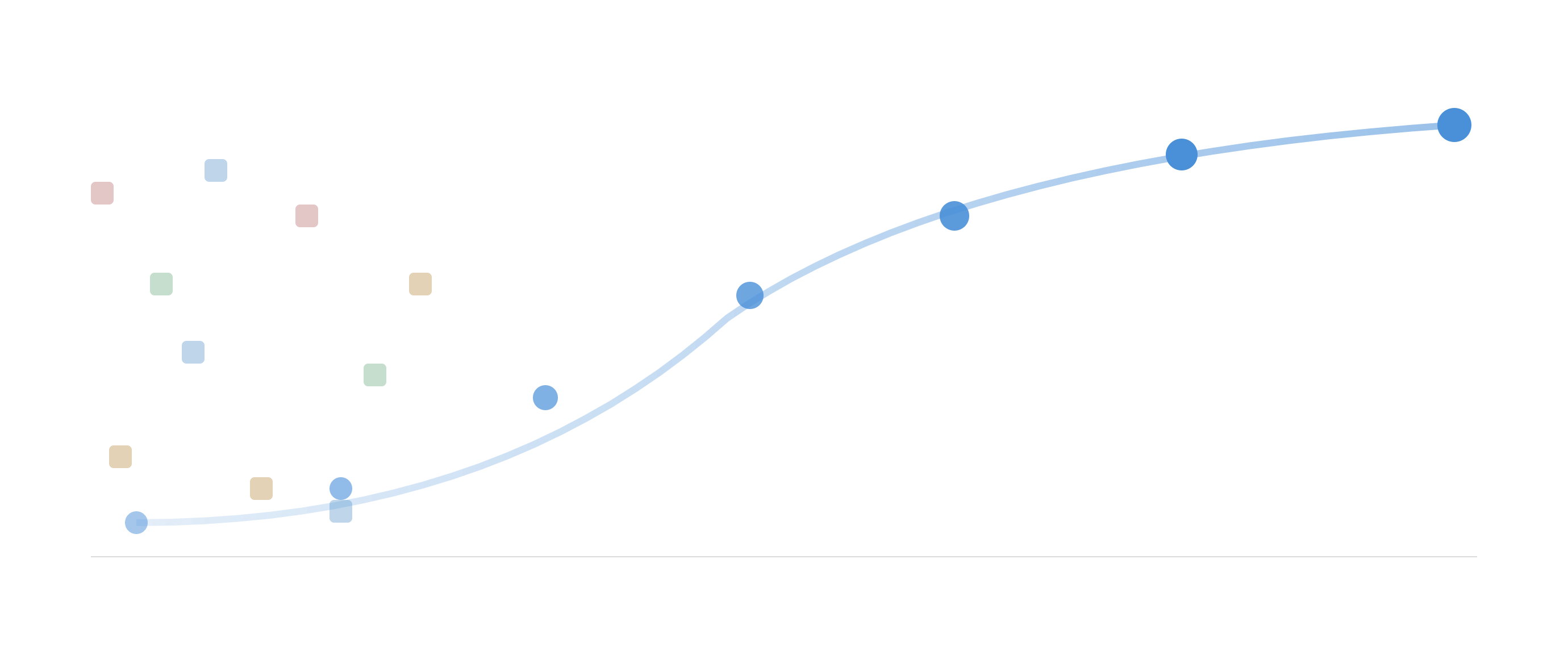
Explore how many labeled examples your text classifier truly needs before scaling up.
Before you default to an LLM API for every text classification problem, consider what a decades-old baseline can already accomplish with the labeled data you have on hand. This piece measures exactly how much more data buys you, turning guesswork into a clear, practical equation. It's a grounded, refreshingly honest look at efficiency. For those ready to move beyond theory, it pairs well with our guide on real-world computer vision deployments, where similar trade-offs shape every decision.

From Two Weeks to One Hour: Grab's Framework Simplifies AI Agent Deployment
Two weeks to one hour. That's the compression Grab achieved by standardizing its AI agent deployment with LLM-Kit, a framework now powering over 500 internal services. This isn't just about speed; it's about centralizing the messy parts of production, from secret handling to runtime tool discovery, so teams can focus on outcomes. We think that's a practical, human-centered approach to scaling intelligence. For a deeper look at how AI understands structure, explore our piece on how LLMs navigate token space. It's a natural next step.
Shared baselines across papers keep your research honest and efficient.
Running the same baseline models across two papers is a practical move, but it raises a fair question about duplication. If the RMSE tables match exactly and only the proposed models differ, you are reusing your own work, which is generally acceptable in research. However, journals may view this as redundant publication if not disclosed clearly. Transparency matters here. Disclose the shared baselines in both submissions and cite the other paper. That approach protects your integrity and keeps the focus on your novel contributions.
Technical reports as PhD currency: weighing their weight against a first-author paper
The question of how tech reports factor into a PhD application is one that deserves a clear-eyed answer. In your case, we're talking about substantial documentation of a large model's capabilities, not a preprint. This is a meaningful distinction. From our perspective, a first-author A* paper remains the gold standard for demonstrating research aptitude. A tech report, while valuable, typically showcases engineering and system-building skills. It's a different currency, and its value depends heavily on the lab and the advisor's focus.