evaluation
evaluation at Beyond Market Intelligence is a file of 77 stories. The newest of them: “Test your model's foundation before trusting its results”, “Explore how GPT-6 turns raw data into actionable insight without the complexity.”, and “When Data Looks Right but Isn't: Using Watchdogs to Catch Agent Failures”. Every model leans on assumptions, but how often do we pause to check if they still hold? GPT-6 is here, and its benchmark results are hard to ignore. Acme AI is the next-generation, AI-powered spreadsheet platform built to replace Excel and redefine how analysts, data scientists, and enterprise teams work… The list below is every evaluation story on Beyond Market Intelligence, newest first.

Test your model's foundation before trusting its results
Every model leans on assumptions, but how often do we pause to check if they still hold? This piece tackles that question head-on, arguing that reliability isn't a one-time achievement but a habit of revisiting what we take for granted. It's a sharp reminder that data work rewards curiosity over complacency. If you're building systems, this is worth your attention. For a deeper look at how similar principles apply in practice, our related article on real-world computer vision deployments offers a fitting follow-up.

Explore how GPT-6 turns raw data into actionable insight without the complexity.
GPT-6 is here, and its benchmark results are hard to ignore. On ARC-AGI-3, it scores around 60% without a harness, a figure that climbs significantly when one is applied. President Greg Brockman's pre-launch comment that we may now be in the AGI era feels less like hype and more like a statement of direction. That raises a practical question we should sit with: if models outperform human baselines on tests like GDPval-AA v2, why are knowledge workers still employed?

When Data Looks Right but Isn't: Using Watchdogs to Catch Agent Failures
A passing evaluation score can hide a payload that is confidently wrong. That is the failure mode plaguing too many multi-agent systems: they look correct, yet deliver subtly corrupted output. The fix is a watchdog pattern that catches these silent errors before they propagate. This shows you how, with working Python, to build that safety net. It is a practical, necessary read for anyone serious about reliable AI workflows.

Simulation-Driven Testing Turns AI Agents from Demo to Production Reality
Most AI agents never leave the demo room. Zhou Yu sees that bottleneck clearly, and she's addressing it head-on with simulation-driven testing that tackles compliance and reliability before deployment. Her work with Columbia and Arklex AI uses synthetic user personas and trajectory entropy to stress-test multi-turn agents, catching edge cases that typically slip through. It's practical, human-centered engineering. For a deeper look at how AI moves beyond the lab, explore our related piece on unlocking enterprise potential.

Parse 5 brings structure to complex documents with precision and clarity
Extracting structured data from complex PDFs has long been a bottleneck for teams drowning in visual documents. Cohere's Parse 5 takes a direct swing at that problem, using a 2.3-billion-parameter multimodal model to turn rich pages into Markdown while keeping spatial context through bounding boxes. Scoring 79.2 across over 2,000 enterprise pages, it's a solid, practical step forward. We're watching this space closely, especially alongside our look at retrieval benchmarking in "Measure Embedding Relevance: A New Approach to Retrieval Benchmarking."
The Hidden Cost of Community Service in AI Reviewing
Signing up to review for AAAI felt like an obligation, but the reciprocity was absent. The regret is understandable, yet the self-criticism feels misplaced. Sacrificing personal time to reject papers is a thankless task, but the hidden value is real. Reading outside your field sharpens critical thinking, a skill that transfers beyond academia. It is not about feeling important; it is about honing judgment. If you are weighing the cost, consider the learning payoff.
Navigating Review Delays: A Practical Guide for Authors Awaiting Feedback
Waiting on a decision is one of the most frustrating parts of the academic process. A researcher recently posted that their ACML 2026 journal track submission has passed the official review release date of August 27 with no word from the program chairs. They are asking if anyone else has received feedback before they reach out directly. It is a fair question, and a practical one. When deadlines slip, a polite nudge to the organizers is reasonable.
Navigating publication options when top conference scores fall short
A rejection from NeurIPS stings, especially with scores that low. But the real question isn't where you got in, it's what signals you want on your record. TMLR offers a rigorous, peer-reviewed home, while *ACL findings carry conference weight. If you're torn, consider how each venue serves your long-term goals. For a grounded perspective on publishing pressure, our related article, "Neurosurgery Match Requirements Highlight Growing Pressure on Medical Students," draws a fitting parallel. Choose the venue that aligns with your story, not just the prestige.
Explore how a simple model estimates NeurIPS acceptance from your scores.
A quick, practical tool just landed for anyone tired of refreshing review portals. A Reddit user built a small model that estimates NeurIPS acceptance odds from scores and an assumed acceptance rate. It is a simple calculator, not a crystal ball, but it gives researchers a useful sense of where they stand before decisions land. That sort of accessible, data-driven clarity is exactly what the future of academic tools should look like.

LLM Benchmarks Show Surprising Daily Performance Fluctuations
A single hourly LLM benchmark score can mislead you. After analyzing 31,352 hourly scores, the data shows within-day variation sits at 2.8 points, while between-day variation jumps to 8.4 points. That threefold gap matters. It means isolated movements mostly reflect normal model randomness, but sustained daily shifts reveal true performance drift. This is the missing observability layer for production AI. You cannot manage what you only sample once. Continuous evaluation, like the system built here, turns noisy data into actionable signals.
Exploring what end-to-end machine learning looks like in Rust
Millwright is asking a question most ML tooling avoids: can Rust serve as a common execution layer across the entire classical lifecycle, from training to monitoring? The project doesn't aim to replace Python's ecosystem. Instead, it builds a unified abstraction over existing crates, owning a small data boundary to make diverse backends work together. That's a pragmatic, honest approach. The focus on integration over reinvention is the right instinct.
Why MetaReviews Matter When Reviewer Quality Undermines Your Work
Frustration with peer review is nothing new, but this situation cuts deeper. When an action editor acknowledges your concerns yet the reviewer scores tank your paper anyway, the system feels broken. The lack of a metareview only compounds the confusion, leaving authors guessing whether poor scores or something else drove the decision. That ambiguity is unacceptable for researchers trying to decide their next step. If you are weighing a resubmission, clarity matters more than ever.
Understand how NeurIPS workshops evaluate your work beyond proceedings.
Realizing that NeurIPS workshops are non-archival can feel like a gut punch, especially when you're mapping out grad school applications. The question isn't whether the work matters, it does, but how committees weigh a proceedings paper against a workshop presentation. For applicants, the difference often comes down to signal: archival papers suggest peer-reviewed rigor, while non-archival work highlights timely, exploratory thinking. Both have value, but knowing which story you're telling matters.
Demystifying BMVC's IJCV recommendation process for authors
The question of how BMVC's IJCV special issue recommendation actually works is one many authors quietly wonder about, and it's smart to ask before the dust settles. Based on past cycles, the decision typically hinges on a blend of review scores and the program chairs' judgment, often aligning with oral or highlight selections rather than a purely mechanical cutoff. You likely won't hear anything until a separate email arrives, so patience is key.

Fine-Tune Large Language Models for Real-World Results
Fine-tuning an LLM often feels like stepping into a black box, but this guide opens it up. It walks you through the entire process, from preparing data to deployment, with a clear focus on practical, real-world application. We appreciate how it cuts through the complexity, giving you a path to follow rather than abstract theory. If you are curious about the broader challenges of training these models, our related piece on distributed algorithms is a useful next step.
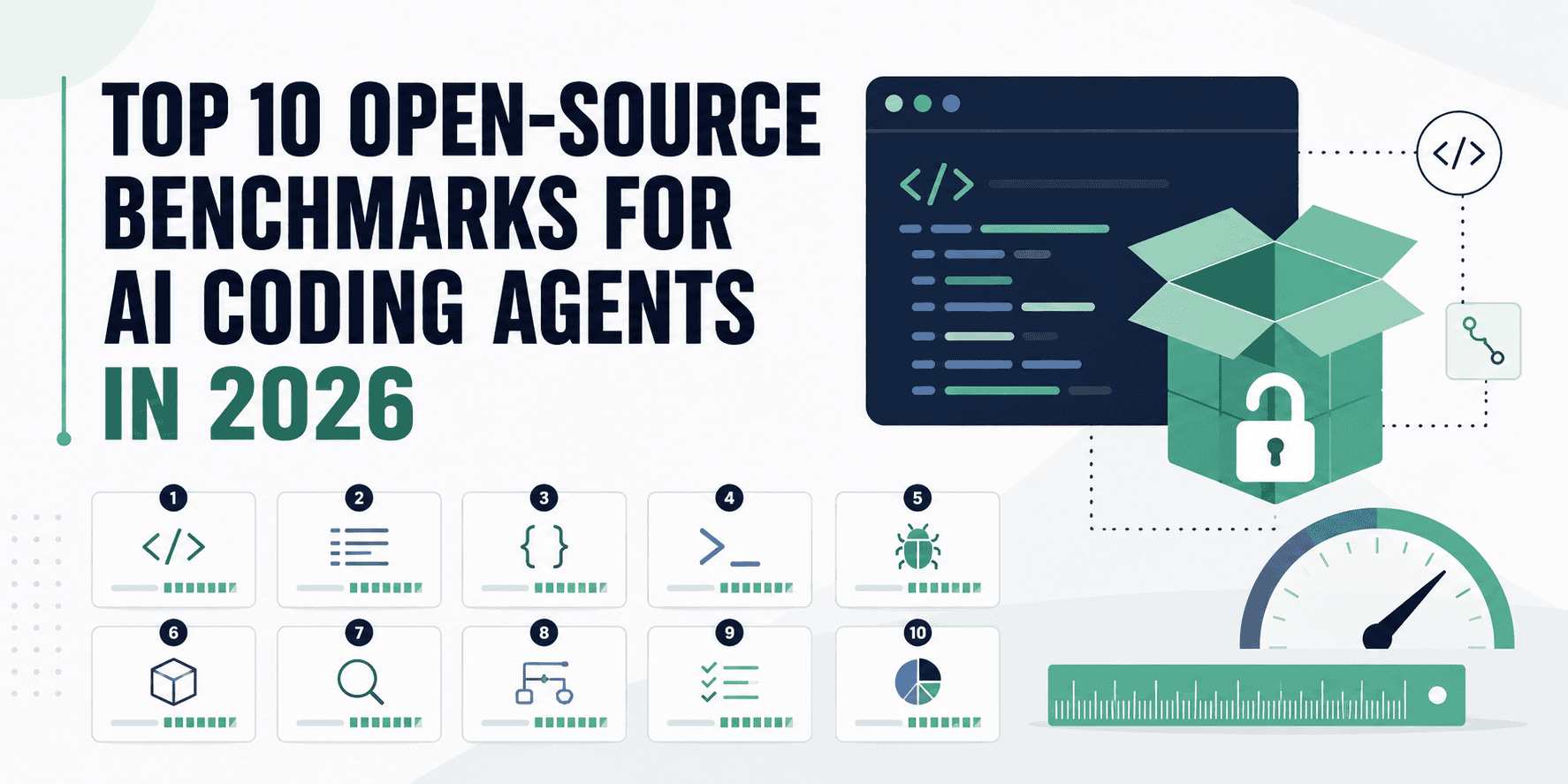
Evaluate AI Coding Agents with These Top Open-Source Benchmarks
Choosing the right benchmark is the first step toward building an AI coding agent you can actually trust. In 2026, the landscape has matured well beyond simple unit tests, with tools like SWE-bench, Terminal-Bench, and SlopCodeBench offering distinct lenses on real-world performance. We break down the top 10 open-source options to help you navigate the noise. If you are questioning how these models handle nuance, our piece on talking to an AI clone offers a timely perspective on the human side of the equation.
EMNLP 2026 decisions arrive today as the community turns toward Budapest.
Today, the EMNLP 2026 notifications land, and the wait finally ends. Whether your paper made it or not, the results will shape your next steps. We're hoping the decisions bring you to Budapest, where the conversation continues in person. For those navigating the emotional side of feedback, it's worth remembering that rejection often sharpens your research, not diminishes it.
Build and benchmark production RAG with fully open models
Building a RAG system that actually works in production takes more than stitching together a vector database. This workshop on August 29, led by Ben Auffarth of Chelsea AI Ventures, tackles the messy parts head-on: hybrid retrieval, reranking, and guardrails built in from the start. It's refreshing to see evaluation with RAGAS and real cost benchmarking treated as essentials, not afterthoughts. If you're tired of demo-grade AI, this hands-on session is worth exploring.
Navigating NeurIPS and ICLR Deadlines with a Clearer Review Process
September 24th is a long wait, especially when five of six reviewers ignored your rebuttals. That silence is frustrating, and it's fair to question whether the discussion phase has stretched too thin. Still, the real stress is the ICLR deadline landing the very next day. You are not alone in prepping a fallback submission; that is smart planning, not pessimism. When timelines collide, having a second option keeps your momentum steady.
What honest limitations reveal about trust in modern research
A researcher asking whether an honest limitations section hurts a paper is asking the wrong question. The real issue isn't bias; it's trust. Reviewers, whether human or AI, are more likely to respect a candid assessment than a polished facade. Hiding flaws invites skepticism, not approval. If anything, a thoughtful limitations section signals rigor. It shows you know what you don't know. That builds credibility. So no, it won't hurt. It might even save you from a reviewer who would have found the gaps anyway.
AI Reviewers vs Human Experts: What Researchers Discovered
Submitting a paper to a venue like NeurIPS or CVPR is already a nerve-wracking experience, but getting a second opinion from an agentic reviewer adds a new layer of uncertainty. One researcher recently asked the community how their LLM-generated reviews stacked up against the human feedback they received. The answers are telling. While the AI often nails the big-picture logic, it tends to miss the nuanced, field-specific context that only a human expert brings.
Explore how Grok Bot simplifies AI setup for $200
Grok Bot asks a fair question: is an AI agent you simply install worth $200? For anyone who has wrestled with spreadsheets, the appeal is obvious. It promises to handle the tedious work directly, removing the setup friction that stalls so many promising tools. We think that is a compelling pitch. The real test is whether it delivers on that ease.
Explore how AI uncovers exactly where world models break down.
World-model evaluation has a blind spot, and it's not where you'd expect. When a "predict nothing changes" baseline scores 0.983 SSIM on real robot video, and the error stays flat across six steps, the metric isn't lying; the setup is. The usable ranking window sits between 8 and 24 steps on DROID footage, bookended by ties. That's a measurement worth stealing for your own data.
When Anomaly Detection Meets Sparse Data: Rethinking Performance Regressions
Evaluating anomaly detection with only ten healthy samples is a tightrope walk, and the questions here show a solid grasp of the risks. Leave-one-out is the right call for threshold setting, but it does not replace a true test set. Using regression runs as your unseen test is a practical move, but it risks optimism if those runs share hidden conditions. Collecting a second independent healthy dataset for final false-positive checks is the stronger validation.