failure analysis
Beyond Market Intelligence keeps failure analysis in one place: 5 stories so far. The section currently leads with “Uber's dependency analysis moves beyond sampled tracing to classify failure types”, “When Samplers Fail: Benchmarking Three Methods Against Ground Truth”, and “Explore how Foresight AI helps reliability teams test and fix failures faster”. Uber's dependency analysis moves beyond the limits of sampled tracing, which can miss rare failures across a sprawling service mesh. Three samplers walk into a Bayesian inference problem, and all three fail, spectacularly. Acme AI is the next-generation, AI-powered spreadsheet platform built to replace Excel and redefine how analysts, data scientists, and enterprise teams work… The list below is every failure analysis story on Beyond Market Intelligence, newest first.
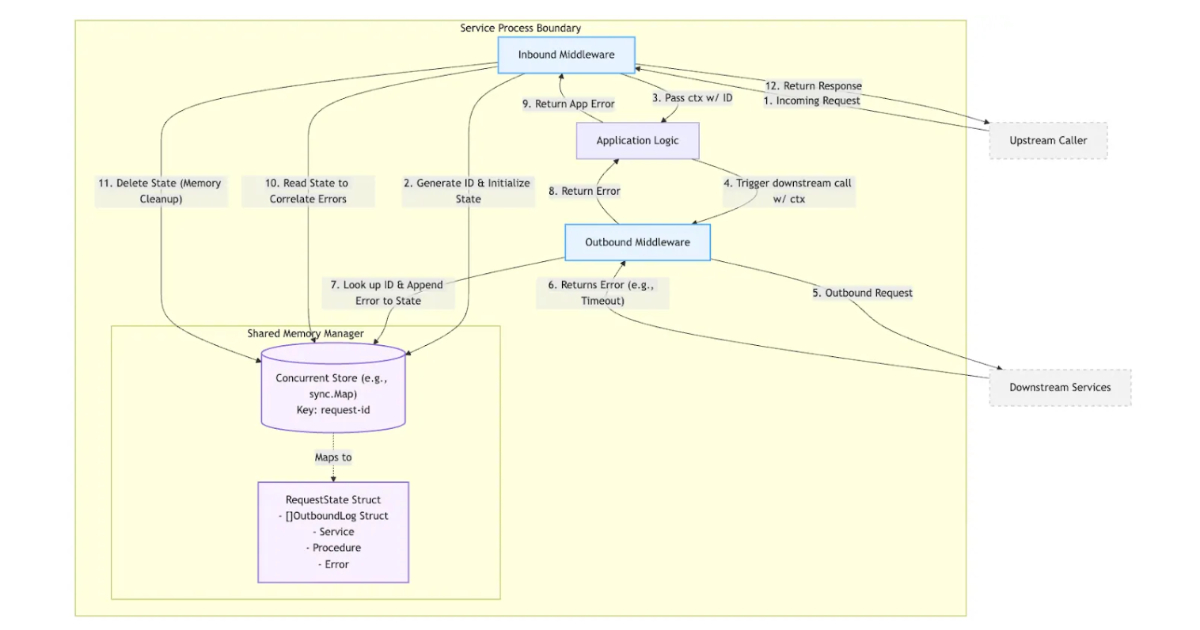
Uber's dependency analysis moves beyond sampled tracing to classify failure types
Uber's dependency analysis moves beyond the limits of sampled tracing, which can miss rare failures across a sprawling service mesh. By using RPC middleware and production metrics, the system classifies dependencies as fail-close, fail-open, or unknown. This approach is a practical step forward for engineers tired of guessing which downstream service caused an outage. For more on how platforms manage complex infrastructure, see our coverage of Grafana Tempo 3.1, which empowers operators to redact traces with simple queries.
When Samplers Fail: Benchmarking Three Methods Against Ground Truth
Three samplers walk into a Bayesian inference problem, and all three fail, spectacularly. That's the honest, refreshing premise of this benchmark, which pits NumPyro, affine-invariant MCMC, and dynesty against exact ground truth. The results are a sobering check on our assumptions about modern tools. When you're building AI scaffolding around agents or exploring spatial data pathways, knowing where your inference engine breaks is as important as knowing where it works.

Explore how Foresight AI helps reliability teams test and fix failures faster
Reliability teams have long relied on reactive troubleshooting, waiting for incidents to reveal weaknesses. Gremlin's general availability of Foresight AI flips that model. It actively analyzes services for potential failures, recommends fixes, and then reruns tests to confirm the solution works. This agentic approach transforms testing from a manual burden into an automated cycle of discovery and correction. For those exploring how to keep complex systems stable, Foresight AI offers a practical path forward.

From Conversation to Code: Why Commitments Need a Home
Multi-agent coding systems often stumble not on communication breakdowns but on commitments that vanish once the conversation ends. That's a sharp observation worth sitting with. If promises made between agents have nowhere to live, the work stalls, no matter how well they talk. This piece reframes failure as an architectural gap, not a social one. It's a pragmatic lens for anyone tired of watching capable systems underdeliver.

Bring Structure to Local LLMs with a Practical Implementation Guide
Structured output turns a local LLM from a clever autocomplete into a dependable tool for real workflows. It's not about caging the model; it's about giving it guardrails so answers arrive clean and usable. The implementation is straightforward once you map your schema, and when things break, you debug with validation errors instead of guesswork. That practical edge makes it worth the setup. For another angle on AI's limits, "Verify Your AI's Understanding: A Simple Check for Tax Season" pairs nicely with this.