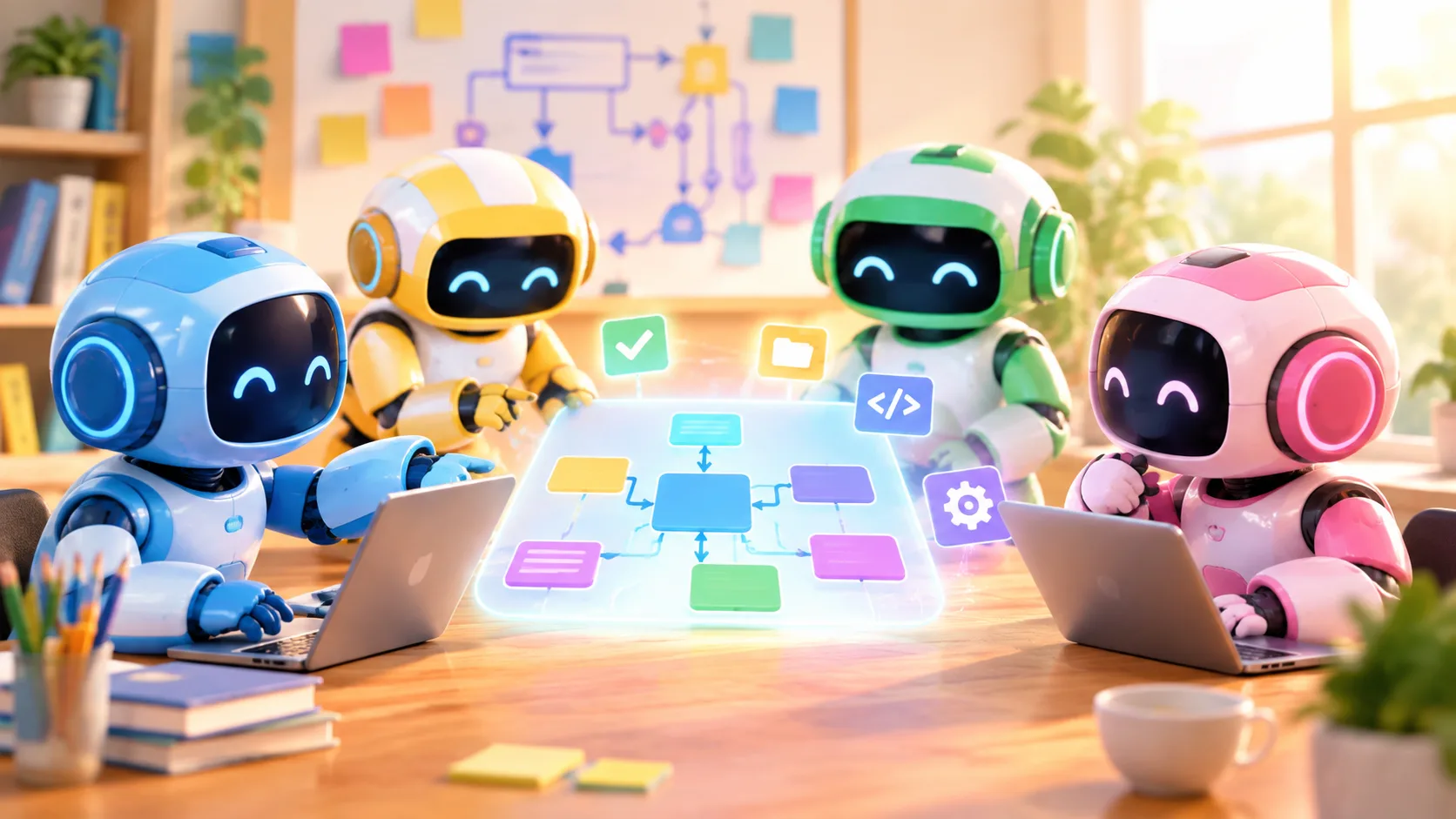
There's a quiet assumption in the multi-agent coding conversation that the hardest problem is getting agents to talk to each other. The core insight pushes back on that: communication isn't the bottleneck. It's the commitments that get made and then lost. Agents can converse, negotiate, and even agree on a plan, but if those agreements don't live anywhere persistent, they might as well not exist. That's a far more subtle failure mode than a model that can't parse a prompt. It's the difference between a team that talks a great game and one that actually closes the loop.
This maps neatly onto what we've been exploring around how language models structure their own reasoning. In Exploring Paragraph Structure: How LLMs Navigate Token Space, the point is that token index is a coordinate and paragraph structure is what turns it into a metric. The same logic applies here. A conversation is just a sequence of tokens. It's the structure that holds those tokens together, the record of who promised what and when, that turns talk into progress. Without a commitment layer, every agent is essentially working from a fresh memory of the conversation, and that's a fragile foundation for any non-trivial codebase. Similarly, Unlock LLM Training: A Practical Guide to Distributed Algorithms reminds us that distribution isn't just about splitting work. It's about synchronizing state. Multi-agent systems are a distributed system in miniature. If the state is only in the chat history, you're one truncated context window away from a complete reset.
The practical takeaway for anyone building these systems is straightforward: treat commitments as first-class artifacts. That means persisting decisions, open questions, and task ownership in a structured form that survives the conversation. It's not about making the agents more chatty. It's about giving them a shared, durable memory of what they've already decided. This is where the human-centered angle matters most. We don't care about agents that can hold a conversation. We care about agents that can finish the job. And a job only gets finished when promises are kept, which means they need a home.
So what should you watch for? The next wave of multi-agent frameworks won't differentiate themselves on model quality. They'll differentiate on how well they handle commitment. If you're evaluating a tool, ask the question directly: where does a commitment live after it's made? If the answer is "in the conversation," that's a red flag. If it's "in a schema, a database, or a task graph," you're on the right track. The future of AI-native spreadsheets and coding assistants isn't in smarter chit-chat. It's in building the layer that turns talk into trackable, testable, and trustworthy action. That's the layer worth exploring.