FastAPI
8 stories filed under FastAPI on Beyond Market Intelligence. The newest of them: “Scaling AI Agents From Prototype to Production on Kubernetes”, “Explore how EpochGo brings local-first AutoML to your data with privacy and control”, and “From Notebook to Production: When Your Model Meets a Real API”. Transitioning AI agents from a local FastAPI prototype to a production-grade system on Kubernetes is a challenge many teams are now facing. EpochGo separates the reasoning layer from the execution layer, and that distinction is the key insight here. Acme AI is the next-generation, AI-powered spreadsheet platform built to replace Excel and redefine how analysts, data scientists, and enterprise teams work… The list below is every FastAPI story on Beyond Market Intelligence, newest first.
Scaling AI Agents From Prototype to Production on Kubernetes
Transitioning AI agents from a local FastAPI prototype to a production-grade system on Kubernetes is a challenge many teams are now facing. Deepak Mohanakumar Chandramouli and Bhumik Vinodkumar Thakkar share practical insights on RayCluster topology, stateful memory, and auto-scaling under dynamic traffic. They also cover guardrails, multi-region setups, and LLM-as-a-judge evaluation pipelines. For more on scaling reliable infrastructure, see our coverage of ARC's latest upgrades for self-hosted runners.

Explore how EpochGo brings local-first AutoML to your data with privacy and control
EpochGo separates the reasoning layer from the execution layer, and that distinction is the key insight here. By letting a local LLM inspect schema metadata while deterministic Scikit-Learn pipelines handle all actual data transformations, the system sidesteps both cloud API costs and LLM hallucinations in mathematical reasoning. It runs entirely offline on consumer hardware. For deeper context on keeping LLM outputs grounded, our piece on JEV as a continuous filter explores similar thinking.
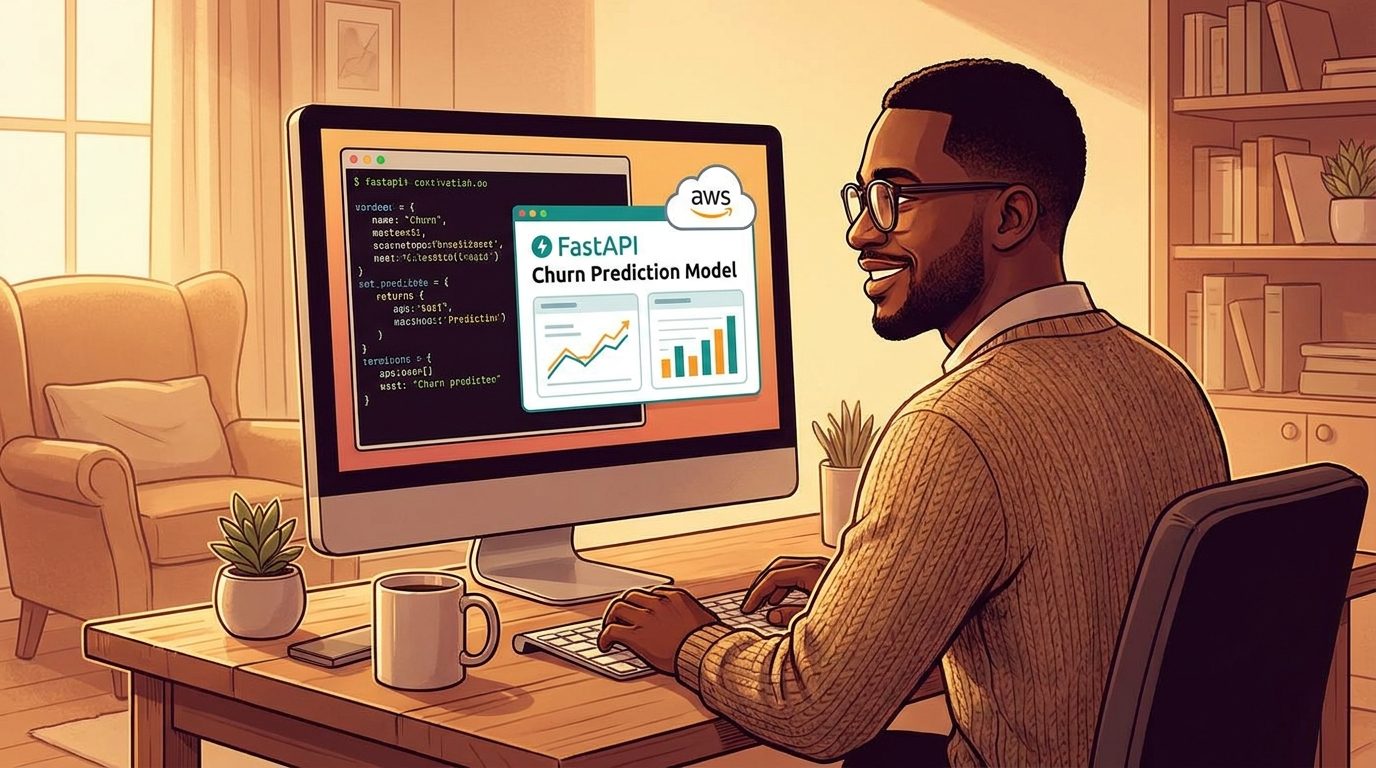
From Notebook to Production: When Your Model Meets a Real API
A model that runs on your machine is only the beginning. The real work starts when someone else needs to call it. This walkthrough of building a FastAPI endpoint for churn prediction captures that gap perfectly, detailing everything that broke between "it runs" and "it's live." It's a grounded, practical look at deployment realities. For more on tackling technical hurdles, explore the Forrester function piece, but this guide stands strong on its own.
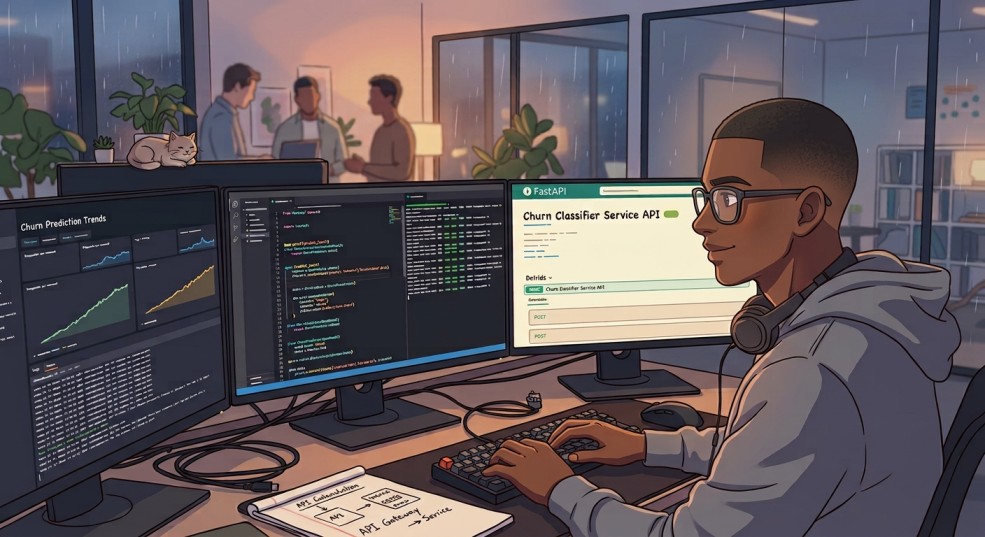
From Notebook to API: Making Your Churn Model Actually Usable
Training a churn classifier that performs flawlessly is one thing. Making it useful to the rest of your software is where the real work begins. This story follows that exact pivot: moving from a perfect model to a practical FastAPI service that other systems can actually call. It's a grounded, honest look at the gap between building and deploying. If you're wrestling with similar transitions, you might also appreciate our piece on navigating AI/ML job requirements.
Turn Data Science Concepts into Deployable Workflows with Grok Build
Building a full data science project from scratch can feel overwhelming, but Grok Build and Grok 4.6 turn that chaos into a clear path. You'll move from exploratory analysis to scikit-learn models, then wrap it all in a FastAPI service, test it, and push it to the cloud. It's production-ready, not just a notebook experiment. For those wrestling with how AI models actually scale, our guide on distributed training algorithms pairs well with this workflow.

Build AI Applications That Remember, Not Just Retrieve
RAG systems fetch, but they don't hold on to what matters. That's the gap this guide tackles head-on, offering a vendor-neutral blueprint for building a knowledge layer that actually accumulates understanding, not just query results. The Azure-native walkthrough, mapping Foundry, AI Search, Cosmos DB, and FastAPI to a property-insurance corpus, turns theory into something you can build on. If you're still questioning how much AI truly grasps, "Verify Your AI's Understanding" pairs well with this practical read. It's a grounded, actionable take.

Empower your team's models to move beyond the notebook.
The gap between a trained model and a deployed one is where most small teams lose momentum. One data scientist, tired of watching weeks of work stall in Jupyter notebooks, built SceptreAI to close that loop. It combines AutoML, MLOps, and Kubernetes serving into a single traceable workflow. The focus is practical: less time assembling infrastructure, more time answering whether a model is trustworthy enough for production. For teams tired of patching tools together, that clarity is the real value.
How Expedia's AI Observability Platform Helps Engineers Investigate Faster
When a production incident hits, every minute of investigation matters. Expedia Group's STAR platform cuts through the noise by pairing service telemetry with large language models, giving engineers a structured path to root cause analysis. Built on FastAPI and Datadog, it keeps humans firmly in control while accelerating response times. That balance matters. For more on how AI assists in complex technical work, our related piece, "Unlock LLM Training: A Practical Guide to Distributed Algorithms," offers a deeper look at the underlying mechanics.