feature
24 stories filed under feature on Beyond Market Intelligence. The newest of them: “Keep your private chats secure when sharing your device with others”, “When Closed Code Won't Open, Can AI Do the Heavy Lifting”, and “Aurora PostgreSQL Gains DuckDB's Analytical Power in New AWS Acquisition”. Private chats shouldn't become public the moment you hand your phone to a friend. Every developer knows the frustration: a feature behaves inexplicably, and the code behind it is sealed tight. Acme AI is the next-generation, AI-powered spreadsheet platform built to replace Excel and redefine how analysts, data scientists, and enterprise teams work… The list below is every feature story on Beyond Market Intelligence, newest first.

Keep your private chats secure when sharing your device with others
Private chats shouldn't become public the moment you hand your phone to a friend. That's the simple problem this new feature solves. It lets you keep sensitive conversations, a surprise party plan or a personal discussion, secure while sharing your device. It's a practical, human-centered solution. For more on keeping data local, our piece on five self-hosted Docker tools for developers offers a deeper look at controlling your own privacy.
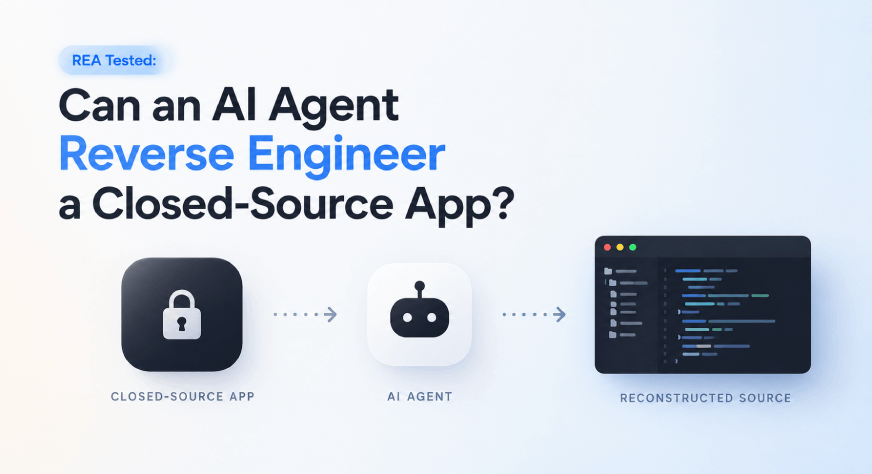
When Closed Code Won't Open, Can AI Do the Heavy Lifting
Every developer knows the frustration: a feature behaves inexplicably, and the code behind it is sealed tight. No source. No docs. Just a compiled binary or minified JavaScript. Traditional reverse engineering demands hours with specialist tools like Ghidra or IDA. That's why Reverse Engineer Anything (REA) is worth your attention. This open-source project, with over 200K GitHub stars, connects coding agents to do the heavy lifting. It's a practical, AI-powered approach to cracking closed code.

Aurora PostgreSQL Gains DuckDB's Analytical Power in New AWS Acquisition
Amazon's acquisition of DuckLabs signals a serious bet on analytical horsepower for its database ecosystem. By bringing DuckDB's co-founders Hannes Mühleisen and Mark Raasveldt under AWS, the company is investing in open-source innovation without compromising DuckDB's independent spirit. Aurora PostgreSQL now gains its first DuckDB-powered feature, blending transactional reliability with analytical speed. For anyone exploring how AI agents unlock hidden insights in compiled binaries, this move reinforces the value of purpose-built tools for modern data challenges.

Facebook Puts Algorithm Control Directly in Your Hands
Facebook is putting algorithm control directly in your hands with its new AI-powered "Your Algorithm" feature. That's good. For too long, users have been passive passengers in their own feeds, hoping the platform guessed right. This tool gives you the ability to influence what appears, a shift toward transparency that feels overdue. For more on how AI is reshaping professional tools, see our coverage of how AI coding rounds are rewriting the rules of the data science interview.

X broadens Gametime into a year-round sports hub, starting with MLB
Gametime is no longer just for football Sundays. X is expanding the feature into a year-round sports hub, with MLB leading the charge and more professional leagues on the way. It's a smart move for fans who want one familiar place to catch every season's action, not just the one that dominates fall. For those still exploring how digital platforms can deepen engagement, Tinder introduces Group Hangouts shows a similar push toward real-world connection.

Tinder introduces Group Hangouts to guide connections beyond the screen
Tinder's new Group Hangouts feature pushes connections beyond the screen, and we appreciate the intent. Swiping has its limits; real-world interaction is where relationships grow. This tool aims to make group meetups feel natural, not forced. It's a practical step toward meaningful engagement. For a deeper look at how AI is reshaping everyday tools, see our coverage of Google Photos AI Wardrobe, another example of technology designed to simplify real life.

Discover effortless dictation across every desktop app, free with Fireflies
Fireflies is making dictation a free, built-in feature across every desktop app, not just its own interface. That's a smart move. Most tools charge extra for this kind of convenience, so removing the paywall lowers the barrier to actually using it. We're always in favor of features that put the user's workflow first, and this one feels like a natural step toward more fluid, hands-free data entry. It's a practical upgrade worth exploring.
Streamlining softmax by reducing inputs without sacrificing accuracy
Reducing softmax's inputs from N to N-1 is a neat theoretical insight, those redundant parameters are doing nothing. If the logits sum to zero, the last one is already determined. The idea could trim the final layer and maybe nudge convergence. But the benefit feels negligible in practice, as the author suspects. Why not do it anyway? Because elegance doesn't always translate to speed. For a deeper look at streamlining neural architectures, our article on "Functional Gradient Descent with Adaptive Representations" explores similar efficiency gains.

Transform Your Style: Google Photos AI Wardrobe Now Accessible on All Devices
Imagine opening Google Photos and finding a wardrobe built from your own memories. That's the reality now that the AI-powered feature, which creates a virtual closet from your photos, is broadly available across all devices after debuting for Android users in June. It's a practical step toward making style management feel intuitive, not tedious. If you're tired of wrestling with static folders, this tool invites you to explore a simpler way to organize and revisit what you wear.

Turn inspiration into action with AI that redesigns your own room.
Pinterest is testing Restyle, a new AI-powered feature that lets you visualize furniture, decor, and lighting directly in photos of your own rooms. It's a practical step toward turning saved inspiration into actual purchases, and we think that's a smart move. Rather than just pinning ideas into a void, you can see how they might fit your space. For more on how AI tools are reshaping everyday tasks, check out our piece on verifying your AI's understanding this tax season.

Take control of your profile by moving tagged posts into your grid.
Instagram is making it easier to curate your profile by letting you pull tagged posts directly onto your main grid. It's a small shift, but it gives you more control over how you present yourself, moving beyond just what you've posted. We like this focus on flexibility; it feels like a natural step toward smarter, more personalized sharing. For more on how Meta is weaving connectivity into daily life, check out our piece on Meta's Smart Glasses.

Siri Recap brings AI note-taking to your wrist conversations
Apple Watch's new Siri Recap feature listens to your conversations and distills them into clear summaries, a practical twist on note-taking that feels less like a gimmick and more like a genuine productivity win. It's similar to tools like Granola, but it's built right into your wrist, which changes the calculus. We're intrigued by how this fits into a broader trend: making AI assist without adding friction.

Alexa learns your interests to alert you when something new arrives
Amazon's new "Update Me When" feature turns Alexa into a quiet shopping sentinel, alerting you the moment a product, tour, or show you care about becomes available. It's a smart shift from reactive searching to proactive discovery, and we like how it keeps you informed without demanding constant attention. For those already exploring AI-driven personalization, this pairs naturally with tools like Google Photos AI Wardrobe, which similarly anticipates your needs.

Bluesky gives users control over who sees their posts
Bluesky's new algorithmic opt-out feature gives users a quieter path forward, letting them post without chasing virality. It's a simple acknowledgment that not everyone wants the feed's spotlight; sometimes, reaching your own followers is the goal. That's a refreshing shift toward user agency in a space often dominated by engagement metrics. If you're exploring intentional tech choices, our piece on a smartphone alternative for intentional living pairs well with this mindset. This move feels less like a limitation and more like a return to control.

Discover how AI simplifies video editing with a first draft in seconds.
Instagram says its new First Draft feature can turn raw footage into a rough cut in under 10 seconds. That is a meaningful step for creators who lose hours to trimming and rearranging clips, and it lowers the barrier for newcomers who find editing software intimidating. We like the direction: simpler tools that respect time. For more on how Meta is reshaping its platforms, check out our piece on Meta's smart glasses expanding connected experiences.
Microsoft retires COPILOT function while keeping its Copilot feature alive
Microsoft's decision to retire the COPILOT worksheet function on 14 September is striking, precisely because the company rarely abandons backward compatibility. The Copilot feature itself remains, so this isn't a retreat from AI assistance. It's a targeted removal of a function that likely saw limited, awkward adoption. Have you used it? If so, for what? I'm curious whether anyone genuinely relied on it, or if it was always a novelty.
Restoring Speed to Your Spreadsheet Error Fixes
If your weekly Excel files keep arriving as text, the error fix button was likely your quiet savior. Now, watching that same fix take 10 to 15 seconds after an AI update feels like a step backward, especially when colleagues still have the original two-second option. You are not alone in wanting that control back. While a direct toggle to revert the feature isn't always available, manually reformatting cells to "Number" often works.

TikTok expands payments with peer-to-peer transfers in DMs
TikTok is quietly testing peer-to-peer payments through its DMs, leaning on the TikTok Pay infrastructure already live in Southeast Asia. It's a practical move that could make sending money feel as native as commenting or sharing a clip. The feature hasn't rolled out broadly, but the direction is clear: social platforms are becoming more transactional, not less. For users tired of juggling apps, this could simplify things.

Comcast's new routers sense motion inside your home: here's the privacy tradeoff
Comcast is adding motion sensing to millions of its newer routers, a feature that can detect movement inside your home without traditional sensors. The convenience is real, but the privacy catch deserves attention. As we explore smarter home technology, we should ask who else might be watching. This feels like a trade-off between ease and oversight, one worth examining closely. For more on how data can slip through unexpected channels, our piece on AI Agents Shared User Images highlights similar concerns.

Explore how Quick Share's tap feature simplifies sharing contacts and files.
Google's Quick Share is getting a tap-to-share mode, and that's a small change with real traction. It simplifies swapping contacts, photos, and videos into a single, intuitive motion. We like seeing Google prioritize accessibility over complexity, especially when it directly boosts everyday productivity. For Pixel users already exploring AI-driven conveniences like those in our related coverage of Gemini's call streamlining, this feels like a natural next step. It's a practical, human-centered update that makes sharing feel less like a task and more like an instinct.

Google Earth's AI imagery tool pulled after sparking valid concerns
Google pulled its Earth AI feature just one day after launch, following swift criticism that it would let anyone drop fabricated imagery onto real maps. The backlash was immediate, and rightly so. Handing users a tool to generate convincing fake landscapes without guardrails isn't innovation; it's inviting confusion into a platform built on trust. We've explored similar tensions before, like in "Talking to My AI Clone Taught Me to Question the Tech," where the line between helpful and harmful blurs.

Wirelessly transfer more iPhone data to Android without extra apps.
Switching from iPhone to Android just got a lot less painful. Google's new feature lets users wirelessly transfer more data types without hunting down a separate app. That's a smart move, removing a real hurdle for anyone curious about making the leap. It's the kind of practical, accessible step that makes technology feel less locked-in. For more on simplifying your digital life, check out "Focus on Essentials: A Smartphone Alternative for Intentional Living." Change doesn't have to be complicated; it just needs to work.

Spotify opens parent-managed accounts to free tier users
Spotify is opening its parent-managed accounts to free-tier users, a move that quietly expands access to a feature once locked behind a paywall. It's a practical step toward making family oversight less of a premium perk and more of a baseline expectation. For households juggling listening habits, this removes a familiar barrier. If you're curious how younger audiences already shape platform quirks, our piece on Gen Z solving NPR's comment mystery offers a fitting parallel.

Explore how AI makes music discovery as simple as conversation.
Spotify's new AI assistant invites Premium users to chat their way through music, podcasts, and audiobooks. It's a natural step toward making discovery feel less like a search and more like a conversation. We like that it meets people where they are, turning a simple prompt into a personalized listening session. If you're curious about how conversational AI shapes user trust, our piece on talking to an AI clone offers a thoughtful counterpoint. Explore it after you've tried the feature yourself.