feedback
22 stories filed under feedback on Beyond Market Intelligence. The newest of them: “A call to raise the bar on conference paper submissions”, “How adding AI to your review process can sharpen your peer feedback”, and “Desk Rejection in Two Days: When Rigorous Work Meets Silence”. Three papers for ICLR, five for AAMAS, and a reviewer who wouldn't accept any of them at a workshop. Uploading a review to ask an AI for second thoughts is an extra step that feels like more work, but one user finds it produces higher quality feedback with fewer typos. Acme AI is the next-generation, AI-powered spreadsheet platform built to replace Excel and redefine how analysts, data scientists, and enterprise teams work… The list below is every feedback story on Beyond Market Intelligence, newest first.
A call to raise the bar on conference paper submissions
Three papers for ICLR, five for AAMAS, and a reviewer who wouldn't accept any of them at a workshop. That's a blunt verdict, and it carries a fair challenge. Submitting unfinished work wastes the limited time of volunteers who read for a living. If you are new to this, find a mentor before you hit submit. Explore what readiness looks like before you ask others to explore your draft. Your reputation, and their patience, depend on it.
How adding AI to your review process can sharpen your peer feedback
Uploading a review to ask an AI for second thoughts is an extra step that feels like more work, but one user finds it produces higher quality feedback with fewer typos. The approach is careful, never uploading the paper itself, leaving that choice to authors. That kind of mindful integration is worth exploring. For a deeper look at how AI reshapes workflows, "Explore how world models are shaping the next evolution of AI" offers a related perspective.
Desk Rejection in Two Days: When Rigorous Work Meets Silence
A two-day desk rejection stings, especially after five months of grinding. You followed the template, built on a niche topic accepted in 2024, and produced work that was rigorous and reproducible. The silence is the hardest part. Don't let this define your trajectory. Submit elsewhere. A different editorial team may see the value in your LLM self-explanations research. And for context on how review cycles are evolving, our piece on navigating AI-slop detection in ICLR's first automated cycle offers useful perspective. Keep building.
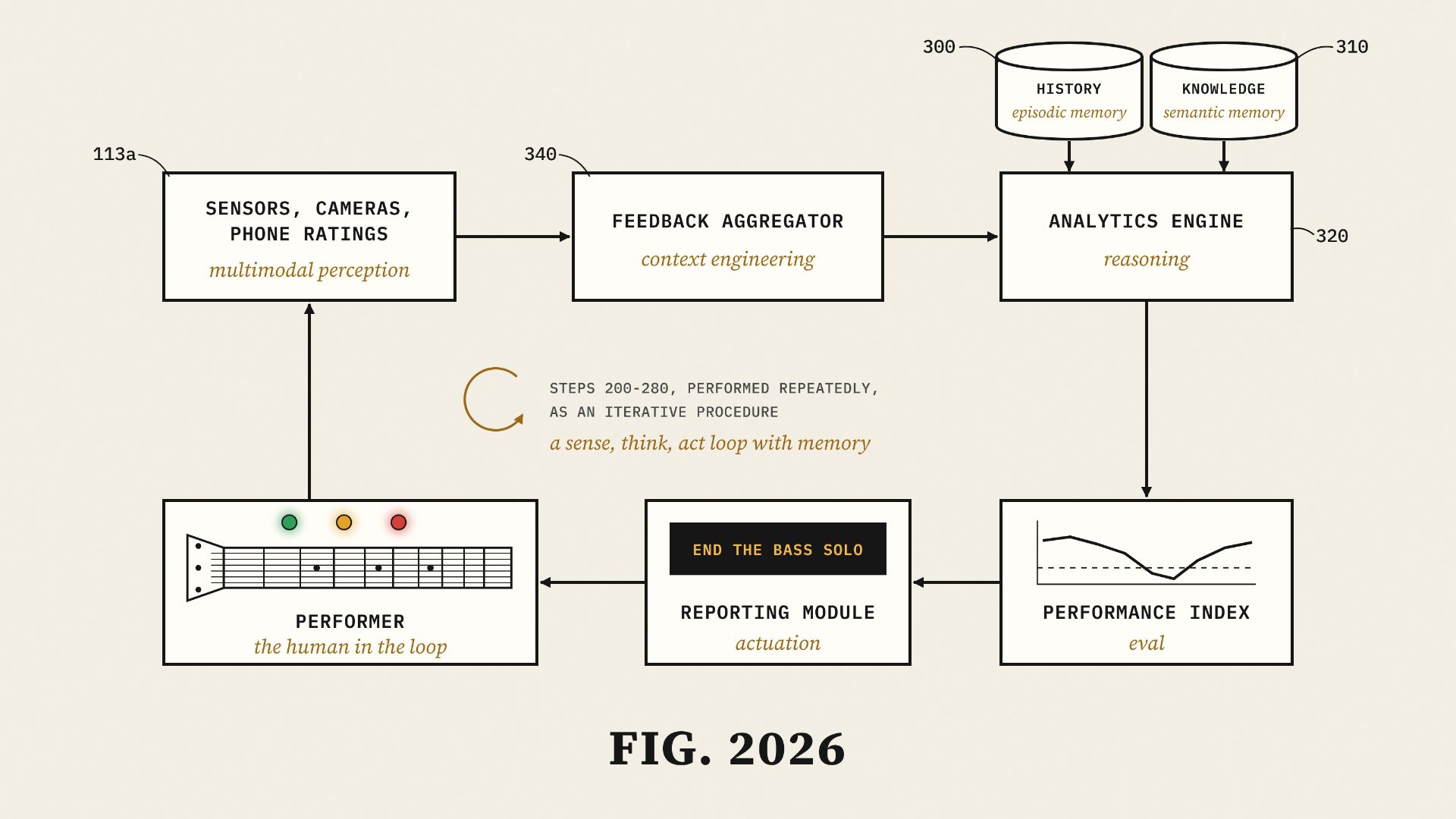
A 2016 Patent Reveals the Agentic Loop Behind Analytics
In 2016, I filed a patent on real-time concert feedback. Re-reading it now, the frame was wrong. We called it analytics. What we actually specified was an agentic loop: multimodal perception, memory-grounded inference, and a human in the decision path. That architecture was right. A decade of hindsight shows what agent builders still miss. For deeper context on how AI models handle perception differently, see our coverage of the vision AI benchmark where GPT-4o invented answers and Claude stuck with B.
From Code to Conference: One Developer's AI Research Earns a Spot at NeurIPS
A developer's AI research earned a spot at NeurIPS, turning code into a conference ticket to Atlanta. That's the kind of momentum we like to see. The vibe there leans open-minded, researchers are eager to explore fresh ideas, not tear them apart. Expect thoughtful questions, not hostility. It's a place where genuine curiosity wins.
Navigating the Future of Medical Imaging Through Meta-Learning
Starting a PhD without a defined problem is both daunting and liberating. One new candidate is exploring meta-learning for medical imaging, drawn to MICCAI challenges over standard benchmarks. That instinct is solid, real-world competitions often reveal fertile ground better than static datasets. The limited data problem remains the field's central tension. Meta-learning, few-shot techniques, and domain generalization all address it differently. For deeper context on tackling data constraints, our article on open-source tools for AI memory systems explores how persistence shapes intelligent behavior.

Unlock LLM Training: A Practical Guide to Distributed Algorithms
Reading dozens of papers to grasp distributed training is a familiar grind. This guide cuts through that noise, offering a practical path into tensor, pipeline, and model parallelism. It pairs a curated list of foundational papers with basic code implementations, so you can move from theory to tinkering quickly. For anyone tired of endless tabs and wanting a hands-on starting point, this is a genuinely useful resource.

Evolve Your Recommendations: Real-World Insights on Adaptive Systems
Adaptive recommendation systems are rarely defeated by model architecture alone. Mallika Rao shows that real complexity emerges in production, where real-time feedback loops, retrieval freshness, and multi-stage orchestration must all bend to latency and cost constraints. This is practical insight, grounded in operational reality. For deeper context on how such systems are built, explore our piece on *Agent Harnesses* to see similar engineering discipline applied elsewhere. Rao's work is a reminder that evolution happens under pressure, not in isolation.
Missing Feedback Raises Questions in NeurIPS Paper Rejections
A rejection is already hard to process, but receiving no final comment while your meta-review sits unchanged since July raises fair questions. The reviewer scores were consistent at 4-4-4, which makes the silence feel harsher, especially when the email promises careful effort on borderline cases. That gap between stated process and lived experience is worth examining. For a deeper look at how complex systems handle feedback loops, our article "Evolve Your Recommendations: Real-World Insights on Adaptive Systems" offers useful context.
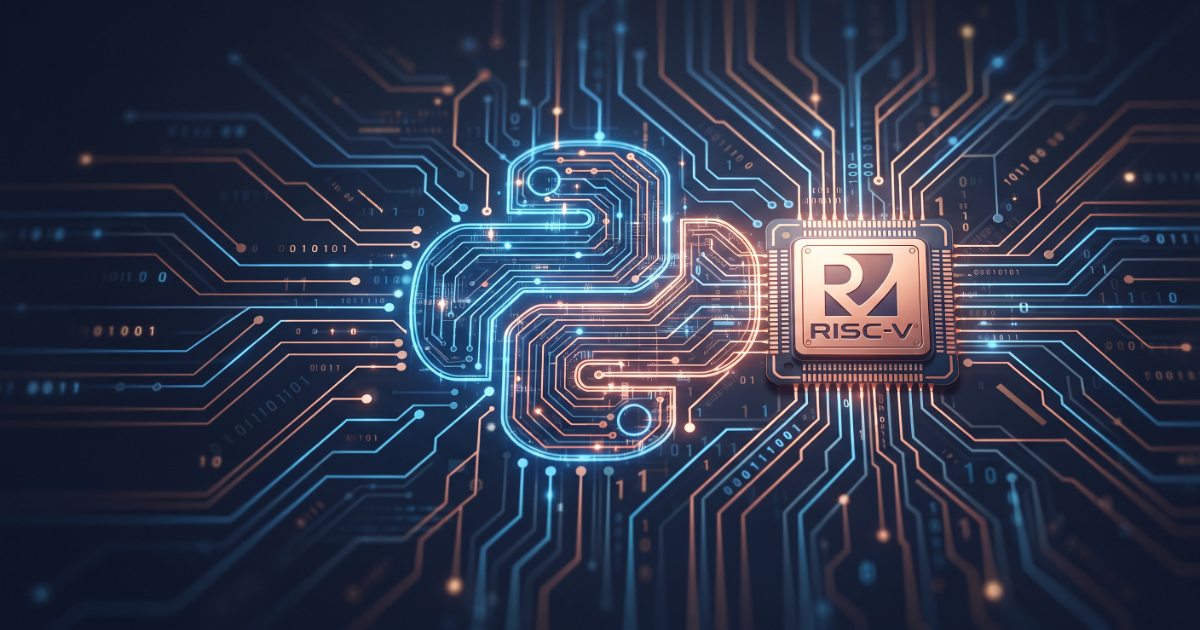
Python Welcomes RISC-V as a Tier 3 Platform
RISC-V just earned its place in CPython's official lineup, and that's worth paying attention to. The core development team's move to Tier 3 status signals real momentum, built on genuine community collaboration rather than hype. It's a practical step forward, though the real test lies in tightening the continuous testing pipeline and chasing that Tier 2 goal. If you're working with RISC-V hardware, your feedback could shape that journey.
The Hidden Cost of Community Service in AI Reviewing
Signing up to review for AAAI felt like an obligation, but the reciprocity was absent. The regret is understandable, yet the self-criticism feels misplaced. Sacrificing personal time to reject papers is a thankless task, but the hidden value is real. Reading outside your field sharpens critical thinking, a skill that transfers beyond academia. It is not about feeling important; it is about honing judgment. If you are weighing the cost, consider the learning payoff.
Navigating Review Delays: A Practical Guide for Authors Awaiting Feedback
Waiting on a decision is one of the most frustrating parts of the academic process. A researcher recently posted that their ACML 2026 journal track submission has passed the official review release date of August 27 with no word from the program chairs. They are asking if anyone else has received feedback before they reach out directly. It is a fair question, and a practical one. When deadlines slip, a polite nudge to the organizers is reasonable.
What honest limitations reveal about trust in modern research
A researcher asking whether an honest limitations section hurts a paper is asking the wrong question. The real issue isn't bias; it's trust. Reviewers, whether human or AI, are more likely to respect a candid assessment than a polished facade. Hiding flaws invites skepticism, not approval. If anything, a thoughtful limitations section signals rigor. It shows you know what you don't know. That builds credibility. So no, it won't hurt. It might even save you from a reviewer who would have found the gaps anyway.
AI Reviewers vs Human Experts: What Researchers Discovered
Submitting a paper to a venue like NeurIPS or CVPR is already a nerve-wracking experience, but getting a second opinion from an agentic reviewer adds a new layer of uncertainty. One researcher recently asked the community how their LLM-generated reviews stacked up against the human feedback they received. The answers are telling. While the AI often nails the big-picture logic, it tends to miss the nuanced, field-specific context that only a human expert brings.
Freedom to explore your PhD path when you're ready to drive your own research
A PhD is a marathon of self-direction, but even the most independent researcher needs a compass. This setup offers total freedom, which sounds liberating, yet the near-total absence of feedback creates a real risk of drifting. For the right person, it is a dream; for others, it is a lonely trap. The choice hinges on whether you thrive on isolation or require a mentor's voice to sharpen your thinking. For more on navigating complex systems, explore our piece on unlocking LLM training.
Navigating Your First NeurIPS: What to Expect from the AC Review Process
Submitting to NeurIPS for the first time is already a big step, and the silence from your AC can feel louder than any review. No, ACs are not expected to post individual comments during the Phase 2 discussion; their role centers on the meta-review you've already received. That document is your primary guide, so treat it as the final word unless you have direct questions. It's standard to wait for the discussion to unfold before seeking more.
Silence from authors: Why some papers skip the rebuttal phase
A single review, a positive AC comment, and then silence from the authors. That is a frustrating place to be. It is natural to wonder if the lack of rebuttal is a common trend or just your specific slice of bad luck. The absence of a response often feels louder than a critical one. For a paper hovering on the borderline, a quiet author is a missed opportunity.
Rethinking peer review integrity in the age of AI-generated research
A reviewer who rejects a paper after raising only minor issues, with a 1 across every subscore, isn't reviewing the work. They're gaming the system. This researcher tried to do right by the process, even for papers they suspected were AI slop, and got punished for it with an adversarial batch and an AC who vanished until the deadline. That's not a lottery; that's a broken feedback loop. If peer review keeps rewarding bad faith, we'll need to rethink how we filter signal from noise.
When Peer Reviews Go Unheard: Rethinking the Feedback Process
The silence from reviewers is telling, and it's a problem. When a meta review goes unanswered and the rebuttal is ignored, the process feels less like feedback and more like a formality. We're seeing a pattern where engagement drops precisely when critical evaluation matters most. It's worth asking if the community is simply fatigued or if the system itself needs a reset. For those navigating this, exploring how we structure feedback could be as important as the data itself.
When Feedback Goes Unheard: Navigating Silent Peer Review
Silence from reviewers is frustrating, especially when your rebuttals were submitted on time. The discussion period exists for engagement, and when editors and ACs go quiet, it undermines the process. You have done your part, so the ball is in their court. Consider reaching out once more directly, but keep it brief. If that fails, focus on what you can control: strengthening your revision for the next venue.
First submission, positive meta, addressable reviews: explore your path to acceptance.
A 3/3/5/7 on a first conference submission is a solid enough foothold, especially when the meta-reviewer points to actionable revisions rather than a dead end. You are right to feel a shot here. The rebuttal is your chance to convert that cautious positivity into momentum. Address each reviewer directly, acknowledge their specific points, and show how you will tighten the argument. You are convincing the AC that the revision will resolve the core concerns.
Explore papers by selecting any passage, formula, or figure for instant AI clarity.
Reading interp papers often means juggling passages between tabs just to make sense of a single formula. This project cuts through that friction. The tool lets you select any passage, figure, or citation and get an explanation grounded in the full paper's context, no context-switching required. It's a practical, honest solution built on a real pain point. Running it on a personal API key is refreshingly humble.