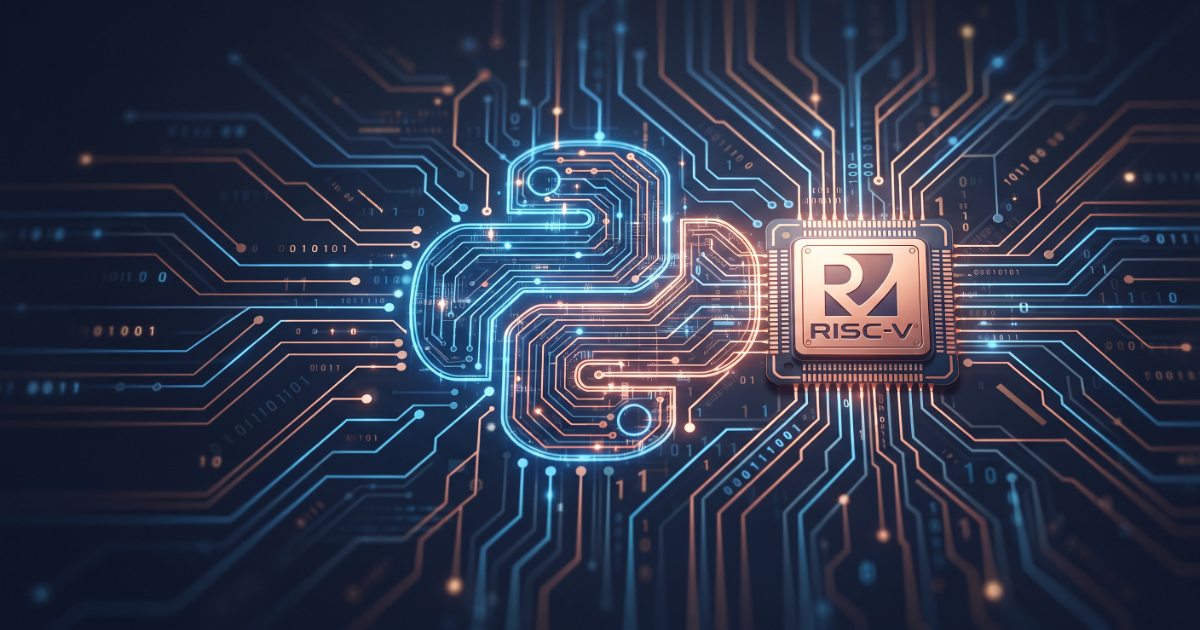
The Python core development team's decision to officially recognize RISC-V as a Tier 3 platform in CPython is a quiet vote of confidence in a future that many in the AI and data space have been watching take shape. This isn't a headline about a new framework or a flashy model release. It's an infrastructure story, and those tend to matter more than the noise. For developers who have been wrestling with the complexity of modern data workflows, this move signals that the ecosystem is finally catching up to the hardware that is increasingly powering everything from edge devices to large-scale inference. The fact that this came from extensive community collaboration, rather than a corporate mandate, says a lot about how open-source progress actually gets made.
This is where the story connects to the broader challenges you're already navigating. If you've spent time trying to unlock LLM training with distributed algorithms, you know that the real bottleneck is rarely the model itself. It's the underlying system support that makes or breaks your ability to scale. RISC-V's entry into CPython's official fold means that the next generation of AI tooling won't have to fight against an architecture that feels like an afterthought. Similarly, when you're dealing with stateless model context protocols on AWS, the underlying portability of your runtime becomes a competitive advantage. Python's support for RISC-V is a direct answer to the question of whether your code will run where you need it to, without requiring a detour through emulation or a rewrite. And for those exploring bridging retrieval and action in AI tasks, the ability to deploy on diverse, energy-efficient hardware is not a luxury. It's a design constraint.
Our take is straightforward: this is a sign that the industry is maturing beyond the x86 monoculture that has dominated data centers for decades. The Tier 3 designation is not glamorous, but it is the first step on a path that could lead to broader integration into the continuous testing pipeline. The core team is being honest about where things stand, and that honesty is worth more than hype. We would tell a reader who is considering RISC-V hardware for their next project to pay attention to the stability and performance feedback that is being requested. This isn't about jumping on a trend. It's about recognizing that the tools you rely on are only as good as their ability to run on the hardware you actually have. The practical consequence to watch is how quickly the CPython team can move from Tier 3 to Tier 2, and whether the community steps up to provide the necessary testing environments. That will be the real measure of whether this support translates into something you can build on with confidence.