financial modeling
Beyond Market Intelligence keeps financial modeling in one place: 201 stories so far. The section currently leads with “Beyond RAG: Agentic AI demands a new hybrid knowledge layer”, “Explore how Amex enables AI agents to transact with intent and trust.”, and “One trillion race simulations reveal a smarter way to pick Derby winners.”. The era of retrieval-augmented generation (RAG) is evolving, as agentic AI demands a more sophisticated approach to data management. American Express (Amex) is innovating in agentic commerce by developing a system that enables AI agents to shop and pay on behalf of users within its own payment network. Acme AI is the next-generation, AI-powered spreadsheet platform built to replace Excel and redefine how analysts, data scientists, and enterprise teams work… The list below is every financial modeling story on Beyond Market Intelligence, newest first.
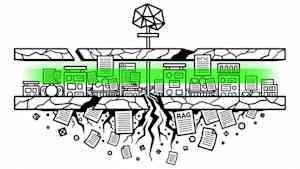
Beyond RAG: Agentic AI demands a new hybrid knowledge layer
The era of retrieval-augmented generation (RAG) is evolving, as agentic AI demands a more sophisticated approach to data management. Traditional vector databases are struggling to meet these needs, prompting a shift towards innovative solutions. Pinecone's new Nexus platform introduces a knowledge engine that compiles context before queries, streamlining agent interactions with structured knowledge artifacts. This change reduces inefficiencies and enhances task completion. As enterprises embrace these advancements, the focus will increasingly shift from mere retrieval speed to governed, reliable knowledge pipelines that drive meaningful outcomes.

Explore how Amex enables AI agents to transact with intent and trust.
American Express (Amex) is innovating in agentic commerce by developing a system that enables AI agents to shop and pay on behalf of users within its own payment network. While Amex's ACE developer kit aims to enhance trust and control through mechanisms like intent contracts and single-use tokens, concerns about transparency in transaction validation persist. As Amex navigates this complex landscape, it emphasizes the importance of trust and security, positioning itself as a leader in redefining how AI interacts with financial transactions.
One trillion race simulations reveal a smarter way to pick Derby winners.
I conducted an extensive analysis of the Kentucky Derby, running one trillion simulations on a 1,000-vCPU cloud cluster. This model, built using a combination of historical data and machine learning techniques, offers insights into race dynamics and potential outcomes. With the top pick, *Further Ado*, showing a significant win probability of 27.9%, this approach highlights the power of data-driven decision-making in horse racing. While not a guarantee of success, these findings provide a fresh perspective for enthusiasts and bettors alike.

xAI ships Grok 4.3 and a voice cloning suite at a competitive price
xAI has launched Grok 4.3, a new large language model that enhances performance while maintaining an aggressively low pricing structure. This release comes amid ongoing legal battles involving founder Elon Musk and OpenAI co-founder Sam Altman. Grok 4.3 introduces advanced reasoning capabilities and a powerful voice cloning suite, designed to optimize user workflows. With significant improvements in specialized tasks, Grok 4.3 positions itself as a strong contender in the AI landscape, offering both affordability and functionality for developers and enterprises alike.

Unlocking Borderless Tables: A Practical Guide to Financial PDF Extraction
Table extraction using Vision Language Models (VLM) presents unique challenges, particularly when dealing with complex formats like borderless tables or those with numerous columns. Users often find traditional tools insufficient for converting PDFs to Markdown, especially in financial contexts. While some solutions, such as LandingAI, show promise, they often come with a cost. Many are seeking effective open-source alternatives that can simplify this process. If you have recommendations or insights into viable options, your expertise could greatly benefit those navigating these challenges.

Your Personal Knowledge Graph Now Lives Outside the Control Plane
AWS Quick is redefining the landscape of enterprise orchestration with its newly launched desktop-native agent, which builds a persistent personal knowledge graph. By integrating data from local files, calendars, emails, and SaaS tools, Quick proactively executes actions, enhancing user productivity in ways traditional control planes may overlook. This evolution transforms Quick from a simple AI assistant into a dynamic workflow agent, offering context-driven insights while maintaining essential governance controls.

AI spreads across AWS as cloud exclusivity gives way to openness
Amazon Web Services (AWS) has marked a pivotal moment in the cloud landscape with its latest announcements, unveiling a suite of tools that integrate OpenAI's powerful models into its Bedrock platform. This move coincides with the recent restructuring of OpenAI's partnership with Microsoft, setting the stage for a new era of collaboration across cloud providers.
Explore how machine learning predicts UFC fights with surprising accuracy
As a dedicated UFC fan, I recently embarked on a personal learning project to build a web app that predicts fight outcomes using Machine Learning. The model, achieving an impressive 71.6% accuracy, leverages an XGBoost binary classifier and analyzes various differential features, such as striking and grappling stats, to assess fighter performance. Each prediction is complemented by AI-generated explanations, enhancing user understanding of the underlying data.

Smarter reasoning agents without the heavy computing costs
Building custom reasoning agents can be a daunting task for enterprise teams, often limited by resources and traditional training methods. However, researchers have introduced Reinforcement Learning with Verifiable Rewards and Self-Distillation (RLSD), a groundbreaking approach that combines the reliability of reinforcement learning with the detailed feedback of self-distillation. This innovative method simplifies the training process, enabling teams to develop tailored reasoning models efficiently.
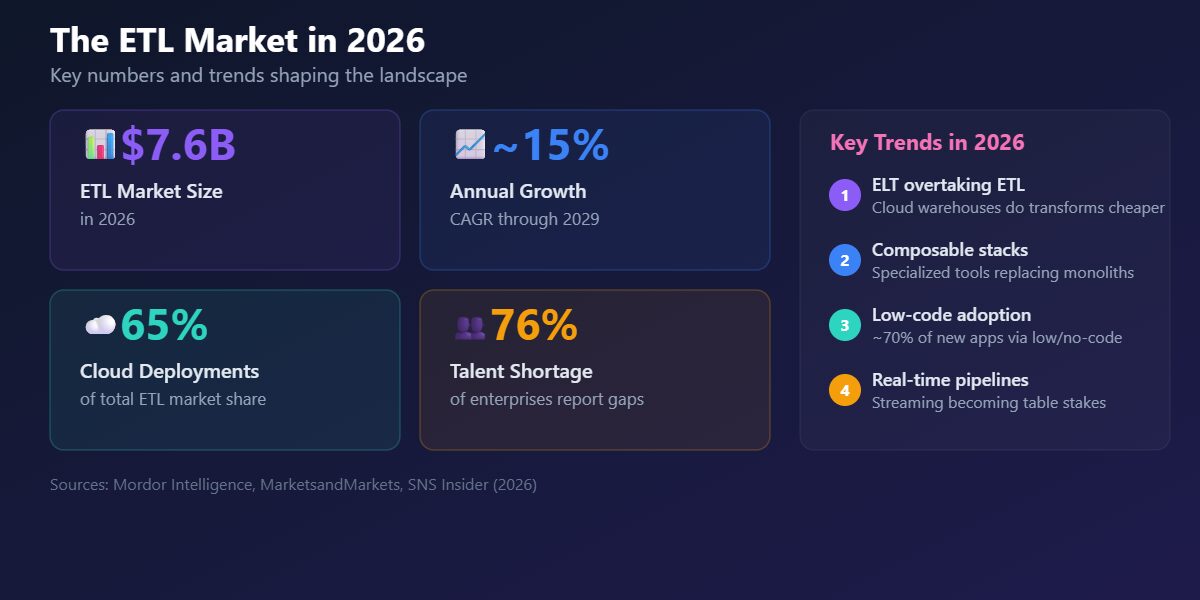
Your Data Pipeline Deserves More Than an Overcrowded Tool List
Choosing the right ETL tools is crucial when building a robust data stack, yet the abundance of overlapping options can be overwhelming. In 2026, the landscape continues to evolve, making it essential to understand which tools align with your specific needs. This practical guide not only highlights the best ETL tools available but also provides clear code examples to facilitate your decision-making process.

Mistral Workflows turns AI experiments into revenue-generating operations.
Mistral AI has unveiled Workflows, a powerful orchestration engine designed to elevate AI systems from mere proofs of concept to integral business processes. Operating within Mistral's Studio platform, Workflows already processes millions of daily executions, addressing critical gaps in operational infrastructure that hinder AI adoption. By separating orchestration from execution, it ensures data privacy and reliability, particularly for regulated industries.

Xiaomi's latest open models deliver powerful AI at an accessible price
Xiaomi has unveiled the MiMo-V2.5 and MiMo-V2.5-Pro, two powerful open-source AI large language models designed for efficient agentic "claw" tasks. Available under the MIT License, these models empower developers to adapt and deploy them in commercial applications without restrictions. Notably, MiMo-V2.5-Pro boasts a leading 63.8% success rate while using significantly fewer tokens than competitors for similar tasks. With competitive pricing and a commitment to innovation, Xiaomi positions itself as a formidable player in the open-source AI landscape, inviting developers to explore transformative

OpenAI and Microsoft loosen ties, opening AI access across major clouds
Microsoft and OpenAI have restructured their partnership, dismantling exclusivity and revenue-sharing agreements that defined their collaboration since 2019. The new arrangement allows OpenAI to sell its models on other cloud platforms, including AWS and Google Cloud, freeing it from the constraints of a single ecosystem. Microsoft will no longer share revenue with OpenAI for Azure-accessed models, while OpenAI continues its revenue obligations until 2030, capped at an undisclosed amount.
Excel Mastery Cuts Through the Software Chaos
In today's landscape of varied SaaS and reporting tools, many find themselves overwhelmed by the constant need to learn new software. Despite the proliferation of specialized tools, Excel remains a versatile powerhouse capable of handling a wide range of tasks—from financial modeling to KPI dashboards and project tracking. Often, users end up exporting data back to Excel to validate results, highlighting the continued relevance of this tool.

Explore this clean automated 5-year DCF template built for clarity.
Tired of the chaos often found in financial models, I created a streamlined 5-Year DCF Template designed for clarity and efficiency. This automated solution simplifies the calculation of Unlevered Free Cash Flow (UFCF), eliminating the frustration of lengthy, complex rows. By seamlessly handling EBIT, taxes, depreciation and amortization (D&A), and capital expenditures (CapEx), this template empowers users to focus on insights rather than getting lost in convoluted calculations. Explore this innovative approach to financial modeling and transform your analysis process today.

Introducing GPT-5.5: a subtle but meaningful step forward in AI
OpenAI has officially launched GPT-5.5, a significant advancement in AI language models that narrowly surpasses Anthropic's Claude Mythos Preview on the Terminal-Bench 2.0. This model, which has been internally referred to as "Spud," showcases OpenAI's commitment to enhancing user experience by simplifying complex tasks and improving coding efficiency. With a focus on agentic performance, GPT-5.5 autonomously tackles intricate workflows, making it an invaluable tool for professionals across various fields.

Your agents are working alone. BAND connects them into one workflow.
In a landscape where AI agents proliferate, a new startup called BAND is addressing the challenge of fragmentation in digital communication. With $17 million in Seed funding, BAND introduces a "universal orchestrator" that enables seamless interaction between diverse AI agents, overcoming the limitations of existing systems. Co-founder Arick Goomanovsky emphasizes the need for agents to communicate like humans for effective collaboration. By providing a deterministic communication layer, BAND aims to transform isolated tools into a cohesive workforce, paving the way for a scalable "agentic economy."

Discover private AI that empowers your data, even off the grid.
Cirrascale Cloud Services has announced a significant expansion of its partnership with Google Cloud, enabling the deployment of the Gemini AI model on-premises through Google Distributed Cloud. This pioneering move offers enterprises and government agencies a fully private, air-gapped server solution, addressing long-standing concerns about data control in regulated industries. With Gemini packaged in a secure, Dell-manufactured appliance, organizations can leverage powerful AI capabilities without compromising their sensitive information.
Google's new AI agents blend web and private data into one research flow.
On Monday, Google unveiled its most significant upgrade to autonomous research agents with the launch of Deep Research and Deep Research Max. These new agents seamlessly integrate open web data with proprietary enterprise information through a single API call, enabling the generation of native charts and infographics within research reports. Built on the advanced Gemini 3.

Long-horizon agents demand a new era of orchestration, not patchwork.
Moonshot AI's Kimi K2.6 is redefining the capabilities of enterprise orchestration by enabling agents to run continuously for hours, even days. Traditional orchestration frameworks, designed for short-lived tasks, struggle to accommodate this shift, revealing significant gaps in their architecture. Kimi K2.6 utilizes advanced Agent Swarms to autonomously manage up to 300 sub-agents, executing thousands of coordinated steps. As enterprises increasingly seek long-horizon agents, Kimi K2.6 positions itself as a vital solution, addressing the complexities of state management and governance in an evolving digital landscape

Claude Design turns prompts into polished prototypes, no design skills required.
Anthropic has launched Claude Design, an innovative AI tool that transforms conversational prompts into polished prototypes, challenging established platforms like Figma. This new offering enables users to create interactive designs, slide decks, and marketing materials with intuitive editing controls and a seamless workflow. Available immediately in research preview for paid subscribers, Claude Design represents Anthropic's strategic shift toward becoming a full-stack product company. By integrating design capabilities with its powerful Claude Opus 4.

The enforcement gap that lets rogue AI agents slip past identity checks.
A recent VentureBeat survey reveals that most enterprises are ill-equipped to counteract stage-three AI agent threats. Incidents at Meta and Mercor highlight vulnerabilities stemming from a common structural gap: insufficient monitoring and enforcement. The survey of 108 qualified enterprises indicates that many believe their security policies are robust, yet 88% reported AI security incidents in the past year. With only 21% achieving runtime visibility into agent actions, the pressing need for proactive isolation and comprehensive security measures has never been clearer.

Salesforce turns its entire platform into raw infrastructure for AI agents.
Salesforce has unveiled "Headless 360," a groundbreaking architectural transformation that redefines its platform by exposing every capability as an API, CLI command, or MCP tool. This initiative empowers AI agents to operate seamlessly without relying on a traditional graphical interface. Launched during the TDX developer conference, Headless 360 introduces over 100 new tools for developers, marking a significant shift in enterprise software.

Claude Opus 4.7 arrives, giving you a smarter, simpler path through complex data.
Anthropic has unveiled Claude Opus 4.7, marking its most powerful large language model to date and retaking the lead in the competitive landscape of AI. This release surpasses OpenAI's GPT-5.4 and Google's Gemini 3.1 Pro in critical benchmarks, particularly in agentic coding and knowledge work. While Opus 4.7 excels in hard sciences and autonomous workflows, it requires careful prompting to maximize its capabilities. With enhanced self-verification and multimodal support, this model positions itself as a specialized powerhouse for enterprises seeking reliable AI solutions.