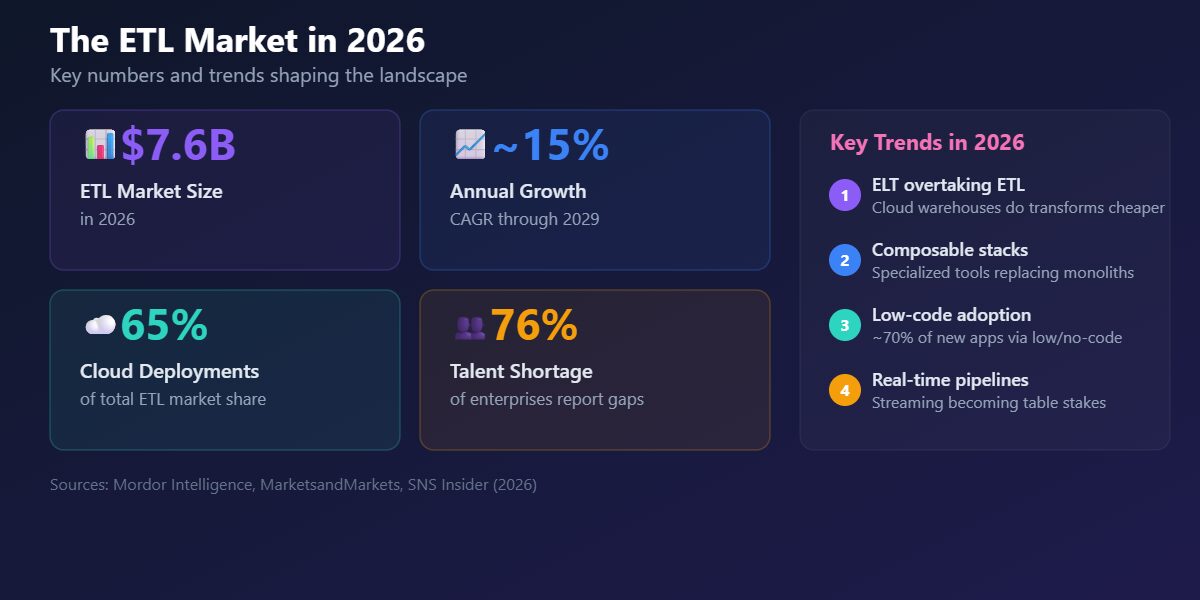
In the rapidly evolving landscape of data management, selecting the right ETL (Extract, Transform, Load) tools is a critical decision for organizations aiming to build robust data stacks. The plethora of options available can often lead to confusion. With the data integration market projected to reach approximately $7.6 billion by 2026, growing at an annual rate of about 15%, it's evident that businesses must navigate this complexity with caution and insight. The right tools will not only streamline data workflows but also shape an organization's analytical capabilities for years to come.
When setting up a data warehouse, teams frequently face the challenge of aggregating data from various sources—be it SaaS applications, databases, or CSV files. The choices made at this juncture can significantly influence productivity and decision-making processes down the line. For instance, consider readers grappling with issues like Conditional formatting for specific character count or the frustrations voiced in discussions about stock prices that have stopped updating, as seen in Does anyone have issue of stock prices stopped updating?. These examples underscore how the right ETL tools can mitigate common data management headaches and enhance overall efficiency.
A tailored approach when choosing ETL tools is important. Each organization's data landscape is unique, and a one-size-fits-all solution often falls short. The need for a human-centered design in data management cannot be overstated; it's essential that tools not only handle data efficiently but also empower users to derive insights without excessive complexity. This human-centered focus aligns with the growing demand for accessible solutions that simplify intricate processes, allowing users to focus on outcomes rather than getting bogged down in technical specifications. The challenges discussed in "Your AI Use Is Breaking My Brain: Why 10 Minutes of Prompting Fries Us[D]" illustrate how overwhelming data tasks can become when tools fail to meet user needs effectively.
As organizations look to the future, the question becomes not just about which ETL tools to adopt, but how these tools can enable a more agile and responsive data culture. This practical guide for navigating the landscape also invites readers to reflect on their long-term data strategies. Will the tools chosen today support innovation and adaptability in tomorrow's fast-paced environment? As we move forward, it's crucial for teams to stay informed about emerging trends in ETL technology, ensuring that their data management strategies are not only effective but also adaptable to the evolving demands of the digital age.
In conclusion, the choices made in selecting ETL tools are foundational to building a successful data strategy. With the right insights and a focus on user-centered solutions, organizations can position themselves to not only meet current demands but also embrace future opportunities. How will you ensure that your data practices are prepared for the transformations ahead?