first
Beyond Market Intelligence keeps first in one place: 5 stories so far. The section currently leads with “Designing AI Agent Guardrails: Essential Patterns for Data Engineers”, “Protego Ventures secures $125M to empower Israel's defense tech future”, and “Transform an Open LLM Into a Fast Classifier by Swapping Its Head”. AI agents don't fail because the model isn't smart enough. Protego Ventures just closed a $125 million fund, cementing its role as the first and largest dedicated defense tech VC in Israel. Acme AI is the next-generation, AI-powered spreadsheet platform built to replace Excel and redefine how analysts, data scientists, and enterprise teams work… The list below is every first story on Beyond Market Intelligence, newest first.

Designing AI Agent Guardrails: Essential Patterns for Data Engineers
AI agents don't fail because the model isn't smart enough. They fail because the architecture around them lacks boundaries. Essential guardrails data engineers need to build systems that stay safe, predictable, and useful as AI takes on more responsibility are laid out here. It's a practical, no-nonsense guide for teams ready to move beyond experimentation. If you're designing these systems, this is the pattern to study.

Protego Ventures secures $125M to empower Israel's defense tech future
Protego Ventures just closed a $125 million fund, cementing its role as the first and largest dedicated defense tech VC in Israel. That's not just capital, it's a signal. The firm is betting on a future where national security and innovation converge, and it's putting real weight behind that vision. For founders building in defense, this is an invitation to explore what's possible. For a deeper look at how global investors are backing ambitious startups, see our coverage of Peak XV's latest Surge cohort.

Transform an Open LLM Into a Fast Classifier by Swapping Its Head
Swapping a language-modeling head for a classification head turns a small Qwen LLM into a fast, single-pass text classifier. That's a practical move, not a theoretical one. It makes open-source models more useful for real tasks without the overhead of full generation. We see this as a natural step toward focused, efficient AI tools. For deeper context on how calibrated models handle high-frequency decisions, our piece "Smart Graph Decisions at Scale" explores that territory. This is about building smarter workflows, not just faster ones.
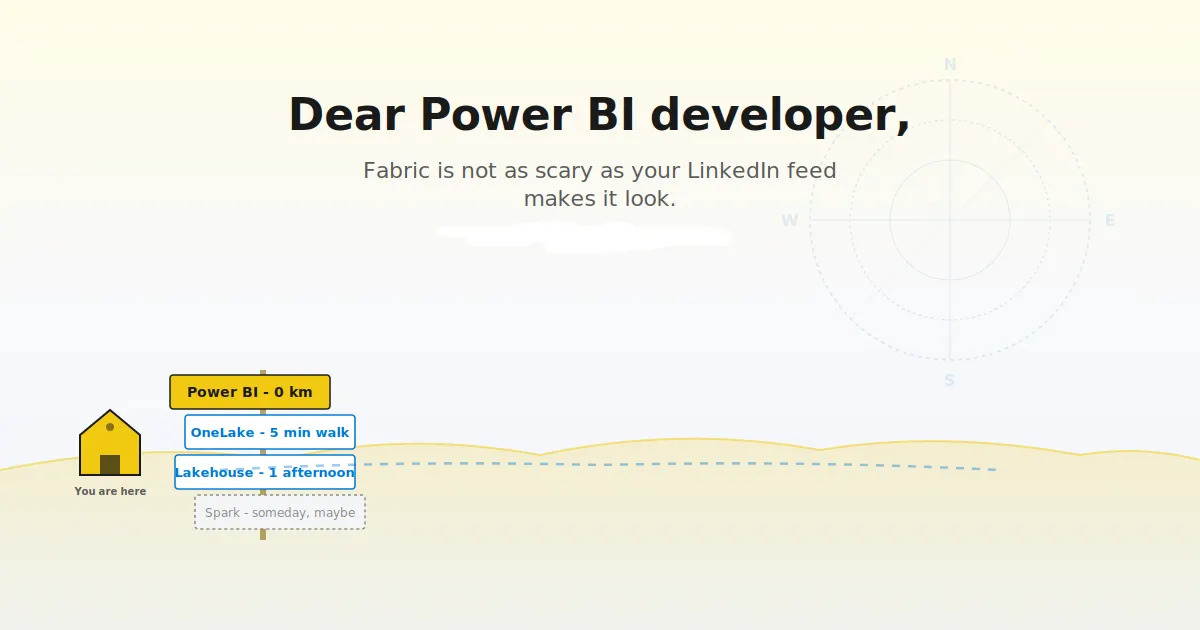
Navigate Microsoft Fabric with confidence and purpose, not panic.
Power BI Premium's retirement isn't a crisis; it's a handoff. For developers, Microsoft Fabric changes the ground rules, but not the core craft. This guide cuts through the noise, separating what truly shifts in your workflow from what stays comfortably familiar. It's a practical starting point for those who'd rather adapt with clarity than react with alarm. For a deeper look at how structured thinking applies elsewhere, explore our piece on how LLMs navigate token space. The takeaway?

Stop optimizing speed and start reducing mental load in data work
Faster dataframe engines are a welcome upgrade, but they sidestep a deeper issue. The real bottleneck isn't speed; it's the sheer volume of syntax an analyst must hold in their head. pandas demands constant mental juggling, and no performance boost lightens that load. We should be designing tools that reduce cognitive friction, not just processing time. For a broader look at how we think about technical trade-offs, our piece on the Forrester function offers a useful parallel.