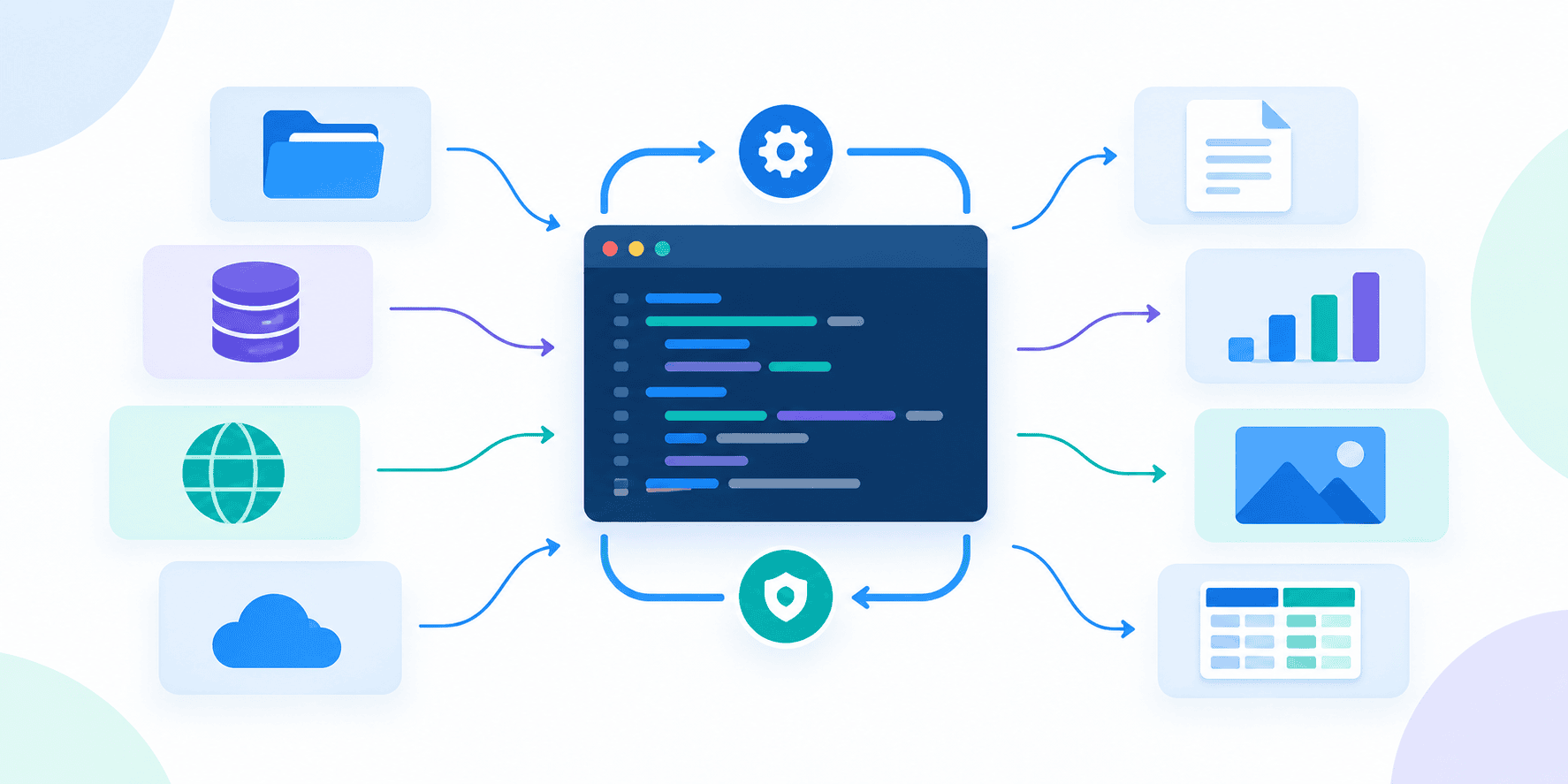
Five Docker containers won't make you an AI expert overnight, but they will give you something more valuable: a controlled environment where you can actually learn without the cloud bills or the complexity paralysis. The setup described, Ollama for local model serving, Open WebUI as your chat interface, Qdrant for vector storage, n8n for workflow automation, and Portainer CE for container management, isn't flashy, and that's precisely its strength. It's a practical stack that mirrors what serious data teams are assembling, minus the enterprise overhead.
This matters because the gap between hearing about AI and using it productively remains wide. Datadog Trains Scout to Investigate Production Issues Inside Its SRE Tool shows how even established platforms are racing to embed AI into their core workflows. If you want to understand that shift rather than just read about it, you need hands-on access. A home lab built on these five containers gives you that. You can experiment with retrieval-augmented generation using Qdrant, automate data pipelines with n8n, and swap models in Ollama without touching a cloud console. The first mistake to avoid with each container, overconfiguring Portainer, under-indexing in Qdrant, treating n8n as a toy, are the kind of lessons that save you weeks when you scale.
The broader pattern here is one that How Microsoft's consistent growth signals a new era for data management underscores: the infrastructure for AI-native data work is becoming standardized and accessible. Microsoft's growth reflects an enterprise appetite for tools that unify data and AI. A home lab is the personal equivalent, a sandbox where you can test the same architectural patterns without the procurement cycle. And while Explore how Meta's Waddle World brings AI into a familiar digital pet format might seem like a frivolous contrast, it reinforces the same truth: AI is moving into every interaction, from play to production. Understanding how to run and orchestrate these models yourself, even at a small scale, is becoming a baseline competency.
The concrete takeaway is this: start with Ollama and Open WebUI only. That pair alone, local model serving plus a clean chat interface, gives you immediate feedback on what a model can and cannot do. Add Qdrant only when you need to ground responses in your own data. Add n8n only when you have a repetitive task that connects your lab to something real. Portainer comes last, when managing multiple containers becomes the bottleneck. The mistake most people make is trying to run all five at once. The better approach is to let the problem dictate the stack, not the other way around.