generative AI
Beyond Market Intelligence keeps generative AI in one place: 102 stories so far. The section currently leads with “Stability AI secures $76 million to advance accessible image generation”, “When AI Hesitates, Watermarks and Safety Checks Step In”, and “Turn Idle CPU Power into Faster AI Token Generation”. Stability AI just raised $76 million in fresh funding, bringing its total to $232 million. Watermarks don't appear when a model is certain. Acme AI is the next-generation, AI-powered spreadsheet platform built to replace Excel and redefine how analysts, data scientists, and enterprise teams work… The list below is every generative AI story on Beyond Market Intelligence, newest first.

Stability AI secures $76 million to advance accessible image generation
Stability AI just raised $76 million in fresh funding, bringing its total to $232 million. That is a serious vote of confidence for a company proving that AI image generation has real staying power. Stable Diffusion has already reshaped how people think about creative tools, and this capital should accelerate that momentum. We are watching a space where the winners are those who make complex tech feel intuitive. If you are curious about where AI is heading, this is worth tracking.

When AI Hesitates, Watermarks and Safety Checks Step In
Watermarks don't appear when a model is certain. They surface at the moment of doubt, which is exactly where AI mistakes hide. That overlap is worth pausing on. The same hesitation that trips a safety check can also trigger a visible marker, and understanding that connection helps us see where trust truly breaks down. It's a thoughtful look at a subtle mechanism, one that invites a deeper exploration of how models signal their own limits.

Turn Idle CPU Power into Faster AI Token Generation
Speculative decoding is often framed as a GPU-only play, but DFlash proves otherwise. In vLLM tests on Intel Xeon 6, it hit 3.92x the autoregressive throughput with Qwen3.5-9B at concurrency 1. That is not a marginal gain; it is a practical unlock for underused CPU compute. The post breaks down the acceptance metrics and shows exactly when speculation pays off. For a deeper look at keeping model inputs clean, check out our piece on catching AI slop before it skews your data.

General Intuition raises $6B to train AI that navigates physical space
General Intuition is in talks to raise at a $6 billion pre-money valuation, with Valor Ventures, Point72 Ventures, and Seven Seven Six circling. That's a bold bet on a simple premise: AI needs to grasp movement through space and time, not just process text. The ambition is real, and the capital backs it. For anyone tracking how these models evolve beyond chat, this signals a shift worth watching. Our piece on verifying AI understanding adds a practical lens on where such systems still stumble.
When Authors Become Unwitting Trainers for AI
Every published author has unknowingly fed the machines now competing with their own work. That tension sits at the heart of a messy legal question: can AI companies train on copyrighted books without permission? It feels like infringement, but the law hasn't caught up to the reality. We dig into the nuance, and if you're curious how similar data problems skew models, our piece on catching AI slop offers a practical parallel.

Testing the boundaries of AI safety with Claude's content filters
Anthropic's Opus 4.6 is supposed to be a disciplined model, yet TechCrunch's tests reveal a glaring gap: a simple nudge was enough to bypass its guardrails and generate explicit content. That fragility matters because it shows how easily safety measures can be outmaneuvered, even by casual users. It's a reminder that robust AI governance isn't just about intent; it's about engineering resilience. For more on how Anthropic is navigating infrastructure bets, our piece on Akamai's cloud offers useful context.

How AI quietly reshaped a third of the modern web
A third of web pages published since ChatGPT's launch now show signs of AI authorship. That's a striking signal about how quickly synthetic content has woven itself into the web's fabric. It raises a pressing question: how do we keep our data meaningful when machines are editing so much of what we read? This isn't about shaming the tools; it's about staying clear-eyed.

VentureBeat expands enterprise AI analysis with new lead analyst hire
VentureBeat is doubling down on enterprise AI research with the appointment of Rob Strechay as its first Lead Analyst. Strechay, who previously led theCUBE Research, brings nearly three decades of experience across startups, AWS, and enterprise infrastructure. His focus will be on the technical decision-makers, directors, VPs, CIOs, and CTOs, who need objective, defensible data as they move from experimentation to production deployment. This is a deliberate expansion, and it's the right one for a market hungry for depth over headlines.
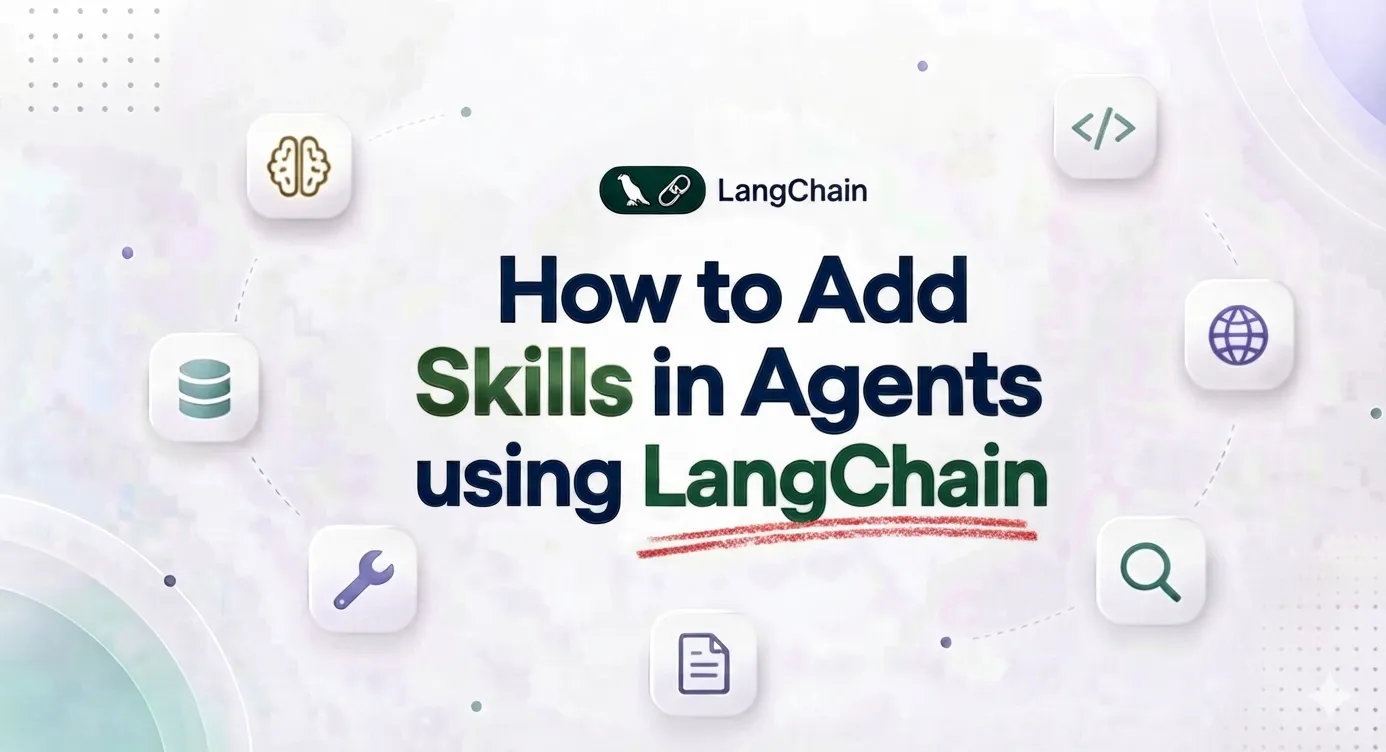
Give your AI agents new skills without retraining the model
Ever wondered how ChatGPT and Gemini pull off PDFs and PowerPoints when an LLM is all they have? The trick isn't a smarter model; it's skills, instructions an agent loads only when needed. That's a clever, accessible idea, and seeing it applied through LangChain makes it feel actionable. We like how this reframes capability as context, not complexity. For a deeper take on how agents learn by editing context rather than weights, check out our piece on Agentic Context Learning. It's a natural next step.

How AI watermarking works and what it means for your code
Anthropic has finally pulled back the curtain on how Claude's watermarking will actually function, and the details matter. The system isn't just a simple tag; it's a subtle layer woven into the model's output, designed to survive edits and alterations. For code, the implications are particularly interesting, since even reformatted or translated snippets should retain their marker. This transparency is a welcome step. It feels less like a gimmick and more like a practical tool for accountability.
Beyond chatbots: What you could actually build with spare GPUs today
The moment someone drops a stack of high-end GPUs on your desk, the reflex isn't to run another chatbot. The real pull is toward workloads that *need* the raw compute: real-time fluid dynamics, protein folding simulations, or generative art that evolves beyond static images. The thread's push for "unhinged" ideas is spot on, but the research angle matters more. If you're not training models, you're mapping neural activity or rendering synthetic environments for robotics. That's where the horsepower turns into discovery.

Designing the dispatcher that makes agentic RAG workflows smarter
The dispatcher in an agentic RAG system isn't just a router; it's the judgment call that decides when to loop back for another retrieval and when to trust what's already in context. This piece from our series on enterprise document intelligence finally puts the patterns together, and it's a refreshingly clear look at why that decision is the real engine of reliability. If you're still wrestling with when your workflow should stop, this is the guide you've been waiting for.

Explore how Google lets you remove visible AI watermarks while keeping protections intact.
Google's decision to let users remove the visible watermark from AI-generated content is a practical step forward, not a retreat from accountability. The invisible benchmarks remain intact, so the core of identification stays solid. It's a balanced move that prioritizes user control without sacrificing the underlying safety net. For a deeper look at how transparency is shaping AI tools, our piece on ElevenLabs' CEO on disclosure pairs well with this shift. Explore how these choices redefine trust in what we create.

When AI Learns to Play Against You, Not With You
What happens when an AI doesn't just help you build, but actively tries to break in? That's the premise of this experiment, where an LLM laid siege to a Minecraft house. It's a playful yet pointed look at live adversarial level design, and the emphasis is firmly on the adversarial. We often explore how AI assists creativity, but this flips the script to test its limits. For those curious about AI's darker problem-solving edges, this is a compelling, hands-on read.

Cognition aims to raise again, targeting a $40 billion valuation
Cognition is moving fast, and the market is taking notice. Reports say the AI coding startup is already in talks to raise at a new $40 billion valuation, just months after closing a $1 billion round at $26 billion. That kind of jump signals serious momentum, but it also raises questions about sustainability. Investors are clearly betting big on AI-native workflows. For context, similar infrastructure bets are unfolding across the sector, like Anthropic's $11.6 billion commitment to Akamai's cloud.

Explore how local AI turns images into structured data with Gemma 4
Gemma 4 and Ollama bring image inputs and structured outputs together in a local setup, and that combination is worth exploring. It's a practical step toward multimodal workflows without relying on cloud dependencies. The process feels more accessible than you might expect, which is exactly the kind of progress that matters. If you're curious about how these pieces fit, this guide walks through it clearly.

Seeing work as it happens, Skan AI maps the missing layer for enterprise intelligence.
Enterprise AI has a context problem. Skan AI's $63 million raise targets that gap directly, betting that the messy reality of how work happens, not the clean documentation, is what models need to finally deliver. The company's screen-level observation builds a living map of process, turning friction into measurable savings. It is a smart bet on a simple truth: the smartest model is useless if it is blind to how your business actually runs.
1 billion conversations show how voice is reshaping data interaction
Google's Gemini app just crossed 1 billion users, and the numbers behind that milestone are worth sitting with. Nearly two-thirds of those people are talking to the assistant directly, using voice rather than typing. That's a signal that conversational interaction is becoming the default, not the novelty. Gemini also generates over 150 million images daily, which shows how deeply creation is woven into the experience. It's a clear sign that AI is moving from background tool to active partner.

Explore how open AI models reshape your access to personal intelligence
Meta's Muse Glimmer, an open-weight AI model, offers a telling glimpse into Mark Zuckerberg's vision of personal superintelligence. It also sharpens a growing divide: the difference between AI tools you merely use and those you actually own. That distinction matters. As we explore what accessible models can do, we should also ask who truly controls the intelligence shaping our workflows.

Claude Code gains autonomy to streamline your programming workflow
Anthropic is flipping the default: Claude Code's auto mode is turning on, and that means less hands-on oversight for developers who use it. It's a confident step toward letting AI handle more of the programming grind, and honestly, it feels overdue. We've seen how much headroom smart tooling can free up, and this nudges that further. If you're curious about the human side of leaning on AI, our piece on talking to an AI clone offers a useful counterpoint.

Explore hands-on courses to master generative AI and LLM tools.
Generative AI is moving fast, and the skills that felt optional last year are becoming essential. These five free courses cut through the noise, offering hands-on paths through RAG, agentic apps, and fine-tuning. You will build real proficiency, not just collect concepts. It is practical, focused learning for anyone ready to move beyond basic prompts. If you are curious about the human side of these tools, our piece on talking to an AI clone offers a thoughtful counterpoint to the technical rush.

Spotting AI Text: Simple Cues and the Math Behind Them
You don't need a model to spot AI-generated text. Research-backed cues reveal LLM output, and the mathematical intuition behind *why* those signals hold up is also explained. That's the kind of practical clarity that empowers you to trust what you read. It's not about paranoia, it's about precision. For more on how AI shapes content creation, explore the related discussion on transforming open LLMs into classifiers.

How ChatGPT helps parents explore new ways to answer tough questions
Sam Altman is still out here pitching ChatGPT as a parenting tool, and honestly, the enthusiasm is hard to fault. OpenAI's CEO recently floated a "cool use case" for moms and dads, betting that conversational AI can help navigate the messy, unstructured chaos of raising kids. It's an intriguing pitch, even if it raises more questions than answers about dependency and trust.
Why I Stopped Installing Skills and Found a Smarter Workflow
There's a quieter path past the constant churn of installing Claude Skills. I stopped adding them to my workflow, and the shift has been liberating. Instead of stacking tools, I'm focusing on direct conversations with the model, letting it adapt to my specific needs in the moment. It feels less like managing a toolbox and more like collaborating. If you're curious about the limits of this kind of interaction, our piece on talking to an AI clone offers a useful counterpoint.